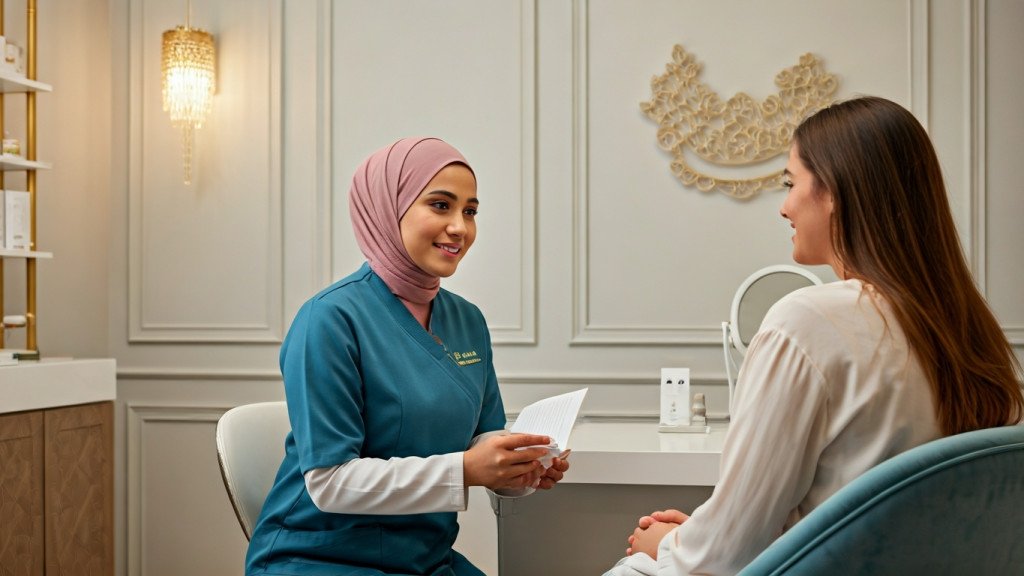
Stepping into a modern aesthetic clinic often presents you with a diverse array of skin rejuvenation treatments. However, beneath the desire to enhance facial texture, deep-seated doubts frequently arise regarding the purity of ingredients and the compatibility of procedures with the Sharia values you hold dear. This apprehension is entirely natural, as the assurance of Halal status is intrinsically linked to inner peace in your daily spiritual practice.
- 5.1 Can Botox and filler injections be classified as Halal?
- 5.2 When does the mandatory Halal certification for all cosmetic products in Indonesia take effect?
- 5.3 Why is the presence of female physicians strongly emphasized in Sharia beauty clinics?
- 5.4 How can I ensure that creams prescribed by clinic doctors are pure and safe?
The Halal beauty trend in Indonesia harmonizes Islamic compliance principles with clinical dermatological standards through three core pillars: the utilization of officially certified pure active ingredients from the Halal Product Assurance Organizing Body (BPJPH), the implementation of sterile medical procedures that do not permanently alter physical anatomy, and the guarantee of privacy within treatment rooms attended by licensed female medical professionals. This integrated approach delivers aesthetic care that is both medically safe and spiritually reassuring.
Three Core Pillars Defining Halal Aesthetic Treatments
In-depth studies by the Assessment Institute for Foods, Drugs, and Cosmetics (LPPOM), in collaboration with dermatological practitioners, have established that the validity of aesthetic services hinges on the integrity of the supply chain and the intent of the treatment. The first absolute pillar to be met is the purity of all topical ingredients and injectable solutions, ensuring they are free from Haram and impure (najis) elements.
Active substances such as synthetic hyaluronic acid, plant-derived collagen, or brightening serums must possess traceability documentation proving the absence of contamination from prohibited animal enzymes during laboratory fermentation processes. Cleansing products, local anesthetic creams, and even post-procedure disinfectants must be free from impure industrial alcohol content.
The second pillar emphasizes medical safety without causing long-term detriment or physical harm. Skin rejuvenation procedures must be performed by licensed physicians using instruments that have undergone high-temperature autoclaving for sterilization to prevent pathogen transmission between patients.
The third pillar pertains to the ethical boundaries and objectives of aesthetic treatments. Permissible treatments focus on maintaining skin health, alleviating acne inflammation, improving scar appearance, and restoring natural facial radiance without excessive anatomical modifications that lead to permanent alterations of the body’s natural creation.
Dynamics of Halal Certification Regulations for Cosmetics and Medical Facilities
The Indonesian government, through BPJPH, has set a significant milestone by mandating that all cosmetic products circulating within the country obtain official Halal certification no later than October 17, 2026. This regulation provides robust legal assurance for consumers when selecting daily skincare formulations.
While medical clinic service operational permits are not currently required to hold a singular institutional Halal certification, industry awareness is driving the emergence of independent Sharia-compliant clinics. These treatment centers voluntarily adopt Halal assurance system standards for all raw materials used in their treatment rooms.
Halal-standard clinics also place special emphasis on service ethics and the safeguarding of patient’s ‘aurat’ (intimate body parts). The availability of private consultation rooms and exclusive care by Muslim female physicians and therapists fosters an emotional sense of security not found in conventional clinics.
| Service Parameter | Conventional Aesthetic Clinic | Halal Sharia-Oriented Clinic |
|---|---|---|
| Source of Active Ingredients | Focus on chemical efficacy without Halal verification | Mandatory BPJPH Halal certification and free from impure elements |
| Procedure Objective | Accommodates extreme anatomical modifications | Restoration of natural skin health without distorting facial proportions |
| Performing Staff | Medical practitioners without specific gender segregation | Female physicians and therapists for female patients |
| Treatment Room Privacy | Flexible partition curtains in shared spaces | Opaque, enclosed treatment rooms to safeguard ‘aurat’ |
| Treatment Transparency | Risk explanation focused on medical side effects | Medical risk education combined with Sharia boundary guidance |
Steps to Choosing a Trustworthy Halal Beauty Service
As a discerning consumer, you can verify the credibility of beauty services claiming to be Sharia-compliant through the following self-assessment:
- Verify BPOM and Halal Product Codes: Check the registration numbers for doctor-prescribed compounded creams and treatment serums against the official BPOM database and BPJPH’s Sihalal application.
- Consult on Injectable Ingredient Status: Request the physician to show the original packaging of the product before the procedure to ensure the vial is securely sealed and sourced from a Halal-licensed manufacturer.
- Inspect Room Hygiene: Ensure that syringes, gauze, and gloves used are single-use disposable items, opened fresh in front of you.
A practitioner’s integrity is evident in their willingness to answer every technical question regarding the origin of substances to be introduced into your body. Do not hesitate to cancel a procedure if the practitioner is unwilling to provide documentation for ingredient transparency.
Salwa Salon Editorial Note: Caring for skin beauty is a form of gratitude for the physical blessings entrusted to us. True beauty is always grounded in the harmony between the healthy biological function of the skin and the peace of mind derived from living one’s faith.
To gain a deeper understanding of the criteria for selecting safe and officially licensed skincare centers, please read our article on guidelines for choosing a safe beauty clinic.
Peace of Mind as the Measure of True Beauty
The concept of Halal beauty demonstrates that the modernity of medical aesthetics need not conflict with divine values. When a clinical treatment yields hydrated, healthy skin without inducing guilt in one’s spiritual practice, that is where complete inner satisfaction is achieved.
This trend continues to grow, establishing a new standard for the self-care industry in the Southeast Asian region. Caring for one’s body with utmost diligence reflects a mature personality that balances physical health with spiritual nobility.
Frequently Asked Questions (FAQ)
Can Botox and filler injections be classified as Halal?
Injections can be Halal provided the injectable solution is proven free from prohibited animal-derived components and is intended for therapeutic health or corrective purposes without excessive alteration of facial structure.
When does the mandatory Halal certification for all cosmetic products in Indonesia take effect?
The government, through BPJPH, has set the full Halal certification mandate for all cosmetic product circulation to take effect on October 17, 2026.
Why is the presence of female physicians strongly emphasized in Sharia beauty clinics?
The presence of female physicians ensures the comfort of Muslim female patients when they need to remove their hijab or expose facial and neck areas during medical treatment.
How can I ensure that creams prescribed by clinic doctors are pure and safe?
Ensure the product has an official BPOM notification number and displays the registered Halal logo on its pharmaceutical packaging label.

Tinggalkan Balasan