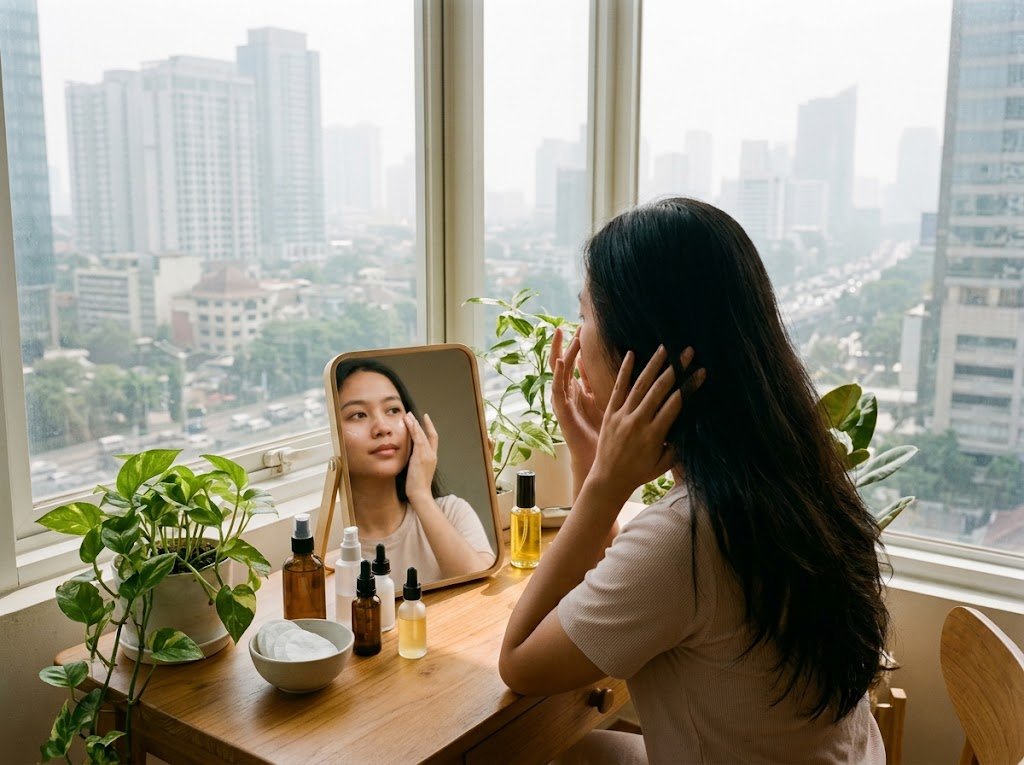
Riding a motorcycle or walking along the streets of a tropical city in the afternoon often leaves a sticky residue on the face and neck. Upon reaching the mirror, the skin tone appears dull and ashen, pores are clogged with blackhead comedones, and strands of hair feel stiff and smell musty from sweat trapped by exhaust fumes particles.
Caring for skin and hair in high-pollution areas relies on double cleansing with gentle surfactants, the application of free radical-scavenging antioxidants, and the restoration of the natural lipid barrier's moisture. This structured protection routine prevents pore congestion, mitigates the risk of micro-inflammation, and restores the body's natural vitality without causing tissue dehydration.
The Impact of PM2.5 Micro-Dust Particles on Skin Cells and Hair Follicles

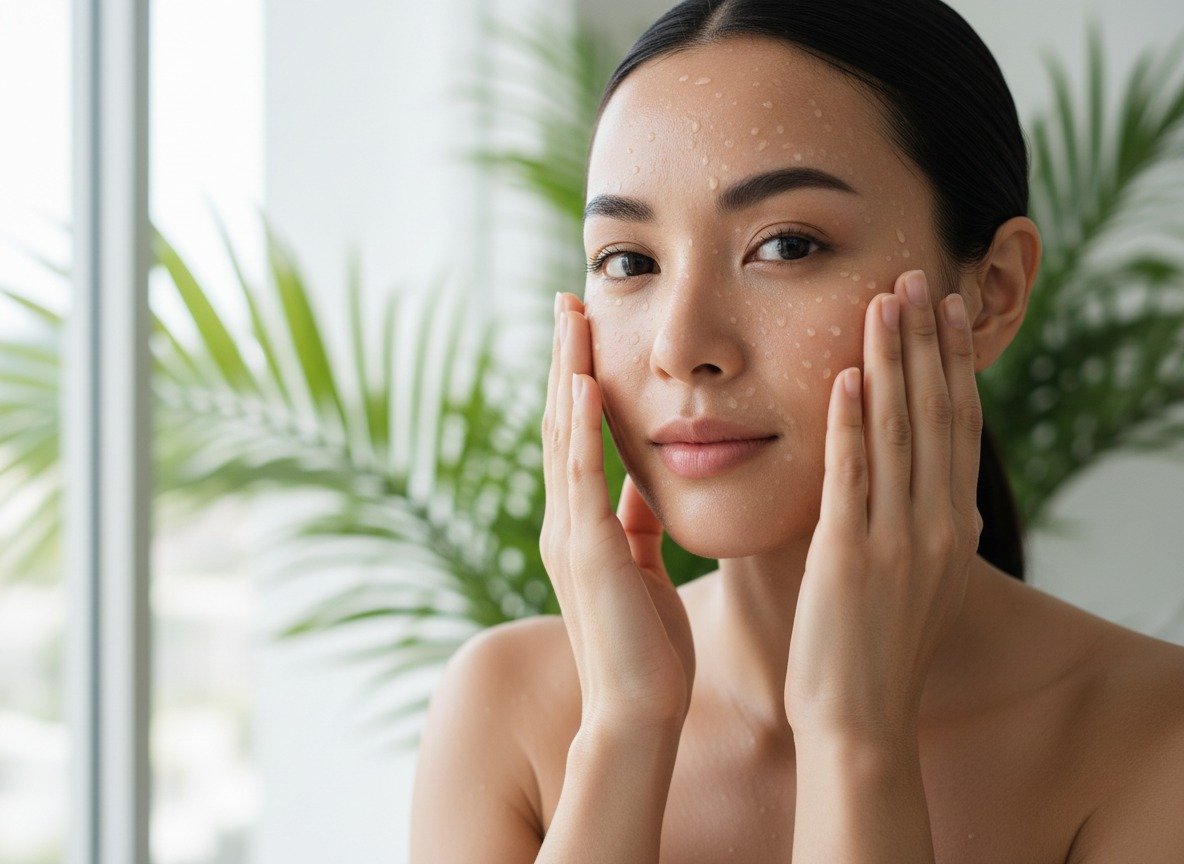
Urban air pollution is dominated by micro-dust particles less than 2.5 micrometers in size (*particulate matter* PM2.5), which carry polycyclic aromatic hydrocarbons (PAHs) and heavy metals. This microscopic size allows particles to freely penetrate hair follicle openings and skin pores.
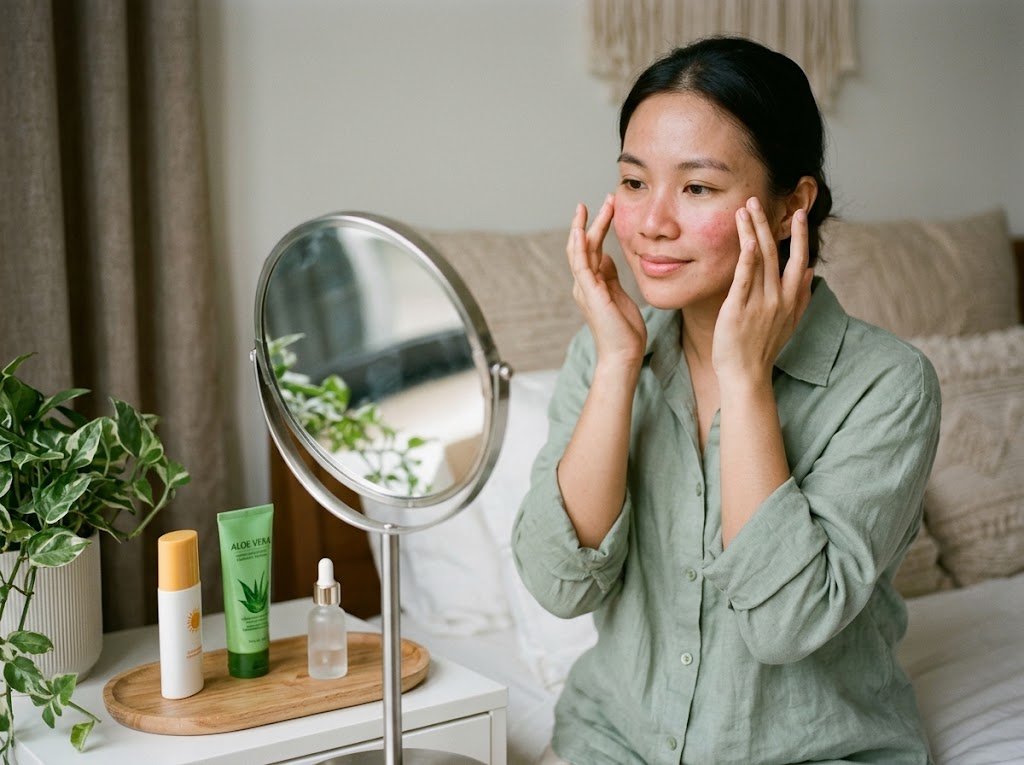
When soot particles adhere to the stratum corneum, reactive oxygen species are formed, triggering the degradation of skin barrier lipids. Consequently, the rate of trans-epidermal water loss increases rapidly, leaving the skin looking dull, losing elasticity, and prone to developing erythematous rashes.
On the scalp, street dust mixed with excessive sweat production oxidizes sebum into squalene peroxide compounds. These toxic compounds irritate the hair root ostia, weaken follicular attachment, and lead to premature hair shedding.

Tinggalkan Balasan