
Finding modest Muslim attire that balances sartorial modesty with a contemporary flair can often be a challenge when navigating daily fashion offerings. Monotonous designs prevalent in the market can lead to a stiff appearance, stripping away unique personal character.
The Modest Style Runway 2026 event in Yogyakarta showcased an exploration of local designers’ creations, integrating the richness of Indonesian textiles like batik and tenun into elegant, dynamic, and globally relevant ready-to-wear modest silhouettes.
Editor’s Note: This article presents independent fashion trend coverage by the Salwa Salon editorial team, reviewing the evolution of the domestic modest fashion industry.
Theme: Swarna Citta and the Philosophical Meaning of Nusantara Textiles
This fashion show, initiated by the Indonesian Fashion Chamber Chapter Yogyakarta, adopted the overarching theme of Swarna Citta as the foundation for its creations. This concept emphasizes noble character and the conscious preservation of culture through a single piece of fabric.
Designers were challenged to transform traditional fabrics without compromising their original philosophical essence into functional fashion designs. Nusantara textiles are no longer viewed as heavy ceremonial cloths but as flexible materials for contemporary Muslim workwear and evening attire.
The exploration of eco-friendly, plant-based natural dyeing techniques and wild leaf ecoprint motifs also dominated the runway. This commitment to sustainable fashion demonstrates that modest wear can align with the principles of environmental preservation.
Combining Traditional Techniques with Contemporary Modest Silhouettes
The primary strength of the showcased collections lay in the bold fusion of modern garment cuts with traditional fabric panels. Structured long coats, voluminous culottes, and asymmetrical tunics were captivating, enhanced with the intricate details of handloom woven fabrics (tenun ATBM).
The use of warm earth tones harmonized beautifully with splashes of terracotta, moss green, and deep indigo blue. Layered ensembles were crafted using natural fiber cotton and handloom silk, materials offering optimal breathability for tropical climates.
| Textile Category | Featured Craftsmanship | Garment Silhouette Application |
|---|---|---|
| Traditional Hand-Drawn Batik | Copper canting with hot wax resist | Longline outer coats and formal pleated skirts |
| Eco-Friendly Ecoprint | Natural leaf steaming on cashmere fibers | Loose-fitting tunics and textured hijab scarves |
| Nusantara Handloom (ATBM) | Manual weft weaving with thick cotton yarn | Structured vests and modest work blazers |
| Contemporary Stamped Batik | Copper stamps with minimalist geometric patterns | Relaxed-fit jumpsuits for daily activities |
Salwa Salon Editorial Note: The key to comfortable layered modest fashion in tropical weather lies in selecting breathable base materials. Ensure inner lining fabrics are made from pure cotton or viscose rayon to keep the skin cool and prevent excessive perspiration during demanding activities.
Find inspiration for styling ethnic outerwear with our guide on batik outer layering ideas for hijabis.
Discover comfortable head covering fabrics for extended wear in our article on tips for choosing breathable hijab materials.
How to Adapt Runway Trends to Everyday Style
Adopting runway fashion into your daily work routine doesn’t mean you have to wear cumbersome layered outfits. Opt for a single statement piece, such as a batik vest with a bold motif, and pair it with a straight-cut white shirt and neutral fabric trousers.
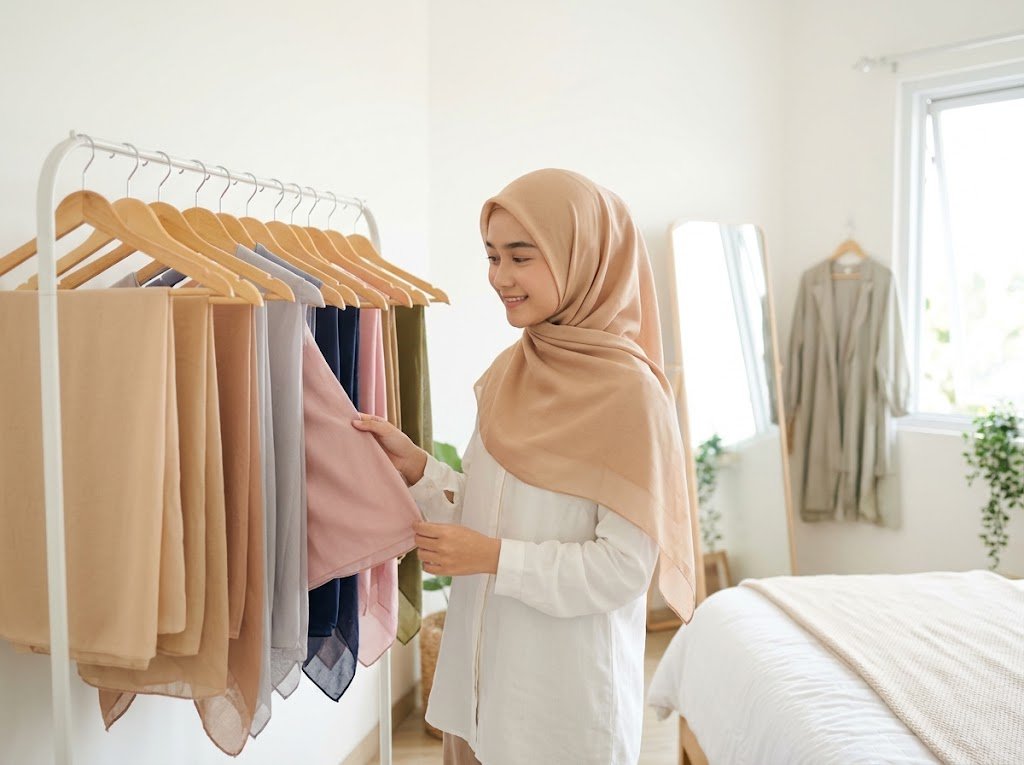
Use a plain, fine voal hijab in a color derived from one of the undertones in your bottom garment’s pattern. This color harmony creates an illusion of a slimmer, more proportional silhouette without appearing overwhelmed by clashing prints.
Integrating Nusantara Textiles with Everyday Comfort
The secret to successfully adapting runway fashion to your work routine is proportional simplicity. Simply pair one element of woven fabric or a bold batik motif with plain neutral-toned culottes or pleated skirts for an elegant and professional look.
Maintaining harmony between at-home self-care and expert guidance is paramount for achieving optimal and lasting results.
Frequently Asked Questions (FAQ)
How do I care for naturally dyed modest clothing to prevent color bleeding?
Wash naturally dyed garments separately using a special soap derived from soapberries (lerak) or a neutral-formula liquid detergent. Avoid wringing the fabric too forcefully and dry clothing in a shaded area away from direct sunlight.
Is thick woven fabric suitable for everyday modest wear?
Thick, textured woven fabric is ideal for use as an unbuttoned outer layer or a structured vest that doesn’t cling tightly to the body’s contours. Pair it with an inner blouse made from thin cotton to ensure smooth air circulation.
How do I choose the right batik motif for a petite frame?
Opt for small to medium-sized batik motifs with vertical or diagonal patterns that connect seamlessly. Vertical arrangements help create the illusion of a taller, more elongated posture.
Does layered modest fashion make the wearer look older?
No, layered styles actually convey a contemporary, fashionable impression, provided the garment cuts feature clean, modern silhouettes. The key is to avoid using more than two distinct patterns in a single complete outfit.


Tinggalkan Balasan