
Staring into the mirror and seeing a dull, fatigued complexion that has lost its natural radiance after days of outdoor pollution often triggers an impulse to hastily concoct a homemade mask. Many individuals immediately mix various kitchen ingredients without understanding their acidity levels or the compatibility of their biological properties with facial skin.
Facial treatments using natural ingredients like pure honey, plain yogurt with lactic acid, and aloe vera gel have been proven to brighten dull skin by binding moisture and providing gentle enzymatic exfoliation without compromising the skin’s protective acid mantle.
Understanding the Causes of Dull Skin Before Trying Home Treatments
Dull-looking facial skin is generally caused by the accumulation of the stratum corneum, the outermost layer of skin cells, which fails to shed naturally every twenty-eight days. This buildup obstructs the natural reflection of light from the dermal surface, making the skin appear lackluster and rough.
Cellular dehydration and oxidative stress from micro-dust particles exacerbate this condition by triggering the degradation of the skin’s protective lipids. Natural home ingredients can be effective supportive solutions if chosen based on their precise mechanism of action and hygiene.
If you have skin that easily reddens when trying new ingredients, you can also consult our guide on oatmeal masks for sensitive skin as a soothing alternative treatment.
7 Natural Home Ingredients to Nourish and Brighten Skin
Here are seven readily available natural ingredients proven to refresh dull facial skin when used with the correct technique:
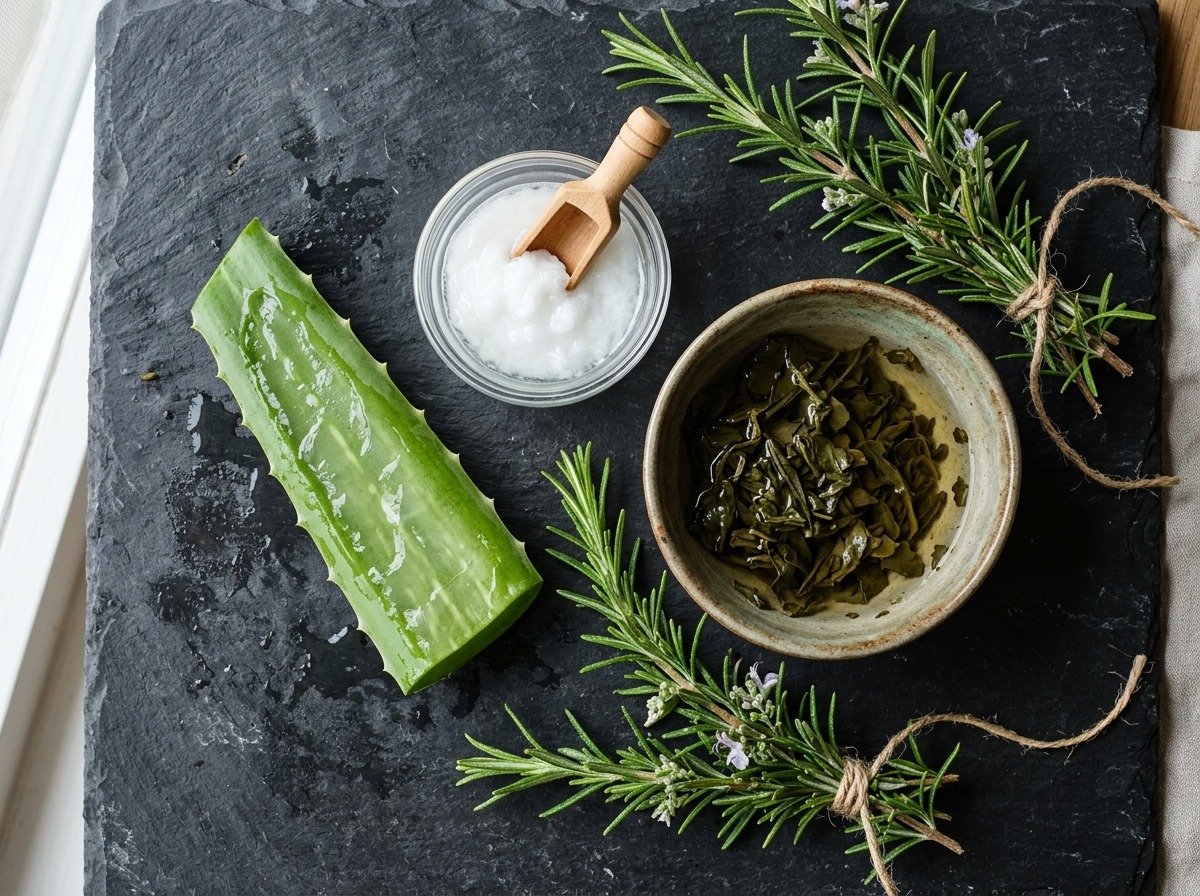
1. Fresh Aloe Vera Gel
The aloin and mucopolysaccharides in aloe vera gel bind moisture into skin cells while soothing micro-inflammation from sun exposure. Regular use helps to diminish dull spots and leaves the skin feeling instantly supple.
2. Enzyme-Rich Pure Honey
Natural honey is a humectant agent that draws ambient moisture directly to the epidermis. In addition to intensive hydration, honey’s natural antibacterial properties prevent the formation of minor breakouts within facial pores.
3. Plain Yogurt with Lactic Acid
Unsweetened yogurt contains natural alpha-hydroxy acids (AHAs) in the form of lactic acid, which gently loosens the bonds between dead skin cells. The cooling effect of yogurt also helps to reduce mild puffiness on tired facial skin.
4. Chilled Cucumber Slice Extract
Cucumbers are rich in silica and caffeic acid, which soothe puffy skin and restore cellular hydration levels. Their mild astringent properties help to refresh enlarged pores caused by intense heat.
5. Fresh Tomato Pulp Rich in Lycopene
Tomatoes contain the carotenoid pigment lycopene, a potent antioxidant that protects cells from environmental radiation damage. The natural citric acid in tomatoes helps to even out dull patches, but its use should be limited to avoid irritating sensitive skin.
6. Finely Ground Used Coffee Grounds
The caffeine in coffee grounds has a mild vasoconstrictive effect that enhances microvascular circulation when gently massaged. Ensure the coffee grounds are very finely milled to avoid abrading the facial epidermis.
7. Diluted Lime Juice Extract
Limes contain natural vitamin C and citric acid, which have the potential to brighten dark spots. However, due to their extreme acidity (pH around 2), lime juice must be diluted with rose water or honey before being applied sparingly.
Never apply pure lemon or lime juice directly to facial skin without dilution, and avoid sun exposure immediately afterward. Phytophotodermatitis can cause severe burning sensations and leave permanent dark spots.
— Fatmawati Tahir — Beauty Practitioner & Editor at Salwa Salon
Guidelines for Natural Ingredient Composition and Contact Time on the Face
The duration of contact with natural ingredients should be limited to prevent skin irritation. The following table summarizes safe usage limits:
| Natural Ingredient | Active Compound | Maximum Application Time | Recommended Frequency |
|---|---|---|---|
| Aloe Vera Gel | Aloin, Mucopolysaccharides | 15–20 Minutes | 3–4 times per week |
| Pure Honey | Glucose, Hydroxyl Enzymes | 15 Minutes | 2–3 times per week |
| Plain Yogurt | Lactic Acid, Probiotics | 10–15 Minutes | 2 times per week |
| Cucumber Slices | Silica, Caffeic Acid | 15 Minutes | Can be used daily |
| Tomato Pulp | Lycopene, Citric Acid | 10 Minutes | 1 time per week |
| Fine Coffee Grounds | Caffeine, Chlorogenic Acid | 5 Minutes (very gentle massage) | 1 time every two weeks |
| Diluted Lime Juice | Ascorbic Acid, Citric Acid | 5 Minutes | Maximum 1 time per week |
Home Application Safety Guidelines for Natural Ingredients
Natural ingredients are not automatically free from the risk of contact allergic reactions. Ensure all containers and mask brushes are thoroughly washed with hot water to prevent bacterial contamination from residual food items.
Always perform a patch test on the lower jawline for twenty-four hours before applying a new concoction to the entire face. If you experience stinging, itching, or a sharp burning sensation, rinse immediately with lukewarm running water.
Frequently Asked Questions (FAQ)
Is it permissible to leave natural ingredient masks on overnight?
It is not recommended to leave natural ingredient masks on overnight, except for pure, hygienically filtered aloe vera gel. Organic ingredients like honey or yogurt left to dry overnight risk attracting room dust and clogging pores.
Is lime mask safe for acne-prone skin?
It is not safe for active or open acne. The high concentration of citric acid in lime juice will cause extreme stinging, damage compromised skin barriers, and trigger post-inflammatory hyperpigmentation.
How can I ensure coffee grounds do not damage facial skin?
Ensure the coffee grounds are from finely ground beans, similar to espresso powder, not coarse grounds for manual brewing. Mix the coffee grounds with pure honey or almond oil as a lubricant before gently applying without firm pressure.
Can natural masks replace sunscreen?
Absolutely not. Natural ingredients do not possess physical or chemical filters against UVA and UVB rays, making the application of adequate SPF sunscreen mandatory every morning.
[/CONTENT]



Tinggalkan Balasan