Discovering clumps of hair left on your comb’s teeth or the bathroom floor often triggers anxiety about the threat of permanent hair thinning. Exposure to the high temperatures of tropical climates combined with sweat frequently weakens the grip of hair follicles on the scalp’s pores.
- 4.1 How many times a week should natural hair masks be applied?
- 4.2 How can the pungent odor be removed after using onion juice on the hair?
- 4.3 Can hair loss due to genetic factors be treated solely with natural ingredients?
- 4.4 How long should natural oil concoctions be left on the hair before rinsing?
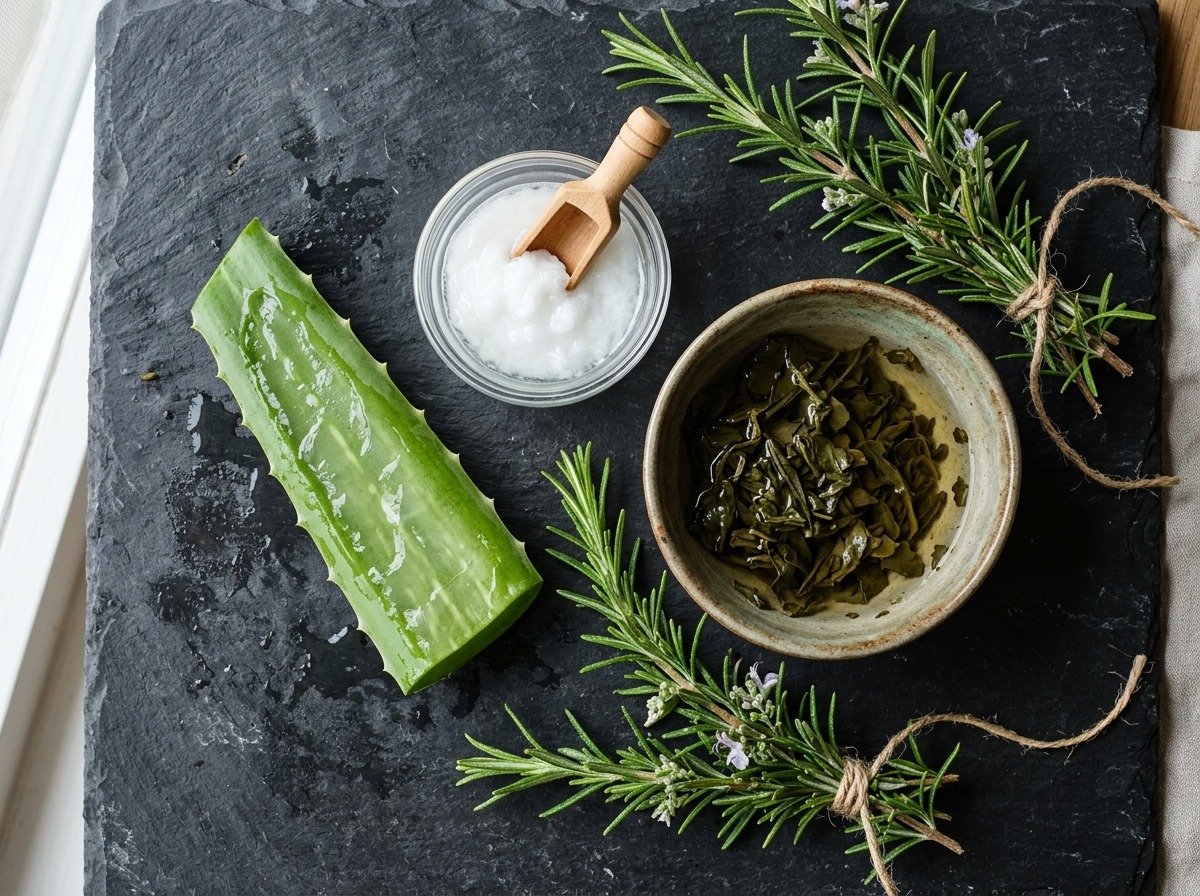
Natural ingredients such as pure aloe vera gel, cold-pressed coconut oil, and brewed green tea have been scientifically proven to contain essential fatty acids, polyphenol antioxidants, and sulfur minerals that strengthen hair follicles and alleviate scalp inflammation.
Understanding the Physiological Mechanism of Telogen Hair Loss
Daily hair loss ranging from 50 to 100 strands is a natural part of the human hair follicle replacement cycle. However, environmental stressors, hormonal changes post-childbirth, or micronutrient deficiencies can prematurely force hair into the resting (telogen) phase.
This condition leads to significantly more hair loss when rinsing or brushing. Topical treatments based on botanical ingredients work by delivering direct nutritional support to the actively dividing cellular matrix of the hair.
The utilization of natural extracts demands long-term consistency in application, as hair growth cycles require several months to show noticeable changes. Diligent, regular scalp care is the primary key to the success of these home therapies.
Nutritional Profile and Mechanism of Action of Ten Selected Natural Ingredients
The first natural ingredient, readily available, is fresh aloe vera gel. This plant is rich in proteolytic enzymes that exfoliate dead skin cells around the follicular ostia, and polysaccharides that hydrate the hair shaft without leaving a greasy residue.
Pure coconut oil has a medium-chain lauric acid structure capable of penetrating the hair’s cortex to prevent natural protein loss during washing. Meanwhile, the epigallocatechin gallate (EGCG) content in green tea has been shown to help inhibit the activity of dihydrotestosterone (DHT), a hormone that triggers hair loss.
Strained onion juice supplies organic sulfur compounds that play a vital role in the formation of keratin fiber disulfide bonds. Before applying onion concoctions or essential oils to your entire scalp, always perform a patch test on the skin behind your neck for 24 hours to ensure the absence of any irritant reactions.
| Natural Ingredient | Primary Active Compound | Specific Benefit to Hair Follicles |
|---|---|---|
| Fresh Aloe Vera Gel | Proteolytic Enzymes and Vitamins A, C, E | Cleanses pore openings and soothes the scalp |
| Cold-Pressed Coconut Oil | Lauric Acid and Caprylic Acid | Penetrates the cortex to prevent protein damage |
| Brewed Green Tea | EGCG Polyphenols and Catechins | Fights free radicals and suppresses DHT stimulation |
| Strained Onion Juice | Bioactive Sulfur and Quercetin | Enhances collagen and keratin fiber synthesis |
| Extra Virgin Olive Oil | Oleic Acid and Natural Squalene | Lubricates dry cuticles and prevents brittle breakage |
Application Guide for Natural Concoctions Without Leaving Residue
The best approach when applying treatment oils like coconut oil or olive oil is to gently warm them using a double boiler. The warmth of the oil facilitates scalp lubrication while stimulating local vasodilation of blood vessels.
When using natural oils such as castor oil or roasted candlenut oil, warm the oil briefly before gently massaging it into the scalp. The warmth helps to open the hair cuticle and scalp pores, allowing essential fatty acids and vitamin E to penetrate deeper into the hair roots.
Massage the scalp using the pads of your fingertips in gentle circular motions for five to ten minutes before leaving it on for half an hour. Rinse thoroughly with a mild shampoo to avoid leaving a greasy layer that can trap dirt and debris.
For water-based concoctions like brewed green tea or licorice extract, the liquid can be directly sprayed onto a clean scalp as a daily tonic. You can learn more about natural hair hydration through the benefits of pure coconut oil for hair health.
Fatmawati Tahir — Practitioner & Beauty Editor at Salwa Salon: The efficacy of natural ingredients does not work overnight miracles, but rather through gradual nourishment absorbed by the hair follicles. The key to dense hair is rooted in a clean, nourished scalp, free from blockages caused by excess oil residue.
Frequently Asked Questions (FAQ)
How many times a week should natural hair masks be applied?
Natural oil masks are recommended for use once or twice a week for 30 minutes before shampooing to maintain balanced scalp moisture.
How can the pungent odor be removed after using onion juice on the hair?
Rinse the scalp with a spice-scented shampoo or add a few drops of rosemary essential oil to the final rinse water to neutralize the sulfur aroma.
Can hair loss due to genetic factors be treated solely with natural ingredients?
Natural ingredients help strengthen the hair shaft and prolong the growth phase, but genetic baldness (androgenetic alopecia) still requires specialized dermatological medical intervention.
How long should natural oil concoctions be left on the hair before rinsing?
The ideal duration for leaving natural oil masks on is between 30 to 60 minutes. Avoid leaving oil on overnight, as it can clog scalp pores and trigger fungal infections that cause dandruff.



Tinggalkan Balasan