
Ever felt hesitant about drastically cutting your long hair short, fearing an immediate change in your facial silhouette or unruly, sticking-out ends? Gradually transitioning your hair length is often the best strategy to allow both you and those around you to comfortably adapt to a new haircut silhouette. However, beyond the change in length, maintaining scalp health and hair shaft integrity in a tropical climate remains a primary challenge.
- 3.1 1. Cleanse Your Scalp with Gentle Shampooing Techniques
- 3.2 2. Apply Conditioner Only to the Hair Shaft and Ends
- 3.3 3. Use Natural Nourishing Masks with a Patch Test First
- 3.4 4. Limit Heat Styling Tool Temperatures and Use Heat Protectants
- 3.5 5. Perform Scalp Massages to Stimulate Follicular Circulation
- 3.6 6. Schedule Professional Hair Spa or Creambath Treatments at the Salon
Caring for your hair during a gradual haircut transition requires the selection of gentle shampoos, weekly nourishing masks, and limiting heat styling tools to keep strands strong and breakage-free.
Jungkook of BTS: Inspiration for Gradual Haircut Transitions
This strategy of trimming hair little by little was notably demonstrated by Jungkook, the vocalist of K-Pop group BTS, leading up to his mandatory military service. Instead of shaving his long hair all at once, he opted to gradually shorten his haircut during live broadcasts, allowing his fans to slowly adjust to the visual change.
In the professional salon setting, the gradual trimming method also offers significant functional benefits. When you reduce hair length periodically—for instance, from shoulder-length to a medium bob, then to a short crop—the hair’s structural weight is gradually lessened, preventing the hair roots from experiencing a sudden shift in their fall pattern.
5 Common Hair Concerns in Hot and Humid Weather
Whether you have long hair or are transitioning to a shorter cut, exposure to hot air, high humidity, and urban pollution in tropical regions frequently triggers the following five primary concerns:
- Limp and Oily Roots: Increased sweat and sebum production during the day causes hair to lose its natural volume just hours after washing.
- Dry Hair Shafts and Split Ends: Exposure to UV radiation and high-heat drying tools can strip the hair’s protective lipid layer, leading to split and brittle ends.
- Frizzy and Difficult-to-Comb Texture: Open cuticles due to dehydration cause strands to tangle and risk breakage if forcefully combed with a fine-tooth comb.
- Dandruff and Scalp Itchiness: Buildup of styling product residue, dead skin cells, and excess moisture can foster the growth of dandruff-causing microorganisms.
- Excessive Hair Shedding During Washing: Hair follicles lacking adequate nutrient supply or experiencing mild scalp inflammation can cause strands to enter the shedding phase prematurely.
6 Steps to Keep Your Hair Strong and Manageable
To ensure your hair always looks neat, voluminous, and healthy with a radiant shine throughout every phase of your haircut transition, consistently implement these six fundamental care routines.
1. Cleanse Your Scalp with Gentle Shampooing Techniques
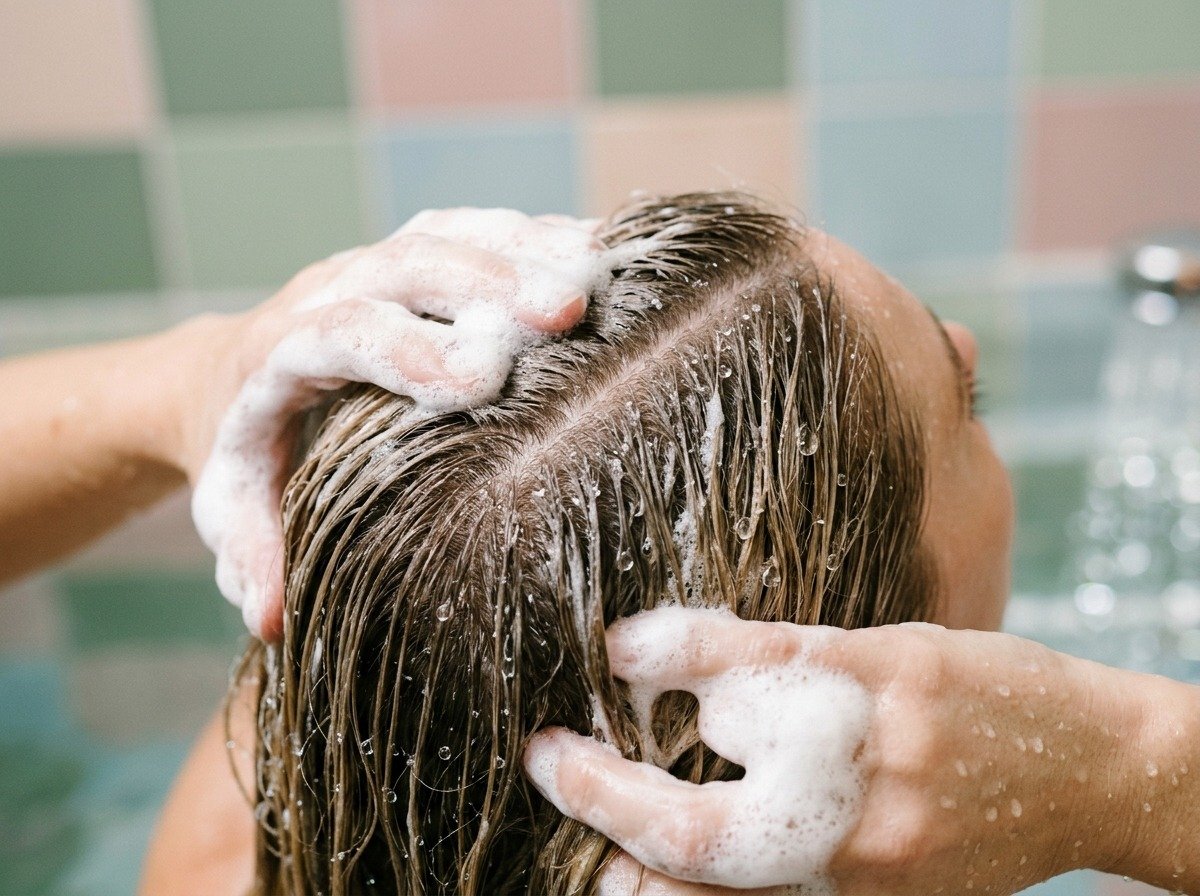
Healthy hair strands always begin with a clean and balanced scalp. Use your fingertips—not your nails—to gently massage your scalp in circular motions while applying shampoo. If your scalp tends to be oily, opt for a shampoo with a mild cleansing formula that effectively removes sebum without stripping the scalp’s natural moisture. Rinse with lukewarm or cool water to help seal the hair cuticle scales.
2. Apply Conditioner Only to the Hair Shaft and Ends
Conditioner works to re-coat the hair shaft, leaving it smooth and tangle-free after washing. However, avoid applying conditioner directly to the scalp, as its residue can clog follicle pores and lead to rapid root greasiness. Simply smooth the product from the mid-ear level down to the hair ends, leave it on for 2 to 3 minutes, then rinse thoroughly.
3. Use Natural Nourishing Masks with a Patch Test First
Once a week, you can provide additional nourishment using natural ingredients at home. However, as each individual’s scalp has varying sensitivity levels, always perform a patch test on the area behind your ear for 24 hours before applying any homemade concoctions to ensure no itching or redness occurs. Some generally effective combinations for enhancing hair softness include:
- Avocado and Honey Blend for Dry Hair: Mash a ripe avocado with one tablespoon of pure honey. Apply to the hair shaft for 20 minutes before shampooing to help lock in moisture.
- Aloe Vera Gel and Olive Oil for Scalp Soothing: Combine freshly washed aloe vera gel (ensure all latex is removed) with a few drops of olive oil to provide a cooling sensation to a dry scalp.
- Egg White Mask for Sebum Control: Whisk egg whites and apply a thin layer for 15 minutes before rinsing with cool water and a mild shampoo to help absorb excess oil.
Expert Note — Fatmawati Tahir: “When a client decides to transition to a shorter haircut to restore damaged hair, the key to success lies in the discipline of caring for the newly trimmed ends. Don’t wait until the ends become visibly split to use a hair vitamin or mask. Caring for the ends from the very first day of the cut will maintain the haircut’s neat fall until the next trimming appointment.”
4. Limit Heat Styling Tool Temperatures and Use Heat Protectants
Shorter haircuts sometimes require the assistance of a hairdryer or flat iron to achieve a flattering inward fall that frames the face. If you must use heated tools, set them to low to medium heat and always apply a heat protectant spray or serum to hair that is still damp (about 50% dry).
5. Perform Scalp Massages to Stimulate Follicular Circulation
Dedicate 3 to 5 minutes each night, or while applying hair tonic, to gently massage your scalp from the nape of your neck towards the crown of your head. This gentle mechanical stimulation helps improve microcirculation, delivering essential oxygen and nutrients to the hair roots.
6. Schedule Professional Hair Spa or Creambath Treatments at the Salon
Daily at-home care yields far more optimal results when supported by in-depth salon treatments every 3 to 4 weeks. Through professional hair spa or scalp treatment services, follicle-clogging impurities that are not removed by regular shampoo can be thoroughly cleansed, while simultaneously infusing keratin and vitamins tailored to your hair’s diagnosed texture.
Frequently Asked Questions (FAQ)
Why is gradual hair trimming more recommended for severely damaged hair?
Gradual hair trimming allows you to remove dry and split ends every 6 to 8 weeks without the extreme shock of losing all your hair length at once. This method also makes it easier for stylists to shape layers according to healthier new growth.
Does short hair still require conditioner after shampooing?
Yes, short hair still benefits from conditioner, especially on the ends, to prevent them from sticking out stiffly and to maintain softness. Use a lightweight conditioner sparingly, applying it only to the hair ends and avoiding the scalp.
Why should egg whites not be rinsed with warm water?
Warm water can cause the proteins in egg whites to coagulate and cook within the hair strands, making them extremely difficult to rinse out and potentially leaving a fishy odor. Always use cool water when rinsing out egg-based masks.
How many times a week should I shampoo if I live in a hot climate?
For individuals with oily scalps who sweat frequently outdoors, shampooing daily or every other day with a gentle, sulfate-free formula is generally safe. If your hair is dry, shampooing 2 to 3 times a week is usually sufficient.


Tinggalkan Balasan