The stinging itch of an irritated scalp, accompanied by white flakes cascading onto dark clothing, can significantly undermine social confidence. Many individuals resort to aggressive scratching, inadvertently creating open wounds and secondary epidermal infections.
Dandruff arises from the overproliferation of the lipophilic fungus *Malassezia globosa*, which metabolizes scalp oils into irritating oleic acid. Consequently, its management necessitates clinically proven antifungal agents, sebum regulation, and the protection of a pH-balanced scalp acid mantle.
Differentiating Between Dry and Oily Dandruff Characteristics
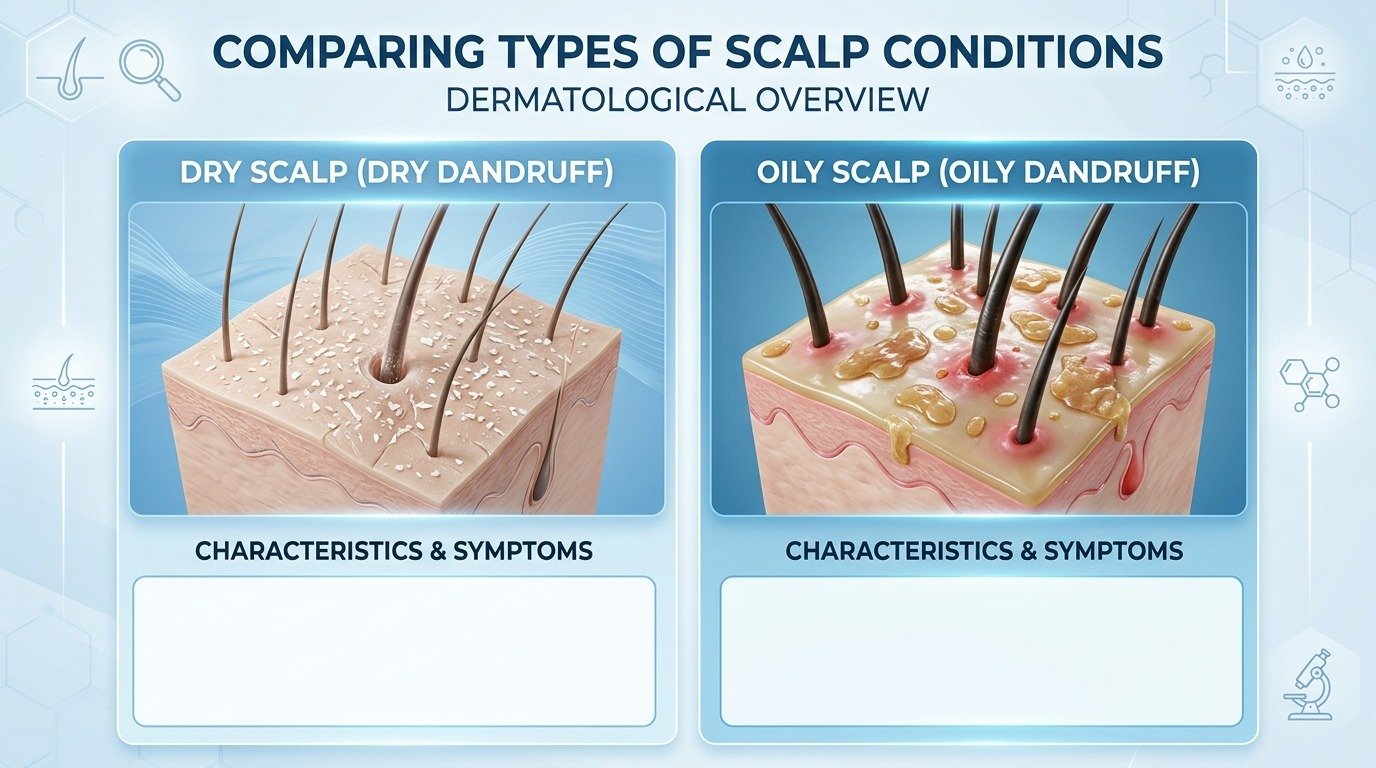
The initial step in addressing scalp concerns is accurately identifying the type of dandruff present. Dry dandruff typically manifests as small, fine white scales that easily detach and float when the hair is shaken, often triggered by scalp dehydration due to harsh cleansing agents in shampoos.
Conversely, oily dandruff, or seborrheic dermatitis, is characterized by larger, yellowish scales that adhere firmly to the hair roots due to excessive sebum production. In humid tropical climates, sebaceous glands are highly active, making oily dandruff a more prevalent complaint.
Ignoring oily dandruff can lead to intense itching and hair loss as follicles become obstructed by dense sebum plaques. Effective treatment demands products that can control fungal activity without stripping the scalp's natural moisture barrier.





Tinggalkan Balasan