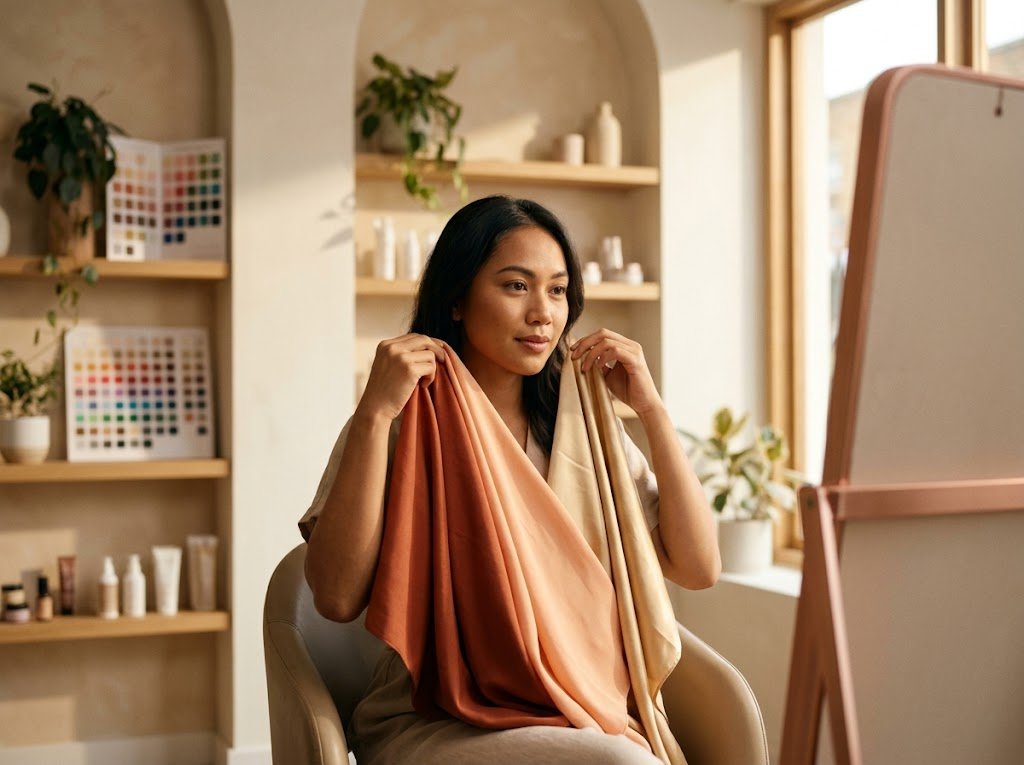
Have you ever purchased a lipstick, outfit, or tried a trending hair color, only to find your complexion appears pale, ashen, or fatigued when you wear it? This common pitfall of choosing the wrong cosmetic and fashion colors is frequently experienced by beginners who select shades based solely on surface skin tone, without understanding the underlying skin undertone (warm, cool, or neutral).
Determining your personal color is a method of matching your makeup, clothing, and hair color palette to your natural skin undertone (warm, cool, or neutral) and the contrast level of your facial features. By utilizing a harmonious color palette, your complexion will appear brighter, fresher, and free from dullness without the need for heavy makeup application.
Why Understanding Personal Color is Crucial for Beginners
According to personal color analyst, Rifdah Jihan Azizah, understanding personal color isn’t about limiting one’s style to fleeting trends, but rather about accentuating the inherent character each individual possesses. When the colors we wear around our face—from headscarves and necklines to hair color and lip tints—harmonize precisely with our skin’s pigments, shadows under the eyes and smile lines appear visually softened.
Conversely, colors that clash with your skin’s undertone can reflect dull shadows onto your face, making foundation look mismatched or lips appear washed out.
3 Simple Ways to Identify Your Skin Undertone at Home
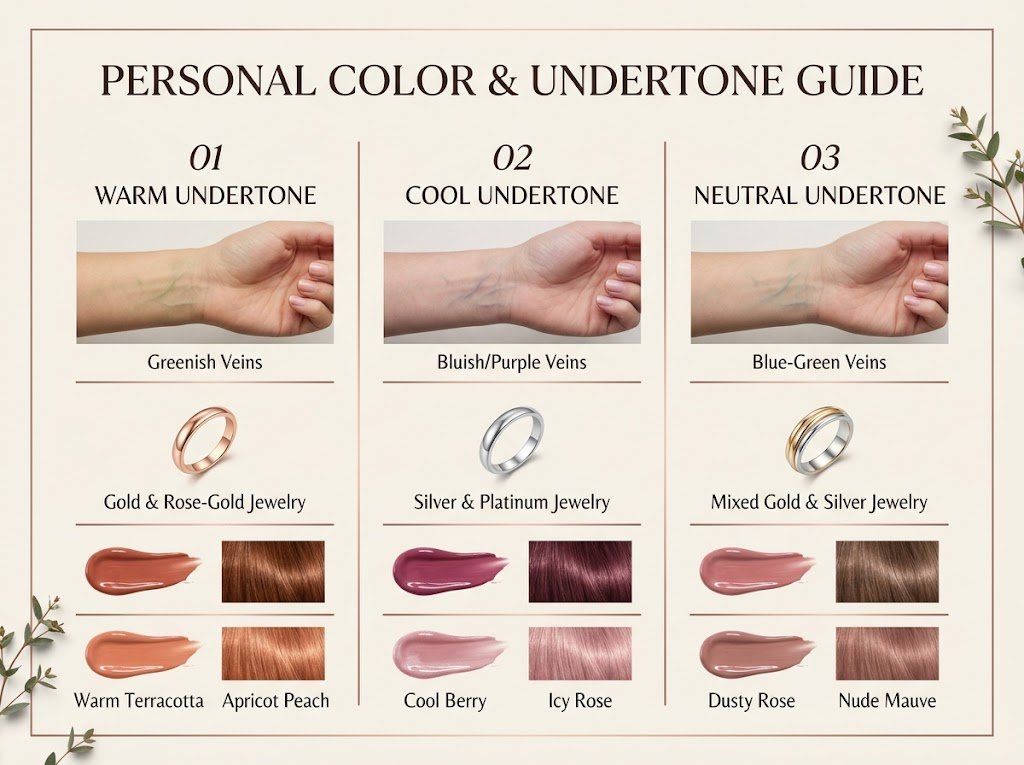
Unlike surface skin tone (such as fair, light olive, or deep tan), which can change with sun exposure, skin undertone is permanent. You can perform the following three basic tests under natural daylight (avoiding heavily yellow-toned indoor lighting):
1. Observe the Veins on Your Wrist?
Turn your palm over and examine the color of the veins on the inside of your wrist:
- Warm Undertone: Veins appear predominantly greenish or olive-toned.
- Cool Undertone: Veins look predominantly bluish or purplish.
- Neutral Undertone: Vein color appears to be a mix of green and blue, or is difficult to distinguish specifically.
2. The Gold and Silver Jewelry Test?
Place gold and silver jewelry or fabric swatches alternately near the back of your hand or under your chin. If your skin appears brighter and more even when juxtaposed with gold or rose-gold tones, you likely have a warm undertone. If silver makes your skin look clearer and fresher, you likely fall into the cool undertone category.
3. Your Skin’s Response to a Clean White Paper?
Hold a clean white sheet of paper next to your bare face in front of a mirror. If your complexion appears to reflect yellowish or golden undertones compared to the white paper, your skin undertone is warm. If your face reflects pinkish (rosy) or bluish undertones, your skin undertone is cool.
Recommended Color Palettes Based on Skin Undertone
Once you’ve identified your dominant undertone, you can use it as a guide when shopping for cosmetics or choosing hair colors at the salon:
1. Palette for Those with Warm Undertones
Skin with warm undertones looks exceptionally vibrant and radiant when paired with earthy and sun-kissed colors. For clothing and makeup, opt for shades like terracotta, peach, coral, warm orange, olive green, ivory cream, and caramel brown. For hair coloring, shades such as copper brown, golden brown, chestnut, and warm mocha will blend seamlessly.
2. Palette for Those with Cool Undertones
Skin with cool undertones appears clean and striking when paired with blue and purple-based color spectrums. Choose colors like cool pink, berry, ruby red, lavender, navy blue, emerald green, and crisp white. For hair colors, shades of ash brown, blue black, burgundy, or chocolate mauve will help brighten the complexion.
Color Flexibility: Adjusting Saturation and Value
Having a warm undertone doesn’t mean you must avoid pinks, just as those with cool undertones can still wear yellows. As emphasized by Rifdah Jihan Azizah, personal color analysis isn’t about rigidly categorizing color choices, but rather about helping us identify the most flattering saturation (intensity) and value (lightness-darkness).
For instance, individuals with warm undertones can still look harmonious in pink by choosing variations like salmon pink or peachy pink, which have a subtle warm undertone blend. Meanwhile, those with cool undertones who wish to wear yellow can opt for a bright lemon yellow or a cool pastel icy yellow.
Expert Note — Fatmawati Tahir: “At the salon, understanding personal color is immensely helpful when formulating hair color for clients. Two individuals with the same deep tan skin tone might require different toner color mixes: a deep tan with a warm undertone will look radiant with a touch of caramel brown, whereas a deep tan with a neutral-cool undertone will appear brighter with a dark ash brown. Always remember to perform a patch test 48 hours prior to any hair coloring service.”
Frequently Asked Questions (FAQ)
What is the difference between skin tone and skin undertone?
Skin tone is the visible surface color of the skin (e.g., fair, light olive, or deep tan) that can darken with sun exposure. Undertone, on the other hand, is the underlying hue beneath the skin’s surface (warm, cool, or neutral) which is permanent from birth.
Does deep tan skin always have a warm undertone?
Not necessarily. While the majority of individuals with deep tan skin in Indonesia have warm or neutral undertones, a significant number also possess cool or olive undertones. This is why some individuals with deep tan skin appear brighter when wearing plum or berry lipstick compared to orange shades.
What preparation is needed before a personal color analysis session?
If you wish to have your colors accurately assessed, ensure your face is clean and free of any base makeup (foundation, powder, or lipstick), remove colored contact lenses (soft lenses), and conduct the observation in a room with neutral daylight illumination.
What if I still want to wear clothing in colors outside my personal color palette?
You can still wear them by positioning those colors as bottoms (skirts or trousers), accessories like bags, or footwear, so they don’t reflect directly onto your chin and cheek areas. If the color is an item of clothing, you can balance it by wearing a headscarf, scarf, or lipstick that complements your skin’s undertone.


Tinggalkan Balasan