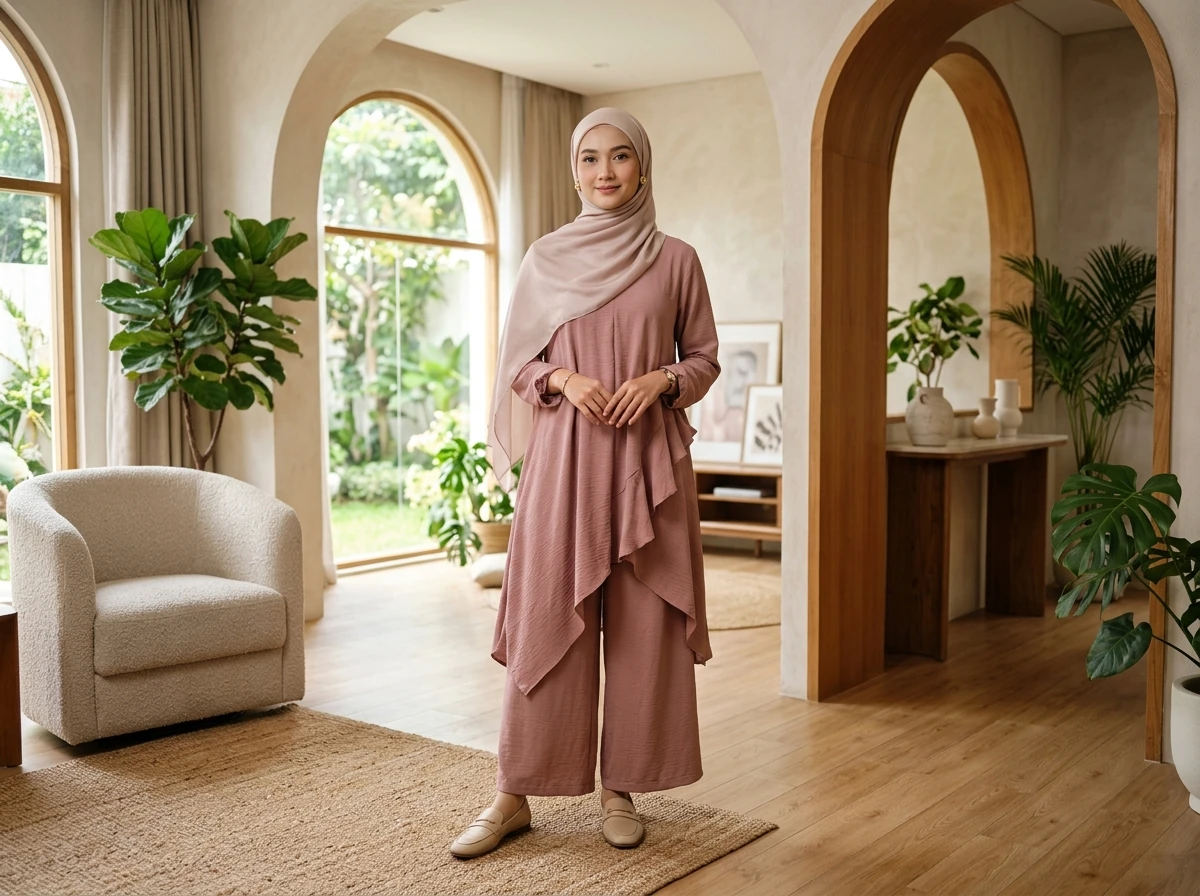
Determining the right ensemble for modest wear that remains fashionable without compromising freedom of movement is often a challenge leading up to festive celebrations. Packed schedules of social gatherings necessitate the selection of attire that is modest, practical, and can withstand the warm temperatures of crowded indoor spaces.
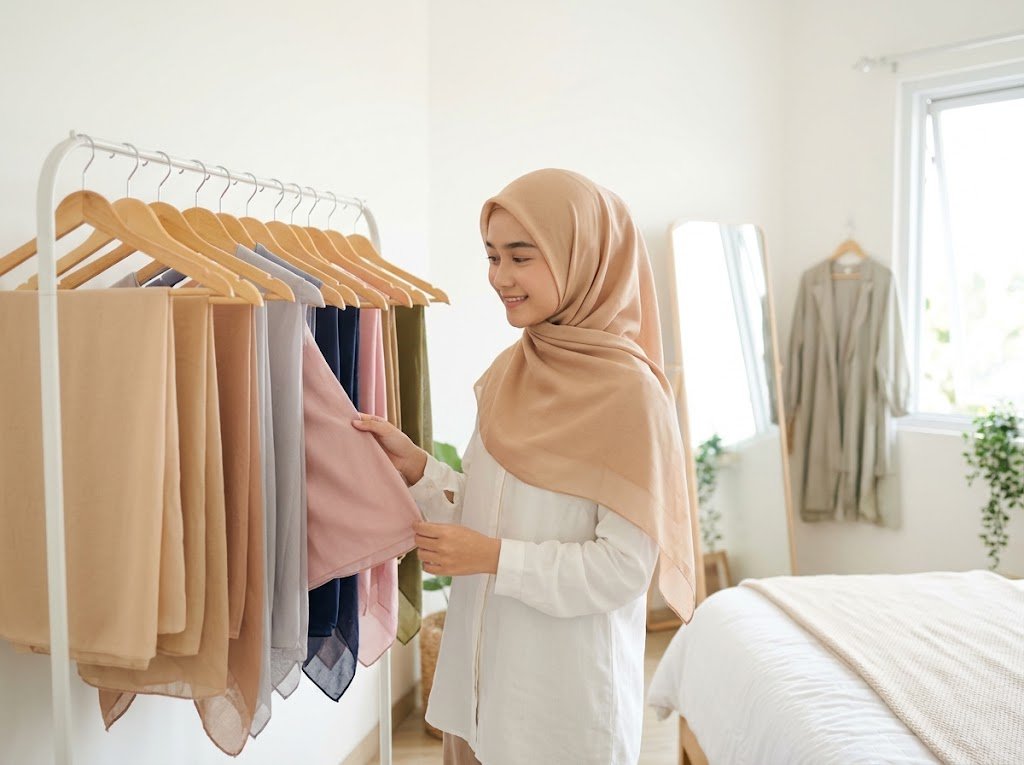
- 4.1 What is the most recommended fabric for a square hijab to ensure it stands neatly on the forehead?
- 4.2 How should I coordinate hijab colors when wearing a busy floral-patterned outfit?
- 4.3 Are culottes suitable for petite women?
- 4.4 Which hijab fabric stands best on the forehead and resists creasing during social visits?
The concept of modest wear offers stylistic latitude through the choice of loose-fitting silhouettes, the versatility of tunic-and-culotte sets, and the prioritization of cool cellulose fiber fabrics that maintain physical freshness throughout the day.
Understanding the Inclusive Philosophy and Flexibility of Modest Fashion
The modest fashion movement has evolved into a universal style language embracing principles of simplicity and elegance, unbound by specific belief systems. This approach focuses on exploring garment cuts that are loose, opaque, and proportionately cover the body’s contours.
In Indonesia, modest wear style inspiration is incredibly rich, thanks to the creativity of fashion designers and female public figures. Options like Zaskia Sungkar’s minimalist, straight-cut abayas or Shireen Sungkar’s relaxed tunic sets with wide-leg culottes demonstrate that covered attire can be exceptionally modern.
The primary strength of modest wear lies in its versatility for various settings. Well-designed garments can be worn for morning festive prayers, large family gatherings, and even formal events beyond religious celebrations.
Silhouette Characteristics Inspired by Indonesian Muslim Women
For those who favor an elegant, feminine aesthetic, A-line dress silhouettes with subtle embroidery accents, akin to Laudya Cynthia Bella’s style, create an illusion of a taller physique without restricting movement. This cut pairs perfectly with a long pashmina hijab draped softly over the shoulders.
For women seeking a strong statement, exploring long, geometrically patterned outerwear layered over plain, solid-colored innerwear, as seen in Dewi Sandra’s style, conveys a sophisticated and authoritative presence. The key is maintaining balance to avoid an overly busy ensemble.
Meanwhile, for teenagers and young women, a pairing of soft pastel asymmetrical tunics with cotton palazzo pants, reminiscent of Lesty Kejora’s style, offers a fresh and understated look. Inspiration for selecting complementary textiles can be found in guides on choosing comfortable modest wear fabrics for special occasions and family gatherings.
| Style Inspiration | Silhouette Cut Characteristics | Versatility for Various Occasions |
|---|---|---|
| Modern Syar’i Abaya | Straight cut without waist gathers | Provides full body coverage and is highly elegant for formal events |
| Tunic and Culotte Set | Thigh-length top with wide-leg trousers | Facilitates active movement when visiting multiple locations |
| Embroidered A-Line Dress | Gently flares from the bust to the hem | Offers waist comfort and a proportional appearance |
| Plain Drape Outerwear | Long cardigan with a fluid fabric structure | Flexible as an outer layer for various basic outfits |
Tips for Maintaining Physical Comfort and Freshness for Hijabis
Wearing layered modest attire in warm weather demands the selection of inner lining (furing) made from breathable cotton hero or fine rayon that effectively wicks away perspiration. Avoid synthetic nylon linings, which trap body heat and can trigger itching on the back.
Utilize a cotton-bamboo knit underscarf (ciput) with good air circulation to prevent hair from feeling damp and musty during prolonged hijab wear. A light spritz of a soft floral body mist on inner garments can provide long-lasting freshness.
Before donning your hijab, ensure your hair is completely dry after washing to prevent moisture from being trapped against the scalp. Hair tied up while damp beneath an underscarf is a primary cause of unpleasant odors and follicular shedding.
Opt for hijab underscarves made from bamboo fiber or porous cotton spandex that do not press too tightly against the ears. True elegance shines when you feel free from heat discomfort and headaches.
Fatmawati Tahir — Practitioner & Beauty Editor, Salwa Salon: The beauty of modest wear stems from the harmony between outward modesty and the freedom of breath your body experiences. The right attire will allow you to enjoy every moment of social connection with a calm and open heart.
Frequently Asked Questions (FAQ)
What is the most recommended fabric for a square hijab to ensure it stands neatly on the forehead?
Pure cotton paris and ultrafine voal are the best choices due to their appropriate weave density, ease of shaping for a neat stand, and cool air circulation.
How should I coordinate hijab colors when wearing a busy floral-patterned outfit?
Select one of the softest colors or the background color present in the outfit’s pattern for a plain hijab. This creates a serene visual harmony.
Are culottes suitable for petite women?
Yes, opt for high-waisted culottes that fall just above the ankle, paired with a well-fitted tunic top.
Which hijab fabric stands best on the forehead and resists creasing during social visits?
Ultrafine voal and polycotton are excellent choices. They possess suitable fiber density, are lightweight, easily shaped to stand on the forehead, and resist creasing even with frequent movement.
[/CONTENT]


Tinggalkan Balasan