Within the social and cultural landscape of Indonesia, the headscarf worn by Muslim women boasts a long history rich with philosophical meaning, identity struggles, and remarkable aesthetic transformations. The terms jilbab, hijab, kerudung, and kudung have undergone linguistic and sociological shifts in meaning over time.
From initially being perceived as religious attire confined to pesantren (Islamic boarding schools) and da’wah (Islamic propagation) circles, modest fashion has now evolved into a dynamic, inclusive mainstream fashion phenomenon, positioning Indonesia as a global modest fashion capital.
Evolution of Terminology: Kerudung, Jilbab, and Hijab
Etymologically and historically in the Nusantara archipelago, the term “kerudung” initially referred to a thin fabric scarf or transparent lace loosely draped over the heads of Malay and Javanese women, with the neck and a portion of the front hair still visible (akin to the style worn by female national heroes like Nyai Ahmad Dahlan or Fatmawati Soekarno).
During the 1980s and 1990s, the term “jilbab” gained popularity to describe loose-fitting, full-body garments that closely adhered to fiqh (Islamic jurisprudence) principles, covering the entire body except for the face and palms. As we entered the new millennium, from the 2000s to the present, the Arabic loanword “hijab” is more frequently used by urban youth to denote stylish, creative, and harmoniously integrated modest fashion that aligns with global trends.
Phases of Modest Fashion Transformation in Indonesia
1. Era of Identity Struggle (1980s to Early 1990s)
During this period, wearing a tightly fastened jilbab in public spaces and formal educational institutions faced administrative challenges and social prejudice. Muslim women who chose to wear the jilbab in this era were driven by strong ideological and spiritual commitment, with a very simple style: a plain white triangular hijab secured with a pin under the chin.
2. Era of Community Explosion and Creativity (2000s to 2010s)
The emergence of various young Muslim women’s communities, local modest fashion designers, and the proliferation of fashion magazines and blogs sparked a new creative explosion in hijab styling. Experiments with ceruty pashminas, layered color-blocking techniques, and the fusion of modest attire with contemporary aesthetics began to appear, proving that covering one’s ‘aurat’ (parts of the body that must be concealed) could still be fashionable and sophisticated.
3. Era of Minimalism and Global Modest Fashion (2020s to Present)
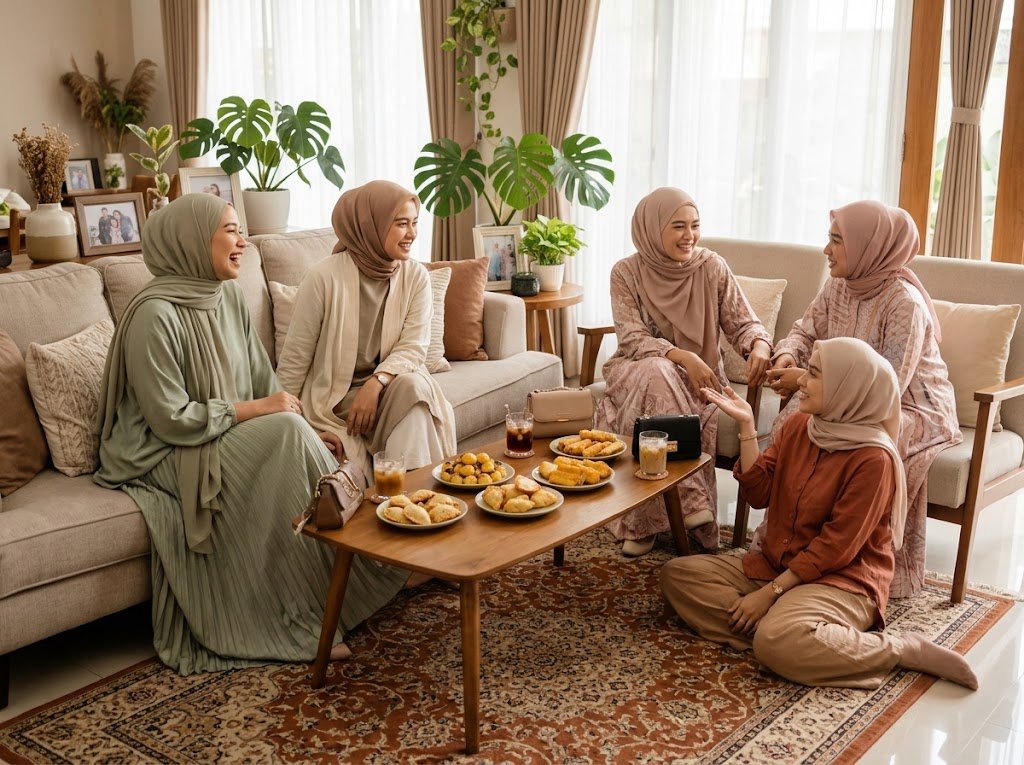
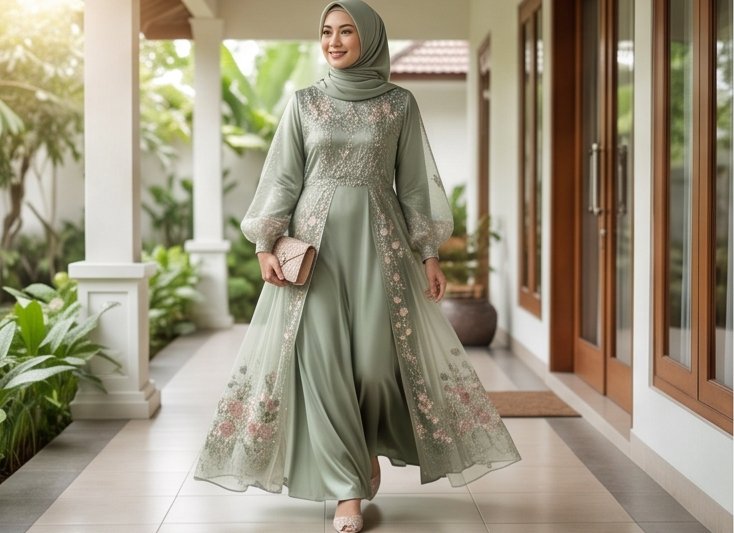
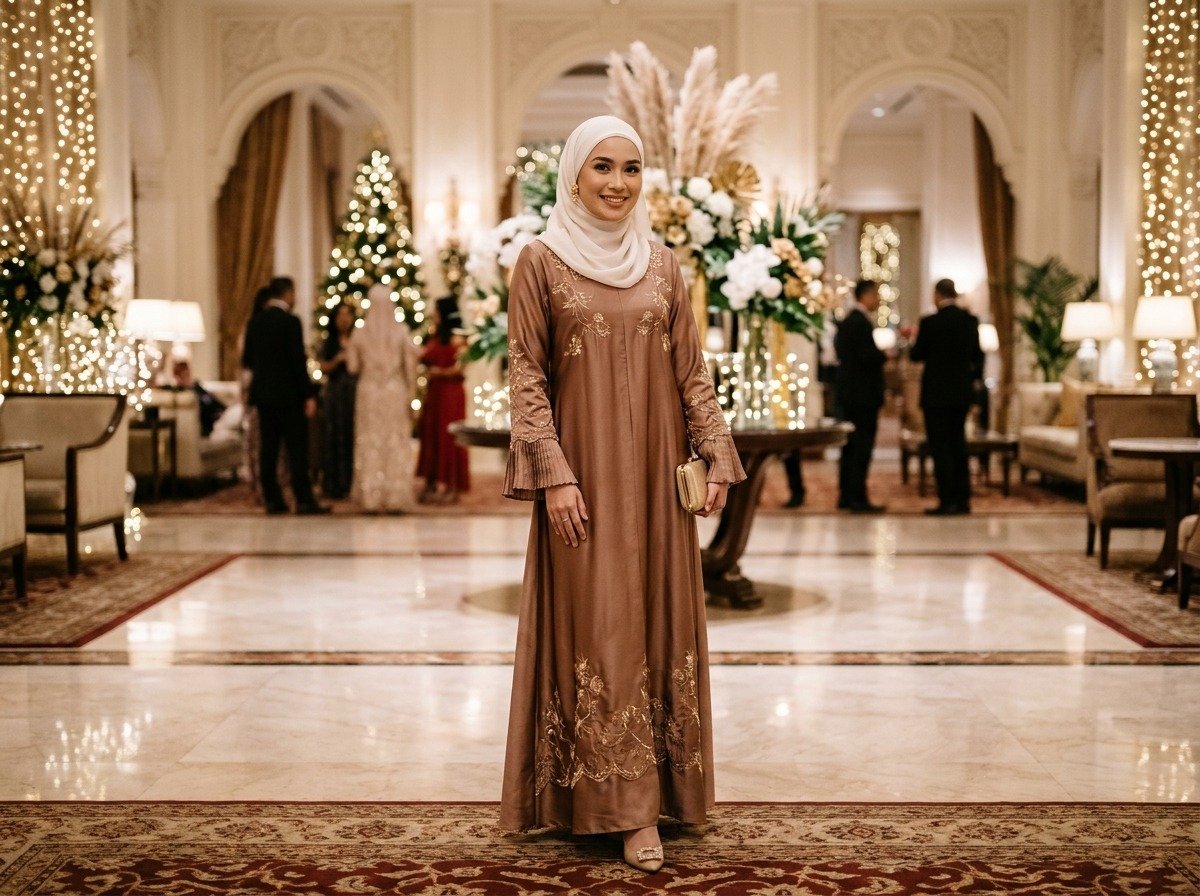
Current hijab trends are moving towards aesthetic maturity: a neat, minimalist “clean look,” the use of premium, eco-friendly fiber materials (ultrafine voal, soft Paris cotton, Tencel), and a serene palette of earth tones. The hijab is no longer just an alternative garment but a massive creative industry worth trillions of rupiah, confidently showcasing itself on international fashion stages like London, New York, and Paris Fashion Week.
Maintaining the Essence of Modesty Amidst the Glamour of Fashion Trends:
The development of the modest fashion industry is a blessing to be grateful for, making it easier for Muslim women to find beautiful and comfortable attire. However, amidst the strong currents of commercial trends, it is crucial for every woman to preserve the fundamental intention and inner essence of modest dressing. The hijab is not meant for displaying luxury or fostering arrogance, but rather as an attire of piety that soothes the soul, upholds simplicity in character, and provides a sense of secure dignity. — Salwa Salon Editorial
The Strength of Indonesian Modest Fashion on the Global Stage
Key factors contributing to the international success of Indonesian modest fashion:
- Richness of Nusantara Textiles: The unique fusion of modest silhouettes with traditional fabrics like batik cap, Bugis-Makassar silk ikat, and songket lends a luxurious and sophisticated cultural identity.
- Climate-Adaptive Material Innovation: Local designers possess a deep understanding of the need for cool, breathable, and sweat-absorbent fabrics, resulting in highly functional modest wear for daily activities.
- Robust Female Entrepreneurship Ecosystem: Thousands of local hijab brands are founded and led by empowered women, creating extensive employment opportunities for artisans and seamstresses across the nation.
Frequently Asked Questions (FAQ)
What is the fundamental difference between jilbab and hijab in fiqh definitions?
In fiqh terminology, ‘jilbab’ refers to a loose outer garment (milhafah) that covers everyday clothing, while ‘khimar’ is a head covering that extends to the chest. The term ‘hijab’ broadly encompasses the concept of covering and overall modest etiquette.
Is the classic square hijab style still popular in the modern era?
It is highly sought after. In fact, premium voal square hijabs are currently the most popular hijab format for professional women due to their neatness and ability to hold shape at the forehead.
How can modest attire be paired with formal wear for the workplace?
Combine a loose-fitting blazer with a crisp collared cotton shirt and a plain hijab in neutral tones (black, mocha, navy) to create an elegant and authoritative professional image.
Why have earth tones dominated hijab trends in recent years?
Nature-inspired colors like sage, cream, terracotta, and taupe exude a calming psychological effect, are easy to mix and match, and complement warm Asian skin tones beautifully.
Conclusion
The extensive evolution of jilbab and hijab fashion in Indonesia reflects cultural maturity, blending adherence to spiritual values with the dynamics of modern creativity. By understanding its history and preserving its essence of modesty, every Muslim woman can dress with pride, grace, and inner peace for all time.