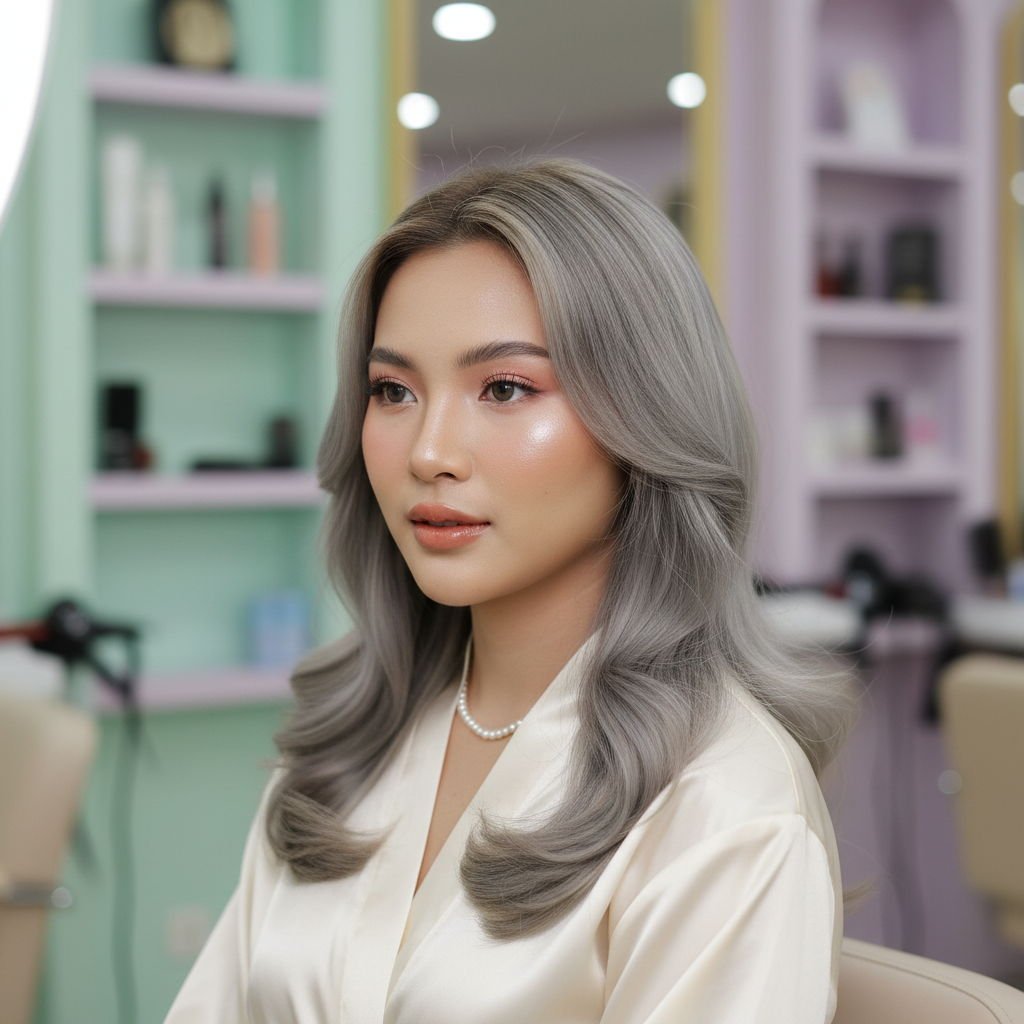
Hello, Salwa Besties! Transforming natural dark hair to a captivating light shade—like platinum blonde, silver ash, rose gold, or vibrant pastel palettes—is always a bold decision that brings a fresh energy to your look. Lightened hair colors provide a striking contrast to facial features, exuding a fashionable, star-like aura and making you the center of attention in any setting.
However, behind this visual beauty lies the chemical decolorization or bleaching process, which repeatedly lifts melanin pigment from the deepest cortical layers. This alkaline chemical reaction not only strips the hair of its original color but also depletes the strands’ natural protective lipid layer. Without a disciplined and structured care commitment, lightened hair is highly susceptible to becoming stiff like straw, brittle, losing its elasticity, and even experiencing mid-shaft breakage. Let’s delve into a comprehensive care protocol to maintain the softness, strength, and luxurious shine of lightened hair!
Structural Degradation of Hair Strands Due to Decolorization
1. Cuticle Thinning and Extreme Porosity?
Normal hair cuticles are composed of tightly layered keratin scales, coated by an 18-MEA fatty acid lipid film. Alkaline bleaching agents forcibly open these scales to allow hydrogen peroxide to oxidize melanin in the cortex. Consequently, the hair becomes extremely porous: it rapidly absorbs water but its moisture evaporates within minutes, leaving strands brittle and tangled.
2. Disulfide Bond Breakage and Loss of Keratin Strength?
The intrinsic strength of hair fibers is supported by disulfide covalent bonds that link keratin protein chains. The oxidation from bleaching breaks these bonds into cysteic acid. Hair strands that lose their structural support lose their natural elasticity: they stretch like rubber when wet and break easily when pulled or combed.
3. Pigment Oxidation and the Appearance of Brassiness?
Sunlight’s ultraviolet rays, swimming pool chlorine exposure, and the calcium and iron minerals in tap water accelerate the oxidation of cool-toned pigments. Luxurious blonde shades will gradually fade, revealing underlying warm, yellowish, or dull copper undertones.
Essential Care Protocol for Lightened Hair
1. Use Purple Shampoo Proportionally
Purple shampoo works by neutralizing unwanted yellow tones based on complementary color theory. Apply purple shampoo once a week or once every two weeks. Avoid washing your hair with purple shampoo daily, as its pigmented formula can build up, leaving hair feeling dry and rough, and depositing a dull grayish cast.
2. Switch to Color-Safe Sulfate-Free Shampoo
For regular daily washing, it’s imperative to use a pH-balanced shampoo (pH 4.5–5.5) that is free from harsh sulfate detergents (SLS/SLES). Gentle amino acid-based surfactants cleanse the scalp without stripping toner pigments and natural lipids from the hair shaft.
3. Bond-Builder Hair Treatment
Regular conditioner only smooths the hair’s outer layer. To repair a compromised cortex, use a hair mask based on bond-building complexes once a week before shampooing to reconnect broken disulfide bonds.
4. Lock in Moisture with Leave-In Conditioner and Pure Hair Oil
After shampooing, always spritz a leave-in conditioner onto damp hair, then seal with 2–3 drops of pure argan oil or marula oil on the ends to create an artificial moisture barrier.
Restoring Covalent Bonds and Lipid Balance in Bleached Hair:
“Hair that has been bleached to level 9 or 10 experiences severe cuticle damage and loses its water-protective 18-MEA layer, making it hyper-hygroscopic yet unable to retain internal moisture. Relying on regular hair oils without disulfide bond repair only provides a temporary illusion of smoothness on the surface. At Salwa Salon, our decolorized hair rescue protocol combines plex bond-repairing treatments, low-molecular-weight biomimetic amino acids, and cold nano-mist therapy to reseal the cuticle scales and restore the hair’s natural elasticity.” — Fatmawati Tahir
Safe Styling Guide for Breakage-Free Bleached Hair
- Limit Styling Tool Temperatures to 150°C (300°F) Maximum: Bleached hair strands have very low heat tolerance. Set your flat iron or curling iron temperature to a maximum of 150°C and always apply a heat protectant spray.
- Dry Hair with a Microfiber Towel: Avoid roughly rubbing wet hair with a thick cotton towel. Gently pat your hair dry with a microfiber cloth.
- Use a Wide-Tooth Comb: Always comb hair starting from the bottom ends first, then slowly work your way up to the roots to detangle without pulling on the hair follicles.
- Schedule Regular Root Touch-Ups: Get your root retouch done at the salon every 4 to 6 weeks before the regrowth becomes too long.
Frequently Asked Questions About Lightened Hair Care (FAQ)
How many times a week is it ideal to wash bleached light hair?
The ideal frequency is 2 to 3 times a week. Washing too often with tap water accelerates the fading of toner pigments and strips away the natural lipids that maintain hair strand softness.
Is bleached hair safe for smoothing or rebonding treatments?
Absolutely not! Applying high-alkaline chemical straightening agents to heavily bleached hair risks triggering total damage, such as burnt or massively broken hair (chemical haircut).
Why does my hair feel stretchy and rubbery when wet after shampooing?
This condition indicates severe structural damage (loss of natural elasticity due to broken keratin bonds). Discontinue the use of all heat styling tools and immediately seek intensive keratin restoration treatments at a salon.

Tinggalkan Balasan