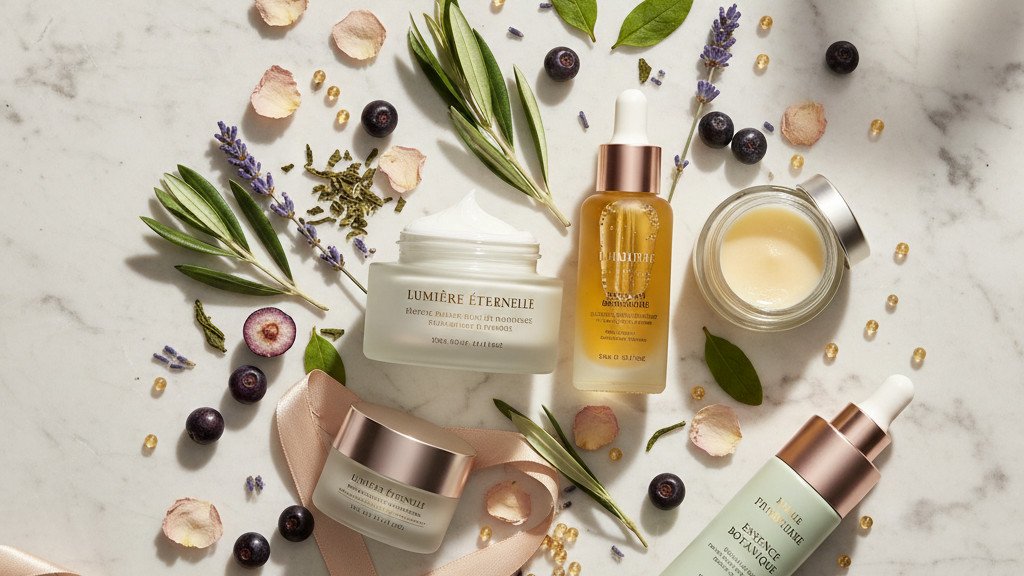
Hello, Salwa Besties! As we enter our 30s, our skin’s biological dynamics undergo noticeable changes. While in our early twenties, skin could recover from fatigue with just a good night’s sleep, intrinsic aging signs begin to manifest. Nasolabial folds appear more pronounced, fine lines start to frame the outer corners of the eyes, cheek elasticity gradually slackens, and our complexion can easily become dull, even with regular cleansing.
This occurs because the natural collagen and elastin factories within the dermal layer begin to decrease their production capacity by approximately 1% annually after age 25. Furthermore, daily ultraviolet radiation exposure, urban particulate pollution, and oxidative stress accelerate the depletion of the skin’s natural hyaluronic acid reserves. The good news is that premature aging can be significantly slowed by opting for anti-aging cream formulations with science-backed active ingredients. Let’s delve into a comprehensive guide to selecting the best anti-aging cream to keep your skin supple, firm, and radiating youthful vitality!
Gold Standard Active Ingredients in Anti-Aging Creams
1. Encapsulated Retinoids and Retinol (Vitamin A Derivatives)
Retinol remains the number one active ingredient most validated by dermatological research worldwide. Retinol works at a cellular level by accelerating basal cell turnover in the epidermis, inhibiting collagenase enzymes that degrade collagen fibers, and stimulating fibroblasts to produce new Type I collagen matrices. Opt for encapsulated retinol formulas that release the active ingredient slowly to minimize the risk of irritation, redness, or peeling.
2. Biomimetic Peptides
Peptides are short chains of amino acids that act as chemical signal carriers between cells. When applied to the skin, peptides trick skin cells into believing that collagen fibers are undergoing damage, prompting them to automatically produce more collagen and elastin proteins. Ingredients like copper peptide, palmitoyl pentapeptide, or Matrixyl are highly compatible with sensitive skin, offering firming benefits without causing stinging sensations.
3. Multi-Molecular Hyaluronic Acid
Premature aging is invariably preceded by a decline in hydration within the extracellular matrix. Modern anti-aging creams combine hyaluronic acid molecules of varying molecular weights: large molecules protect the skin’s outer surface from transepidermal water loss, while micro-molecules penetrate the dermal layers to fill intercellular spaces, providing an immediate plumping effect for dense, supple skin.
4. Synergistic Antioxidants (Vitamin C, Niacinamide, and Coenzyme Q10)
A potent combination of antioxidants acts as a shield, neutralizing free radicals that break down skin’s elastin fibers. Niacinamide (Vitamin B3) at a 3-5% concentration is proven effective in strengthening natural ceramide synthesis while also diminishing age spots. Coenzyme Q10 supports the skin cells’ mitochondrial energy metabolism.
Degradation of Type I Collagen and Biomimetic Peptide Formulations:
“Entering our thirties, dermal fibroblasts experience a decline in collagen synthesis efficiency by up to 1% annually, exacerbated by matrix metalloproteinase (MMP) enzymes due to UV radiation. Relying solely on occlusive moisturizers is insufficient to penetrate the dermal-epidermal junction. Our clinical solution involves combining encapsulated retinol with copper biomimetic peptides and professional salon radiofrequency treatments to stimulate neocollagenesis without compromising the stratum corneum barrier.” — Fatmawati Tahir
Application Guide for Irritation-Free Anti-Aging Cream Use
1. Implement the Gradual Retinization Principle (Adaptation Method)
Do not immediately apply potent active ingredient retinol creams nightly if you are a first-time user. Begin with a frequency of twice a week for the first two weeks. If your skin shows no signs of redness or itching, gradually increase the frequency to every other night, until your skin becomes accustomed to nightly application.
2. Utilize the Sandwich Moisturizer Technique for Sensitive Skin
For those with sensitive or dry skin, apply a thin layer of a ceramide-based moisturizer first, wait for two minutes, then apply a pea-sized amount of the anti-aging retinol cream, followed by a final layer of a calming moisturizer. This method prevents irritation while preserving the active ingredients’ bioavailability.
3. Extend Application to the Neck and Décolletage Area
Neck skin has a significantly thinner dermis and fewer oil glands compared to facial skin, making it prone to horizontal lines (tech-neck). Always extend any remaining anti-aging cream from the lower jawline upwards onto the neck using gentle upward strokes.
4. Mandatory Daily Sunscreen Application Every Morning
Anti-aging active ingredients accelerate the shedding of dead skin cells, leaving the newly formed, younger skin cells more susceptible to UV radiation. Never go outdoors without broad-spectrum sunscreen protection of at least SPF 30 PA+++.
Frequently Asked Questions About Anti-Aging Creams for Ages 30+ (FAQ)
Is it safe to use retinol-based anti-aging creams daily?
It is very safe, provided your skin has undergone proper adaptation (retinization), the concentration is appropriate (0.1%–0.3% for beginners), and it is always accompanied by robust moisturizing hydration. Use only at night, as retinol molecules are easily degraded by sunlight.
How long does it take for fine lines to visibly diminish?
The cell turnover cycle in your 30s takes approximately 35 to 40 days. Improvements in skin suppleness and hydration are typically felt within the first 4 weeks, while the fading of fine lines and improvement in collagen density require disciplined use for 8 to 12 weeks.
Do individuals with oily and acne-prone skin still need to use anti-aging creams?
Yes, it is still highly recommended! Choose anti-aging creams with a gel or water-based emulsion texture that are non-comedogenic. Retinol actually offers dual benefits for oily skin by normalizing pore desquamation, thus preventing blackheads while simultaneously firming the skin.


Tinggalkan Balasan