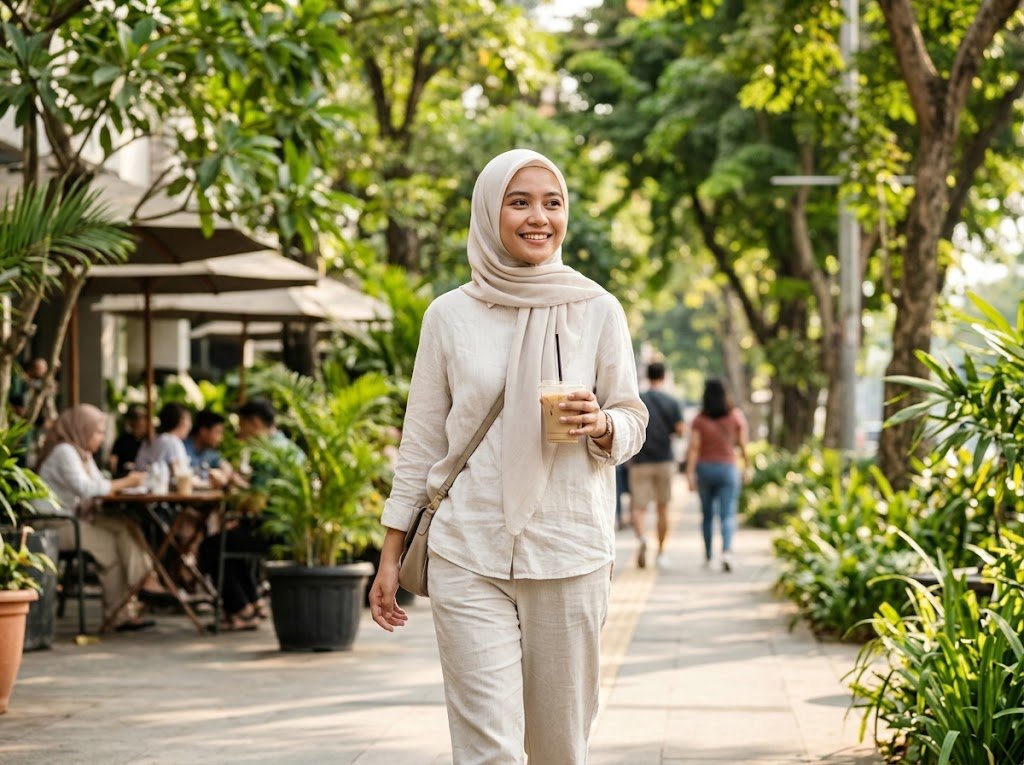
Hello, Salwa Besties! Wearing a hijab during daily activities in tropical climates often presents unique challenges, from feeling overheated and experiencing limp hair to a scalp prone to itching. The key to maintaining elegance, confidence, and all-day comfort under your hijab lies in selecting the right fabric and implementing proper scalp care.
Modest wear should not only be aesthetically pleasing but also promote optimal airflow for your crowning glory. Let’s dive into a guide for choosing cool, skin-friendly hijabs for your daily routine!
Characteristics of the Best Hijab Fabrics for Tropical Climates
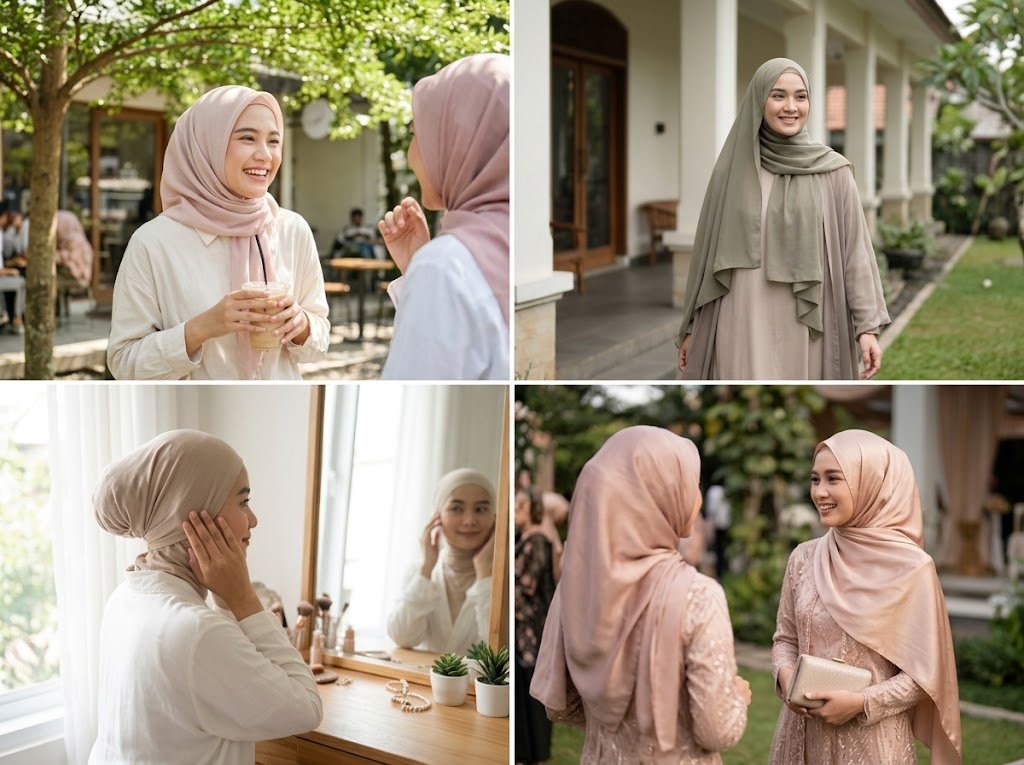
1. Breathable Ultrafine Voile Cotton
Voile cotton fabric features natural fiber pores that allow for seamless air circulation. Its texture is lightweight, soft, resists creasing, and drapes beautifully to create a structured look around the forehead.
2. Flowy Ceruti Babydoll for Elegant Draping
Ceruti fabric, with its fine, sandy texture, offers a captivating, flowy silhouette. It feels cool against the skin and is exceptionally elegant for formal gatherings.
3. Rayon and Stretchy Jersey for Hijab Liners
The inner hijab, or ciput, is the layer in direct contact with your scalp. It’s crucial to opt for ciput made from bamboo rayon jersey, which boasts high sweat absorption and avoids excessive pressure on the ears.
4. Silk Blends for a Luxurious Finish
For Besties attending special events, silk blend fabrics provide an elegant, luxurious sheen without causing head heaviness or heat.
Characteristics of Naturally Porous Inner Hijabs for Scalp Moisture Balance:
“All-day hijab comfort in tropical weather is truly dictated by the first layer in contact with the scalp – the inner hijab or ciput. Avoid synthetic nylon spandex inner materials that trap heat and repel sweat absorption, as trapped perspiration can trigger follicular inflammation and seborrheic dermatitis. Opt for inner hijabs crafted from organic bamboo rayon fibers or pure combed cotton, which possess micro-circulation pores. These natural fibers rapidly absorb sweat moisture and release it, keeping the scalp cool and preventing hair root shedding.” — Fatmawati Tahir
Tips for Maintaining Healthy Hair Under Your Hijab
Ensure your hair is completely dry before wearing your inner hijab and outer hijab. Tying hair while damp beneath fabric is a primary cause of musty odors, hair root shedding, and fungal dandruff.
Frequently Asked Questions About Daily Hijab Comfort (FAQ)
What hijab fabric is least prone to creasing when traveling?
Crinkle airflow and ceruti babydoll fabrics are excellent choices due to their naturally textured, subtly wrinkled finish that requires minimal ironing.
How can I care for my hijab-wearing hair to prevent excessive shedding?
Avoid tying your hair too tightly with rubber bands. Use loose satin scrunchies to reduce tension on the hair roots.
How often should inner hijabs or ciput be replaced?
It is recommended to replace your ciput daily or at a maximum of every two days to maintain scalp hygiene and prevent the buildup of sweat and oil.


Tinggalkan Balasan