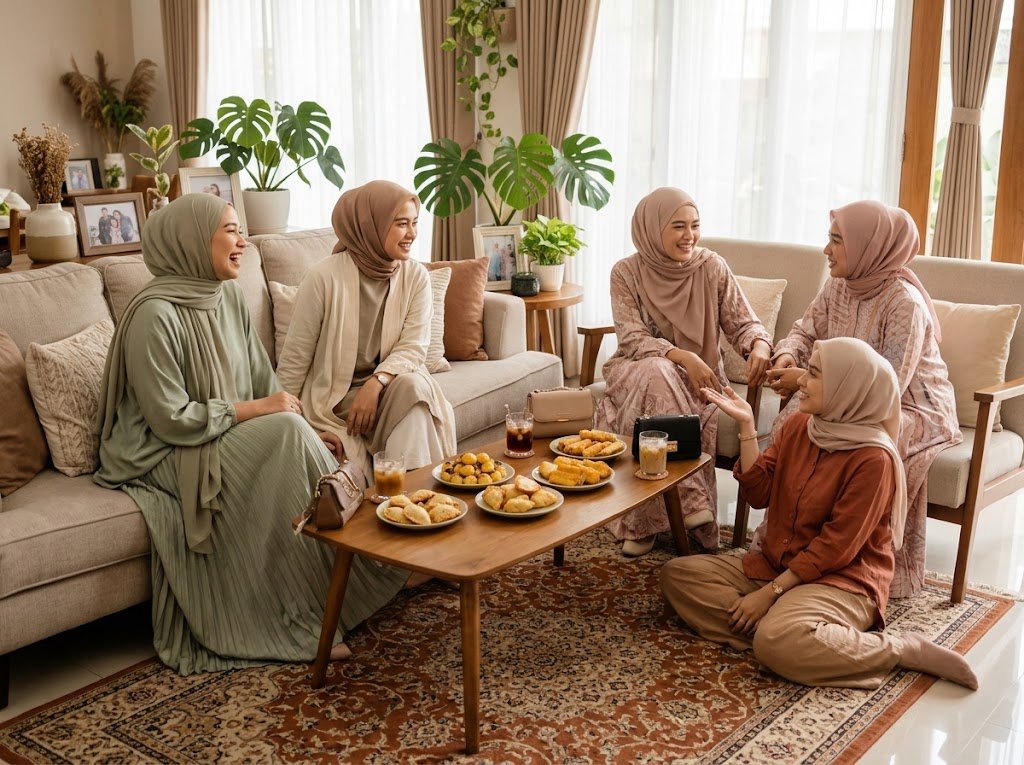
In the fabric of religious and societal life, private spaces hold a sacred status that must be respected by every civilized individual. For a Muslimah, dedicated women’s worship spaces—such as prayer rows behind mosque curtains, women’s study circle halls, and private beauty treatment rooms—are sanctuaries where they can feel secure, comfortable, and free from the concern of their aurat being seen by non-mahram individuals.
- 4.1 Are young boys permitted in women-only areas or female congregational spaces?
- 4.2 What is the ruling on taking selfies in women’s prayer areas?
- 4.3 What should mosque officials do if a man attempts to enter a women’s area?
- 4.4 What is the etiquette for Muslimahs dressing at home in front of non-mahram family members?
Recognizing the importance of safeguarding the privacy of Muslimah-exclusive spaces is a tangible manifestation of faith and adherence to fiqh. Violations of these private boundaries—whether through inappropriate physical disguises, negligence in obtaining visual documentation without consent, or disregard for etiquette—are not merely breaches of social ethics but actions that wound the sense of security and the sanctity of women’s privacy rights in their worship of Allah Ta’ala.
Fiqh Boundaries of Aurat Between Muslimahs
Many assume that women are free to view each other’s bodies without the constraints of Sharia law. According to the jurists of the four major schools of Islamic jurisprudence, the aurat between pious Muslimahs is from the navel to the knee, though it is still recommended to cover other parts of the body with full modesty and decorum (haya’).
Therefore, women-only spaces are designed so that every Muslimah can comfortably remove her outer hijab to arrange her hair, nurse her baby peacefully, or perform ablution without apprehension. The entry of unauthorized individuals into these spaces, by Sharia law, compromises the sense of security and violates the privacy of the aurat of all women present.
3 Crucial Etiquettes for Maintaining Women-Only Spaces
1. Upholding Prayer Row Separation Based on Creation’s Design?
Islamic Sharia strictly mandates the separation of prayer rows for men and women to preserve the solemnity of prayer and purity of heart. Men are forbidden from imitating women (tasyabbuh) in any form, let alone infiltrating rows or spaces designated for women. Those managing places of worship and study circles must be firm in enforcing this rule for the comfort of the congregants.
2. Etiquette for Using Phone Cameras in Private Spaces?
Smartphone cameras pose the most significant threat to privacy in the modern era. Never point a camera lens or conduct live streaming within mosque ablution areas, women’s restrooms, or Muslimah salon waiting areas. Be aware that in the background of your photos, there may be fellow Muslimahs who are not wearing their hijabs or are adjusting their attire.
3. Mutual Reminder with Gentle Speech?
If you observe an error or an action that could potentially violate privacy in a women-only space, offer correction and advice privately with soft and compassionate words. Avoid shouting or publicly shaming others, which can incite conflict.
Commitment to Privacy Protection at Salwa Salon:
At Salwa Salon, we prioritize the safety and privacy of every Muslimah client as our paramount ethical commitment, which is non-negotiable. All our treatment areas are designed to be completely enclosed from public view, do not feature surveillance cameras in private hair treatment booths, and are exclusively served by a trustworthy team of female therapists. We want every Muslimah sister to be able to remove her hijab with complete peace of mind, enjoying relaxation without a shred of worry. — Salwa Salon Editorial Team
Cultivating Social Awareness for Collective Security
A sense of security in public spaces cannot be achieved without active concern from all of us. Respecting women-only spaces is an indicator of a nation’s civilization that honors women.
By mutually safeguarding each other’s honor and upholding the highest standards of etiquette, places of worship and public facilities will always be spaces filled with peace, blessings, and Divine protection.
Frequently Asked Questions (FAQ)
Are young boys permitted in women-only areas or female congregational spaces?
Boys who have not reached puberty (under the age of discernment, around seven years old) are still permitted to accompany their mothers. However, if they are over seven years old, they should be directed to the men’s prayer rows.
What is the ruling on taking selfies in women’s prayer areas?
It is permissible if it only focuses on one’s own face at close range. However, it is highly unethical if the lens captures other congregants in the background who are removing their prayer veils or performing ablution.
What should mosque officials do if a man attempts to enter a women’s area?
Security personnel or female organizers have the right to firmly yet politely admonish them and direct them to the men’s prayer area to ensure the comfort of the female congregants.
What is the etiquette for Muslimahs dressing at home in front of non-mahram family members?
Muslimahs are still obligated to wear a hijab and modest clothing that covers their entire aurat, except for their face and palms, in front of male relatives who are not mahram (such as cousins or brothers-in-law).
A Soothing Conclusion
Preserving the sanctity of prayer rows and respecting the privacy rights of fellow Muslimahs is part of the noble character highly beloved by Allah and His Messenger. By maintaining a sense of modesty, mutually protecting the honor of believing sisters, and sincerely adhering to the guidelines of fiqh, our society will always be filled with harmony, inner peace, and His abundant mercy.