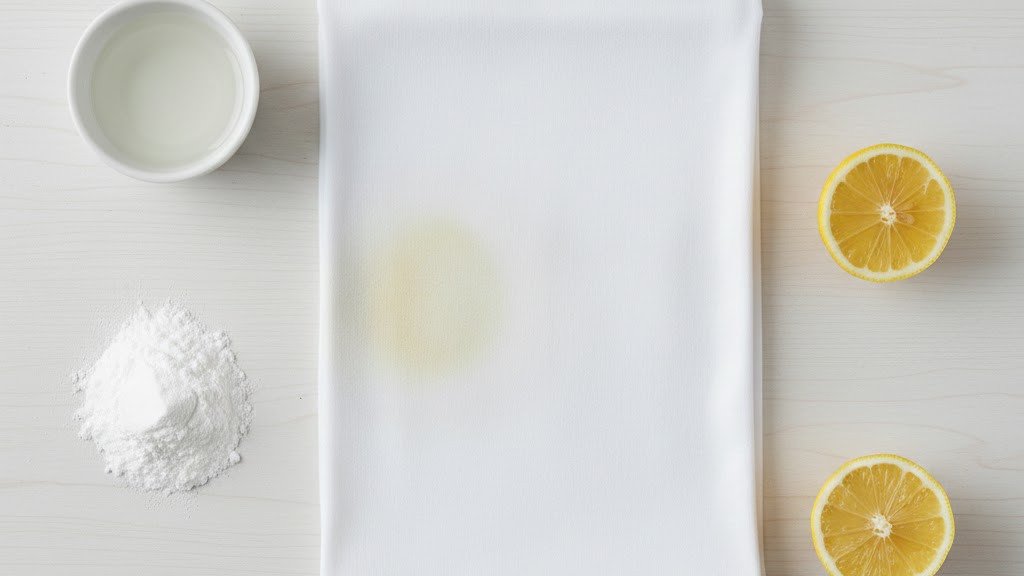
Retrieving your favorite hijab from the closet only to find stiff yellow stains on the neck or temple area often disrupts your morning appearance plans. Disappointment escalates when these stubborn marks persist even after repeated washing with ordinary detergent.
Yellow stains on hijabs form from a chemical bond between sweat’s protein and sebum lipids, oxidized by the aluminum salts in deodorants and the minerals in wash water. Effectively removing these stains without compromising fabric softness can be achieved using three natural kitchen ingredients: a white vinegar solution to break down proteins, a sodium bicarbonate (baking soda) paste to lift lipid residue, and citric acid from lemon juice to safely brighten fabric fibers.
Why Do Sweat Stains Harden and Yellow on Hijabs?
Human sweat is actually a clear, colorless fluid when first secreted by the apocrine and eccrine glands on the scalp. However, this fluid carries lipids, free fatty acids, urea, and mineral salts that adhere to the hijab’s fabric weave.
When a hijab is worn all day under the tropical sun, skin bacteria break down these protein components, triggering an oxidation reaction upon exposure to the air. This chemical reaction is exacerbated by antiperspirant residues containing aluminum chloride, creating a hardened, yellow complex that binds tightly to the textile’s thread pores.
Washing a stained hijab with hot water or ironing it before the stain is removed will actually set the protein bonds permanently into the fabric fibers. Consequently, the hijab fabric becomes stiff in the under-chin area and loses its natural drape.
Three Fabric-Friendly Cleaning Agents for Hijab Fibers
Restoring a hijab’s original color clarity doesn’t always require harsh chemical chlorine bleaches that risk damaging the structure of delicate silk or fine voal fibers. These three natural ingredients work to break down stains using gentle acid-base reaction principles:
The first ingredient is common white vinegar, which contains acetic acid with a moderate acidity level of about five percent. Acetic acid works to dissolve mineral salt crusts and break down hardened sweat protein bonds without stripping the fabric’s pigment color.
The second ingredient is baking soda, or sodium bicarbonate, a weak base with very fine, micro-abrasive particles. Baking soda paste works to bind sebum lipid molecules, lift trapped oil impurities from between the threads, and neutralize any musty odors left on the fabric.
The third ingredient is fresh lemon juice, rich in natural citric acid. Citric acid acts as a highly effective, eco-friendly optical brightening agent, restoring the radiance of ivory, pastel, or cream-colored hijabs without making the fabric fibers brittle.
| Natural Cleaning Agent | Cleaning Chemical Property | Target Stain Residue | Suitable Hijab Fabric Types |
|---|---|---|---|
| White Vinegar | Dilute Acetic Acid (pH 2.5) | Mineral salt crusts and antiperspirant deposits | Cotton voal, paris, ceruti chiffon, rayon jersey |
| Baking Soda (Paste) | Sodium Bicarbonate (pH 8.3) | Sebum oil residue and sweat odor neutralizer | Thick cotton, linen, premium voal (avoid pure silk) |
| Lemon Juice | Photocatalytic Citric Acid | Oxidized yellow pigments on light colors | White, cream, light gray, and bright pastel hijabs |
Step-by-Step Guide to Cleaning Hijab Stains
Follow these structured cleaning stages to ensure your hijab’s fabric fibers remain durable and free from mechanical damage:
- Vinegar Soaking Step: Mix white vinegar and cold water in a one-to-one ratio in a small basin, then soak the stained yellow area of the hijab for thirty minutes.
- Baking Soda Paste Application: Create a thick paste by mixing two tablespoons of baking soda with a little water. Apply it directly over the soaked stain and let it sit for fifteen minutes.
- Extremely Gentle Scrubbing: Use an extra-soft bristled toothbrush to gently rub the stain in a circular motion with light pressure, preventing the fabric threads from unraveling or pilling.
- Rinsing and Final Wash: Rinse the fabric thoroughly with cold running water, then wash the entire hijab using a gentle liquid detergent specifically formulated for delicate garments.
Air-dry the hijab in a shaded area, away from direct sunlight, to prevent color fading. Regularly maintaining your hijab’s cleanliness will extend the lifespan of your wardrobe collection.
Salwa Salon Editorial Note: A hijab free from sweat stains and odor is a reflection of a Muslimah’s neatness and personality. Care for your worship attire and head covering with gentle diligence, as comfortable attire radiates sincere inner peace during social interactions.
For those who wish to understand techniques for caring for various hijab textile materials to prevent premature damage, please read our article on how to care for voal hijab fabric to prevent pilling.
Habits to Prevent Yellow Stains from Accumulating
Preventing stain formation is always easier than rectifying them after months of hardening. Wash your hijab as soon as possible after a day of outdoor activities, without letting it pile up in a damp laundry basket.
Ensure deodorant or antiperspirant on your underarms and neck has completely dried before wearing your outfit and securing your hijab pin. This simple preventive measure avoids direct contact between the hijab fabric and the concentrated chemicals that trigger yellow stains.
Frequently Asked Questions (FAQ)
Can white vinegar solution fade the color of patterned hijabs?
It does not fade; dilute acetic acid actually helps to lock in natural textile dyes. However, perform a spot test on a hidden corner of the fabric first to ensure colorfastness.
Is it permissible to clean pure silk hijabs with baking soda paste?
It is not recommended because the alkaline nature of sodium bicarbonate can damage the delicate natural protein bonds in pure silk fibers.
Why is chlorine bleach not recommended for removing sweat stains?
Chlorine bleach reacts with sweat proteins and actually exacerbates the fabric’s color change to a permanent, deep yellow.
Is lemon juice safe to use on dark-colored hijabs?
Avoid using lemon on deep dark fabrics because citric acid, when exposed to sunlight, has a natural bleaching effect that can fade the fabric’s color.




Tinggalkan Balasan