Washing your face on a scorching day often provides a fleeting sense of refreshment, but within minutes, the skin feels tight and dry, with an oily sheen on the nose and forehead. This imbalance can be confusing, as the face feels oily on the surface yet parched and rough underneath.
This condition is characteristic of dehydrated skin in tropical climates, where the outermost layer loses significant moisture due to trans-epidermal water loss. The restorative solution involves gentle enzymatic exfoliation to remove dead keratinocytes, layered hydration with humectants, and lipid barrier reinforcement using lightweight moisturizers.
Differentiating Genetically Dry Skin from Weather-Induced Dehydration
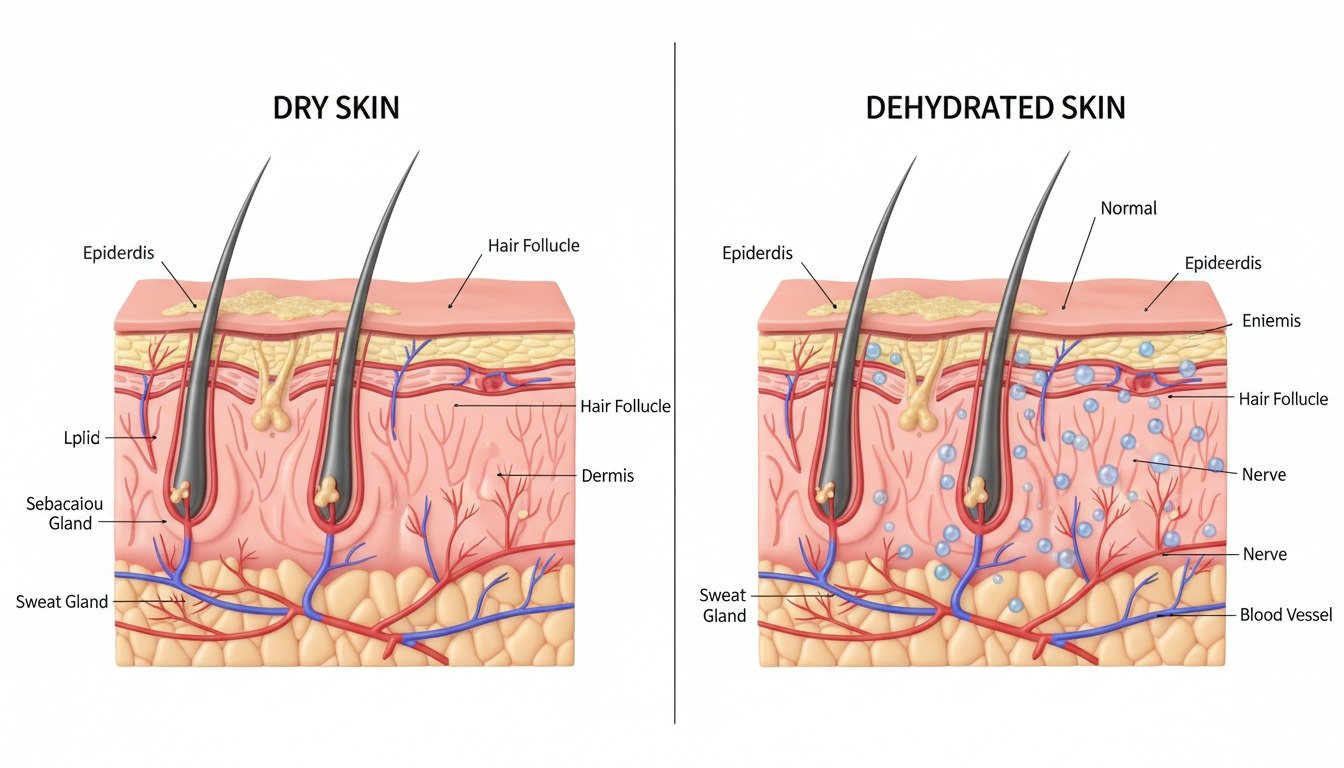
Many individuals mistakenly equate dry skin with dehydrated skin. Dry skin (*xerosis cutis*) is a permanent genetic skin type where the sebaceous glands naturally produce very little sebum.
Conversely, dehydrated skin is a temporary condition caused by external factors, where the water content in the stratum corneum drops below the normal threshold of ten percent. Even oily skin can become severely dehydrated if frequently exposed to intense sun and dry, air-conditioned environments.
When epidermal cells lack sufficient water molecules, natural desquamation enzymes (*desmogleins*) cannot function optimally. Consequently, dead skin cells accumulate and adhere tightly, obstructing natural light reflection and leaving the complexion looking dull and ashen.






Tinggalkan Balasan