Complaining about facial skin that frequently feels itchy or experiences recurrent breakouts often leads us to focus on purchasing new cosmetic products without considering the quality of the water used daily. Unbeknownst to us, water contaminated with heavy minerals can slowly damage the skin’s natural defenses.
- 4.1 What are the physical signs that bath water at home is considered hard water?
- 4.2 Is installing a water filter in the bathroom truly effective for treating sensitive skin?
- 4.3 Why is it not recommended to wash your face directly under a hot water shower stream?
- 4.4 What are the long-term effects of bathing with mossy or rusty water on the skin?
Environmental sanitation quality and the purity of clean water supply are absolute foundations for skin health, where water free from microbiological contaminants and heavy metals prevents damage to the epidermis’s acid mantle and sebaceous follicle infections.
Lessons in Human Development and Environmental Sanitation Priorities
In-depth studies on the human development index in South Asian regions, as analyzed by researcher Swati Narayan, reveal that a nation’s progress is not solely measured by the number of high-rise buildings. The success of developing countries in reducing infectious disease rates is rooted in the courage to prioritize basic sanitation and equitable access to clean water.
Communal awareness of toilet hygiene and waste disposal systems has been proven to significantly improve the health status of children and women in rural areas. Environmental cleanliness is a fundamental right that determines the quality of life for every individual.
This social lesson reminds us that true self-care always begins with the hygiene of our surrounding environment. Even the most expensive skincare products will not work optimally if the clean water facilities in our homes are not adequately met.
The Impact of Bath Water Quality on Skin Barrier Damage
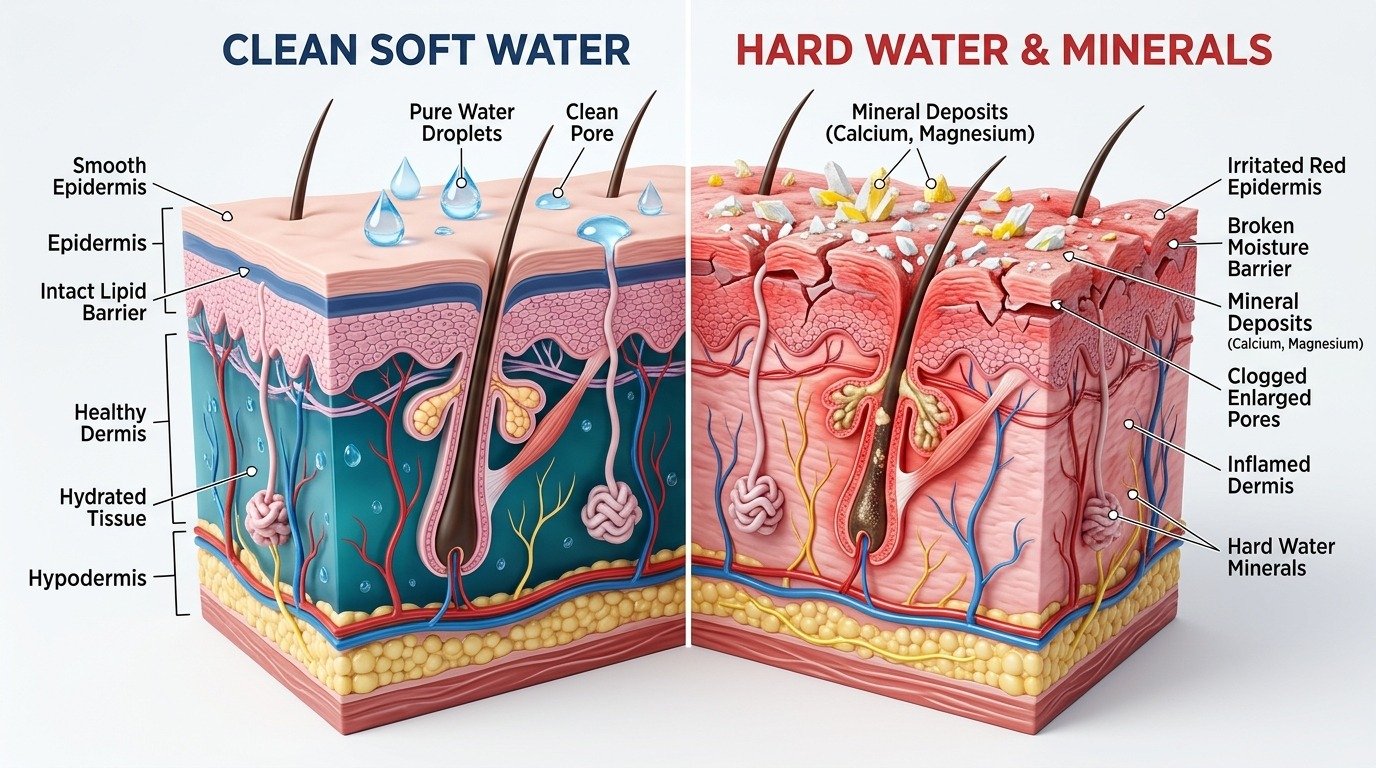
Bath water with a high degree of hardness (hard water) contains an excessive concentration of calcium and magnesium carbonate minerals. When these minerals react with cleansing soaps, they form calcium stearate lather residue that is difficult to rinse off and can settle in the skin’s pores.
Groundwater with high calcium and magnesium content (hard water) can react with soap to form a slippery residue that clogs pores and exacerbates atopic dermatitis. Installing a simple activated carbon bath water filter helps effectively filter out chlorine and heavy metal sediments.
This mineral deposit alters the natural pH of the skin’s acid mantle, which should be around 5.5, making it more alkaline. Consequently, protective ceramide lipids are eroded, and intracellular water evaporates rapidly, triggering dryness, redness, and atopic dermatitis flare-ups.
In addition to hardness, high residual chlorine in unfiltered tap water can oxidize keratin proteins in the skin and hair. A deeper understanding of the body’s protective barrier function is discussed through healthy lifestyle habits for skin vitality and well-being.
| Bath Water Characteristics | Mechanism of Reaction on Skin Surface | Actual Impact on the Epidermis |
|---|---|---|
| Hard Water (High Calcium) | Leaves pore-clogging mineral residue | Dry, flaky skin and itching after bathing |
| High Chlorine Water | Oxidizes sebum layer and barrier lipids | Redness, irritation, and brittle, dull hair |
| Bacterially Contaminated Water | Triggers colonization of gram-positive pathogens | Folliculitis, inflamed acne, and fungal infections |
| Filtered Clean Water (pH 5.5) | Maintains normal skin microbiome flora | Elastic skin barrier and well-locked moisture |
Practical Steps to Maintain Water and Bathroom Hygiene
Ensuring the cleanliness of daily bath water can begin with installing an activated carbon filter on the showerhead. Sediment filters can effectively remove iron pipe rust particles and neutralize free chlorine residue before the water touches the facial skin surface.
Use gentle, neutral pH syndet cleansing formulations that do not easily react with hard water minerals. Pat your body dry with a clean microfiber towel and avoid rough scrubbing of wet skin.
Immediately apply a moisturizing lotion within three minutes after bathing to lock in hydration before it evaporates. Maintaining bathroom sanitation is the most fundamental first step towards healthy skin care.
Fatmawati Tahir — Beauty Practitioner & Editor at Salwa Salon: Clean, radiant skin begins with the purity of the water that washes your face each morning. Do not overlook the hygiene of your bathroom sanitation and the quality of your home’s water if you desire long-term healthy skin.
Frequently Asked Questions (FAQ)
What are the physical signs that bath water at home is considered hard water?
Hard water is indicated by soap’s difficulty in producing abundant lather, the formation of white, chalky scale on faucets, and a tight, stiff skin sensation after rinsing.
Is installing a water filter in the bathroom truly effective for treating sensitive skin?
Yes, activated carbon filters are effective at filtering out rust particles, free chlorine, and micro-sediments that frequently trigger irritation in sensitive skin and eczema.
Why is it not recommended to wash your face directly under a hot water shower stream?
Hot water temperatures instantly dissolve the skin’s natural lipid barrier, and the pressure from the shower spray can damage the delicate capillary blood vessels in the cheek area.
What are the long-term effects of bathing with mossy or rusty water on the skin?
Bacteria and rust particles can cause microscopic irritation, exacerbate back acne, and damage the skin barrier, making the skin prone to chronic eczema and prolonged itching.
Ensuring the cleanliness of the bathtub and regularly cleaning the water filter protects all family members from the risk of skin allergies and waterborne bacterial infections, maintaining soft skin for both children and adults.
[/CONTENT]





Tinggalkan Balasan