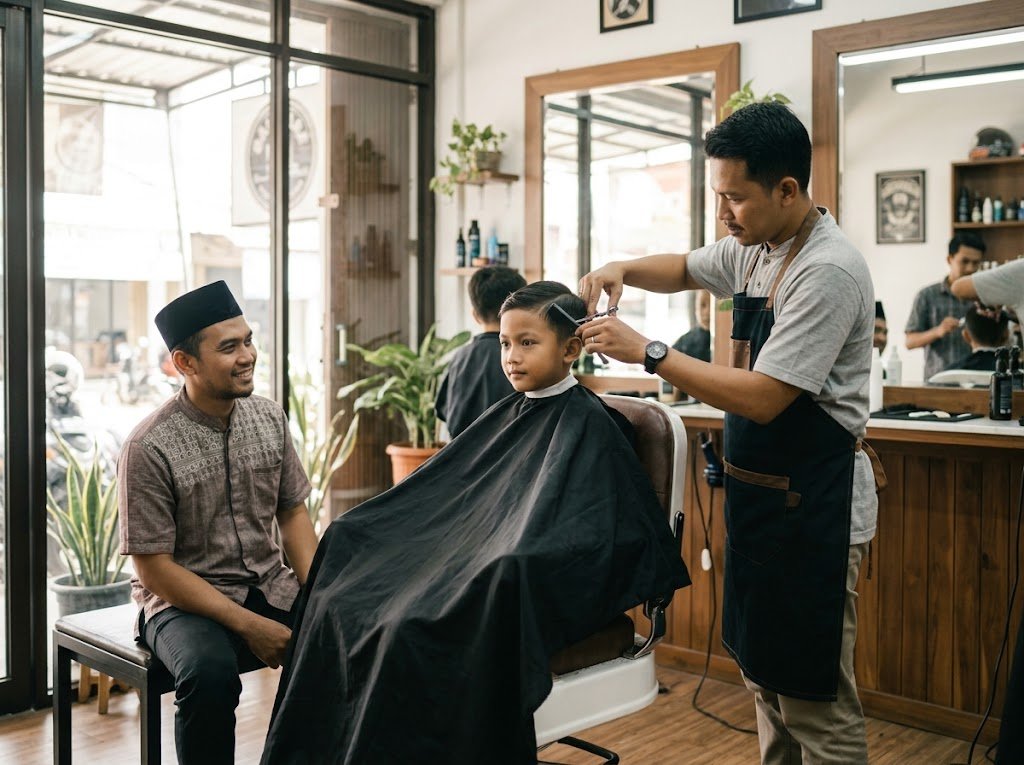
Maintaining the cleanliness and neatness of one’s body parts is a cornerstone of Islamic teachings. From trimming nails, removing specific body hair, to grooming the crown of one’s head, all are guided by noble etiquette. It’s no wonder many of us often wonder: “Are there actually auspicious days or specific times recommended in Islam for haircuts?”
This question naturally arises, considering the prevalence of various myths and superstitions surrounding haircut days in our societal traditions. To avoid misinterpreting religious law, let’s delve into the explanations of scholars regarding the sunnah of hair trimming and the etiquette of natural hygiene in Islamic teachings!
Islam Deeply Cherishes Purity and Beauty
Before discussing specific days, it’s crucial to understand that the primary basis for the recommendation of haircuts is maintaining personal hygiene. In a hadith narrated by Imam At-Tirmidhi, the Prophet Muhammad (peace be upon him) said:
“Indeed, Allah is Good and loves goodness, He is Pure and loves purity, He is Noble and loves nobility, He is Generous and loves generosity. So, purify yourselves.”
Unkempt, dirty, and neglected hair is not a reflection of a good Muslim’s character. Keeping hair neatly combed and periodically trimming split ends is a manifestation of gratitude for the bodily blessings bestowed by Allah SWT.
Are There Specific Rulings Regarding Auspicious Days for Haircuts?
Islamic jurisprudence scholars and hadith experts unanimously agree that there is no authentic evidence that rigidly restricts or mandates specific days for haircuts. One may cut their hair on any day—Monday, Tuesday, Wednesday, Thursday, Saturday, or Sunday—whenever the need arises.
However, there is one day that is highly recommended and is a weekly sunnah practice for Muslims, which is Friday.
The Virtue of Haircuts and Personal Grooming on Friday
Friday is the *sayyidul ayyam* (master of days) and the weekly Eid for Muslims. On this day, Muslims are encouraged to perform the obligatory bath (Jumu’ah bath), wear perfume, brush their teeth (using siwak), and groom themselves before attending the Friday congregational prayer.
Based on the practices of the companions and the *tabi’in* (successors), trimming nails and tidying hair on Friday or Thursday afternoon is highly recommended to ensure the body is in its most purified and fragrant state when attending the Friday congregational prayer.
Weekly Hygiene Rituals & Crown Maintenance
Making Friday a routine for personal grooming offers tangible biological benefits for hair health. Within the salon cycle, scheduling weekly *sanitary grooming*—such as cleansing fine hairs on the nape, washing combs with antiseptic soap and water, and massaging the scalp with pure olive oil before the sunnah bath—prevents the buildup of fungal dandruff and excess sebum. This care, combined with the intention of worship, keeps the scalp cool and free from musty odors in tropical climates.
Maximum Timeframe for Maintaining Natural Purity
Regarding the frequency of nail trimming and body hair removal, Islamic law sets a maximum timeframe to prevent negligence in self-care. Narrated by Anas bin Malik (may Allah be pleased with him), he said:
“We were given a time limit for trimming our mustaches, clipping our nails, plucking our armpit hair, and shaving our pubic hair, so that we would not leave them for more than 40 nights.” (HR. Muslim).
Scholars like Imam An-Nawawi explain that allowing dirt to accumulate on nails or hair for more than 40 days is *makruh* (disliked). Therefore, trim regularly without necessarily waiting for this maximum limit.
Etiquette and Prohibitions During Haircuts
- Avoid Al-Qaz’u: Do not shave half of the head bald while leaving the other part long. Trim the hair evenly and proportionally.
- Not Resembling the Opposite Gender: Men should cut their hair in a masculine style, and women should not shave their heads very short to resemble men.
- Maintaining the Neatness of Long Hair: If a man chooses to grow his hair long, he is obligated to comb and maintain its cleanliness regularly.
- Promptly Clean Up Hair Trimmings: Gather the cut hair strands and dispose of them in a clean place as a sign of respect for human body parts.
Q&A Regarding Haircuts in Islamic Law
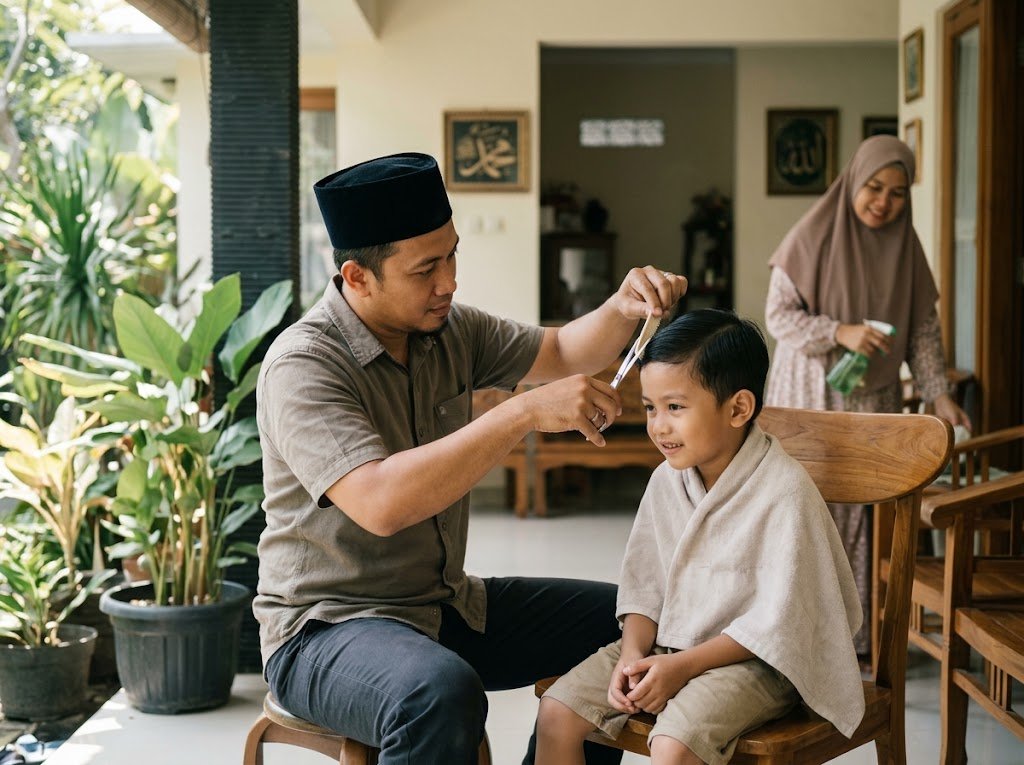
Is cutting hair at night prohibited in Islam?
It is absolutely not prohibited. The prohibition of cutting nails or hair at night is merely an ancient myth from past societies due to the limitations of oil lamp lighting. In Islamic law, cutting hair at night is *mubah* (permissible).
Is it permissible to cut hair during menstruation or postpartum bleeding (nifas)?
Yes, it is permissible. There is no authentic evidence prohibiting menstruating women from cutting their nails or hair. The opinion that mandates washing hair that sheds during the obligatory bath is a weak opinion and lacks strong hadith support.
Are women permitted to shave their heads completely bald?
The general ruling is *makruh* (disliked) to the point of being *haram* (forbidden) for women to shave their heads completely bald, unless there is an urgent medical indication such as undergoing head surgery or cancer treatment.
Conclusion
Caring for the crown of one’s head in Islam highly upholds the principles of cleanliness, neatness, and simplicity. You are free to cut your hair on any day according to your needs, but choosing Friday for personal grooming will earn you extra sunnah reward. Treat your hair with love and intention, dedicating all actions to drawing closer to Allah SWT.




Tinggalkan Balasan