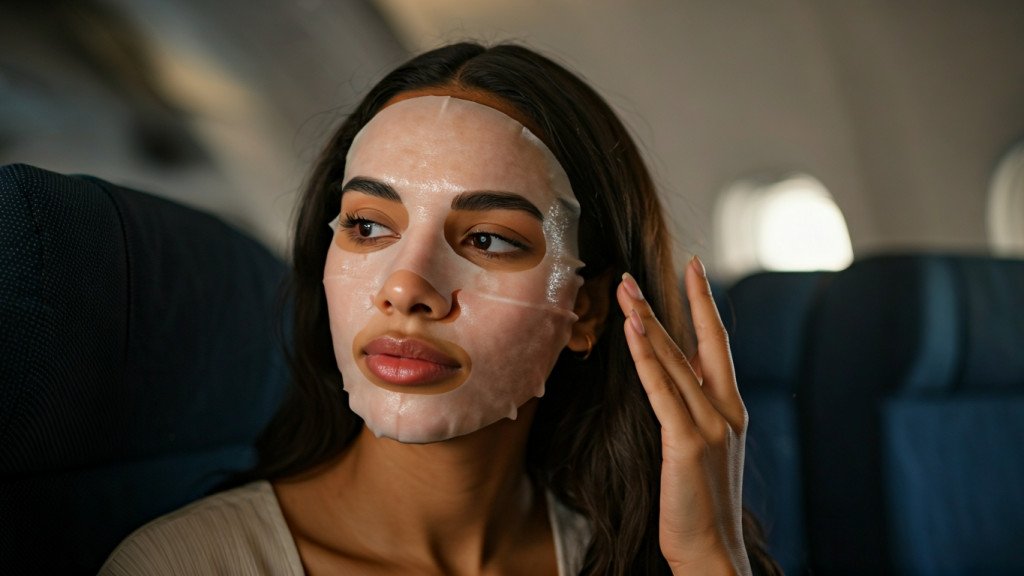
The sensation of facial skin suddenly feeling tight, a stinging sensation around the nostrils, and chapped lips are often experienced a few hours after a commercial aircraft reaches cruising altitude. High-pressure cabin air poses a significant challenge to the integrity of the human skin barrier.
The key to preventing dry skin on long-haul flights centers on mitigating transepidermal water loss (TEWL) by layering hyaluronic acid humectants, sealed with a ceramide-rich occlusive cream, providing extra protection for the eye and lip areas, and avoiding heavy makeup.
The Dynamics of Cabin Air Humidity on the Skin Barrier
The air conditioning and ventilation systems in commercial aircraft draw in outside air at altitudes of thirty thousand feet, which has extremely low absolute humidity. Consequently, the relative humidity level inside the passenger cabin plummets drastically to below twenty percent.
For comparison, a comfortable air humidity level for human skin ranges between forty and sixty percent. The extremely dry cabin air acts like a giant sponge, continuously drawing out water molecules from the stratum corneum.
If you wear heavy foundation makeup during a flight, the powder pigments will absorb any remaining oil and water on the skin’s surface. The combination of dry powder particles and oxidized sebum can trigger follicular inflammation, leading to post-flight acne breakouts.
Skincare Protocols Before and During Your Flight
Before heading to the airport, thoroughly cleanse your face with a gentle, foaming-free cleanser and apply a hyaluronic acid serum to damp skin. Seal in this hydration with a rich emulsion cream moisturizer containing ceramides and beneficial cholesterol.
While on the plane, avoid repeatedly spritzing pure water-based face mists without re-sealing. The evaporating mist water in the dry cabin air will actually draw out your skin’s natural moisture into the surrounding air.
Apply a beeswax-based or pure castor oil lip balm every two hours to create an airtight shield over the delicate lip mucosa. Also, use an eye cream containing caffeine or peptides to prevent under-eye puffiness caused by slowed blood circulation.
If you’re undertaking a transcontinental flight exceeding eight hours, a bio-cellulose sheet mask can be applied for fifteen minutes mid-flight. Immediately follow with a thin layer of a plant-based facial oil, such as squalane, after removing the mask to lock in moisture.
| Travel Phase | Essential Skincare Action | Recommended Active Ingredients |
|---|---|---|
| Pre-Flight | Double cleansing and barrier hydration | Hyaluronic Acid & Ceramide NP |
| Cruising Altitude | Occlusive sealing and lip balm | Pure Squalane & Shea Butter |
| Eye Area | Preventing puffiness and dry lines | Bioactive Peptides & Caffeine |
| Post-Landing | Cabin dust cleansing & rehydration | Centella Asiatica & Panthenol 5% |
Salwa Salon Editorial Note: Carry all in-flight skincare products in travel-sized bottles under 100ml, neatly stored in a waterproof transparent pouch. Maintaining hand hygiene with hand sanitizer before touching your face on the airplane seat is crucial to prevent the transfer of cabin bacteria.
Learn the difference between genetically dry skin and environmental dehydration in our review on the distinction between dry skin and dehydration.
Also, discover the criteria for barrier-repairing moisturizers in our article recommending moisturizers with ceramides.
Internal Hydration Support and Bodily Comfort
Long-lasting skin hydration must be supported by systemic hydration from within the body. Drink at least 250ml of plain water every hour while on the plane to replace bodily fluids lost through respiration.
Limit your consumption of alcoholic beverages, strong coffee, and sugary sodas at cruising altitude. Caffeine and alcohol have mild diuretic properties that accelerate fluid excretion through the kidneys, thereby exacerbating cellular dehydration in the skin tissues.
Frequently Asked Questions (FAQ)
Is it okay to wear makeup on a long flight?
It’s best to avoid heavy foundation or powder makeup for flights longer than four hours. If you wish to look polished upon landing, opt for a lightweight tinted moisturizer with a highly hydrating formula one hour before the plane lands.
Is using a sheet mask on a plane truly effective for skin treatment?
It is highly effective, provided you choose a bio-cellulose fiber sheet mask that doesn’t dry out easily and immediately seal it with an occlusive moisturizer afterward. Do not leave the mask on your face until it becomes stiff and dry.
Why do the lips chap the fastest on a plane?
Lip skin lacks sebaceous glands and sweat glands to produce its own protective lipid barrier. The extremely thin stratum corneum of the lips makes it the first area to lose moisture when air humidity plummets.
How can I manage oily skin to prevent it from becoming more greasy in the airplane cabin?
Oily skin produces more sebum in the airplane cabin as an emergency compensatory response to the extremely dry air. Apply a lightweight gel-textured moisturizer containing hyaluronic acid to prevent oil glands from overcompensating.




Tinggalkan Balasan