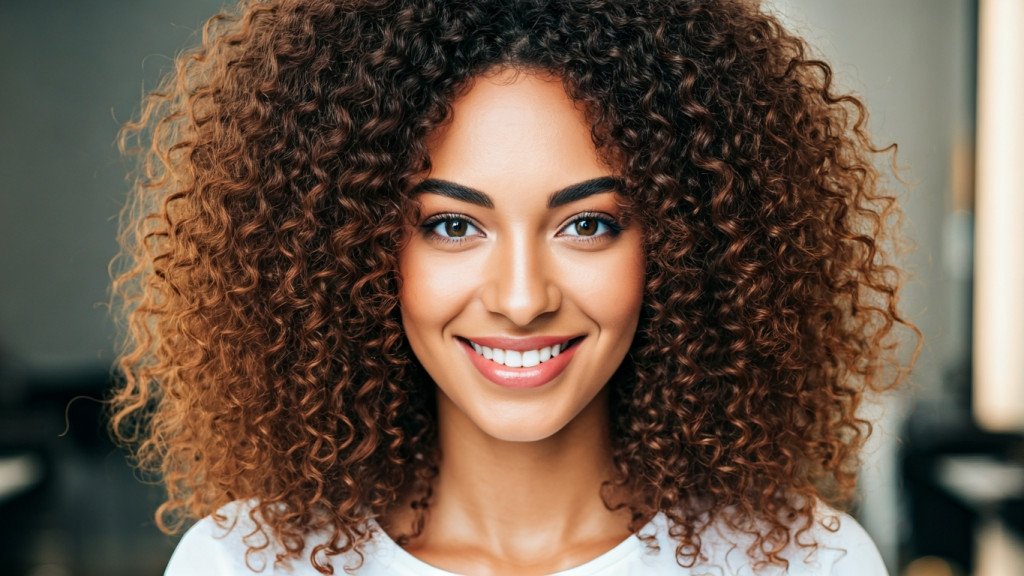
Coarse, wire-like strands and suddenly disrupted, irregular wave patterns in curly hair often stem from your choice of cleansing product in the bathroom. While abundant lather provides a fleeting sense of cleanliness, it also threatens the hair shaft’s natural protective oils.
Sulfate shampoos contain potent cleansing surfactants like Sodium Lauryl Sulfate, which dissolve the natural lipid barrier on the cuticle of curly hair. This triggers internal moisture loss, making strands prone to breakage, and strips away the original elasticity of curls.
The Anatomy of a Curly Hair Shaft and Sebum Distribution
The structural characteristics of curly hair differ from straight hair because the follicles on the scalp grow at a curved angle. This spiral shape makes it difficult for natural sebum oil from the sebaceous glands to glide evenly down to the hair’s ends.
Consequently, curly hair shafts are biologically predisposed to chronic dryness from the mid-shaft to the ends. The outermost protective cuticle layer on spiraled strands also tends to be more open compared to the tightly flattened cuticle arrangement of straight hair.
When high-detergency surfactants are applied, they not only lift dirt particles and excess oil but also strip away the protective 18-methyl-eicosanoic acid fatty layer. This loss of protective lipids leads to a sharp increase in hair porosity.
Gentle Surfactant Alternatives for Maintaining Curl Definition
Sulfate-free shampoo formulations utilize plant-derived cleansing agents derived from glucose or pure coconut. These cleansing compounds can lift surface impurities without dissolving the essential moisture reserves within the hair’s cortex.
Cleansing ingredients like Coco-Glucoside, Decyl Glucoside, or Sodium Cocoyl Isethionate produce a denser, gentler lather. Regular use of these active ingredients keeps the cuticle tightly sealed, ensuring hair’s wave pattern remains elastic and naturally radiant.
| Surfactant Category | Label Examples | Cleansing Character | Suitability for Curly Hair |
|---|---|---|---|
| Harsh Sulfates (High Anionic) | Sodium Lauryl Sulfate (SLS) | Very stripping, dissolves oils | Not recommended for curl patterns |
| Mild Sulfates | Sodium Laureth Sulfate (SLES) | Rich lather, slightly gentler | Should be limited to once a month |
| Plant-Derived Glucosides | Coco-Glucoside, Decyl Glucoside | Fine lather, preserves moisture | Highly ideal for routine cleansing |
| Isethionates & Taurates | Sodium Cocoyl Isethionate | Cleanses while protecting lipids | Highly recommended for dry curls |
Salwa Salon Editorial Note: When transitioning to sulfate-free shampoos, your scalp may require an adjustment period of two to three weeks. As these formulas lack harsh detergents, ensure you massage your scalp with your fingertips for a full two minutes to guarantee all sebum residue is thoroughly lifted.
Explore a guide to caring for easily tangled wave patterns in our review on how to manage frizzy curly hair.
Also, learn the correct way to shampoo without damaging the cuticle in our article on the proper shampooing order.
Tips for Maintaining Curl Definition Post-Wash
After thoroughly rinsing out your sulfate-free shampoo, apply a rich, moisturizing conditioner from the mid-shaft to the ends of your hair. Distribute the strands using your fingers or a very wide-tooth comb, allowing the formula to penetrate for five minutes.
Avoid drying curly hair by rubbing it with a rough, conventional cotton towel. Instead, use a microfiber cloth or a plain cotton t-shirt to absorb excess water using a gentle scrunching technique upwards to maintain the integrity of your curl formation.
Drying Technique for Curly Hair Using a Microfiber Towel
Rubbing wet curly hair with a coarse cotton towel is a primary cause of frizz. Use a microfiber towel or an old cotton t-shirt with a gentle upward scrunching technique to dry excess water while preserving the elasticity of your curls.
Frequently Asked Questions (FAQ)
Can sulfate-free shampoos effectively cleanse the scalp?
Yes, modern plant-derived cleansing agents can effectively emulsify dirt and sweat without producing excessive detergent lather. Optimal cleanliness is achieved through gentle scalp massage movements during shampooing.
When might curly hair still require a sulfate shampoo?
Deep-cleansing sulfate shampoos can be used occasionally, perhaps once a month, if you frequently use heavy silicone-based styling products or solid oils. This step aims to prevent the buildup of waxy residue that can clog scalp follicles.
Why does curly hair feel greasier at the roots when first switching?
This condition is an adjustment phase for the oil glands that were accustomed to producing excess sebum due to the stripping effects of previous harsh shampoos. Scalp oil production will gradually normalize and balance after two to four weeks of consistent use of gentle cleansers.
Are sulfate-free baby shampoos suitable for adult curly hair?
Not always. Baby shampoos are often formulated with a neutral pH of around 7.0 to be tear-free. This pH level is slightly too alkaline for adult hair cuticles and can potentially lead to frizz in curly hair shafts.
Transitioning to sulfate-free cleansers is an act of care for your curly hair, preserving the natural moisture of your curl cuticles to ensure they remain healthy, radiant, and easy to style.

Tinggalkan Balasan