
Hello, Salwa Besties! Have you ever noticed your face suddenly erupting with inflamed cystic acne, your skin feeling dry and flaky, or experiencing itchy redness precisely when you’re facing a grueling exam week, intense work deadlines, or emotionally draining conflicts? This phenomenon isn’t mere coincidence. Our bodies possess a highly integrated biological mechanism where the state of our mental and emotional well-being is vividly reflected on our outermost organ: the skin.
The profound connection between the central nervous system, hormonal responses, and skin integrity is scientifically studied in medicine through the branch of psychodermatology. When the mind is overwhelmed by chronic stress, the brain releases neurochemical signals that trigger systemic chaos: sebaceous glands overproduce sebum, the skin’s protective barrier weakens, and cellular immune responses become hyper-reactive. Understanding this biological relationship is crucial so we don’t just focus on treating skin symptoms externally, but also address their root causes internally. Let’s delve into the mechanisms!
Biological Mechanisms of Stress Impact on Skin Damage
1. Activation of the HPA Axis and Cortisol Hormone Surges
When the body detects emotional threats or mental pressure, the hypothalamus in the brain signals the pituitary and adrenal glands (the Hypothalamic-Pituitary-Adrenal axis). This response triggers the release of cortisol and corticotropin-releasing hormone (CRH) into the bloodstream. CRH directly binds to receptors on sebaceous glands, stimulating excessive sebum production with a thicker, stickier viscosity, which facilitates pore blockage leading to inflamed cystic acne.
2. Skin Barrier Disruption
Stress hormones suppress the biosynthesis of essential lipids like ceramides, free fatty acids, and cholesterol in the stratum corneum. This depletion of the lipid layer causes significant transepidermal water loss (TEWL), leading to severe skin dehydration, micro-cracking, extreme sensitivity, and stinging upon application of daily skincare products.
3. Neuropeptide Release and Neurogenic Inflammation
Sensory nerve endings in the skin release pro-inflammatory neuropeptides such as Substance P when an individual is under stress. These compounds trigger mast cell degranulation, releasing histamine, dilating capillary blood vessels, exacerbating rosacea redness, and accelerating the recurrence of atopic eczema and psoriasis.
4. Impaired Regeneration and Wound Healing Processes
Chronic stress disrupts the function of macrophages and fibroblasts responsible for repairing damaged cellular tissue. Consequently, acne lesions take weeks longer to heal, and prolonged inflammation increases the risk of stubborn post-inflammatory hyperpigmentation (PIH) or atrophic scarring.
The Brain-Skin Axis and Neurogenic Inflammation Management:
“Acne triggered by stress hormone surges presents distinct clinical characteristics compared to typical comedonal acne. Individuals experiencing stress exhibit the release of the neuropeptide Substance P, which induces sterile inflammation at the follicular base before the proliferation of Cutibacterium acnes bacteria. This is marked by painful, throbbing cystic nodules along the jawline and chin. At Salwa Salon, our acne-stress management protocol integrates soothing lymphatic drainage therapy to reduce sympathetic nervous system tone, combined with a botanical anti-inflammatory mask rich in azulene and centella asiatica to stabilize mast cell membranes without inducing aggressive exfoliation.” — Fatmawati Tahir
Holistic Steps to Address Stress-Induced Acne and Skin Issues
1. Adopt the Principle of Skinimalism (Simplifying Your Skincare)
When your skin is in distress due to stress, halt all potent acid exfoliants (concentrated AHA/BHA) and high-concentration serums. Revert to a basic routine: a pH-balanced cleanser free from harsh foaming agents, a calming hydrosol, and a moisturizer rich in ceramides and panthenol to restore the skin barrier.
2. Structured Relaxation and Breathing Exercises
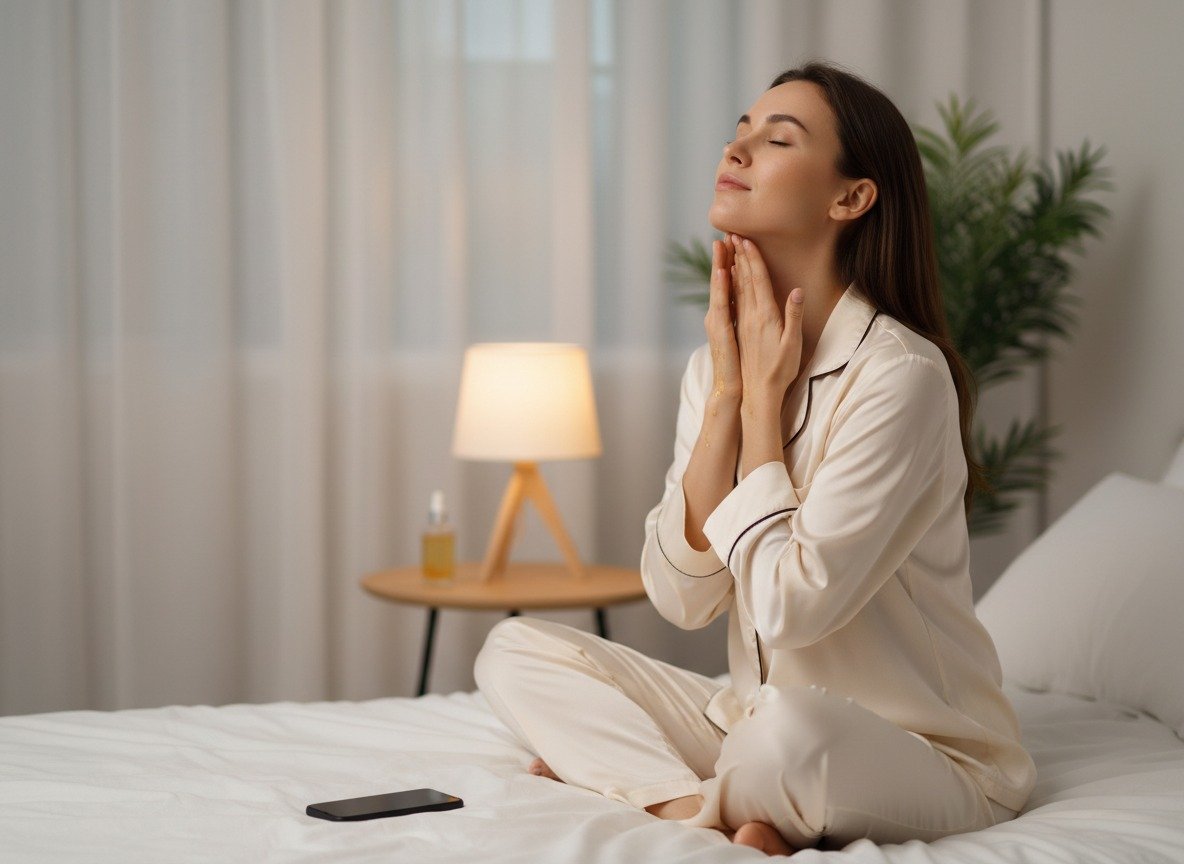
Practice deep breathing techniques (such as the box breathing method: inhale for 4 seconds, hold for 4 seconds, exhale for 4 seconds) for 10 minutes daily. These exercises are clinically proven to reduce sympathetic nervous system tone and significantly suppress cortisol hormone surges.
3. Prioritize Restorative Sleep (Beauty Sleep)
Aim for 7 to 8 hours of sleep each night in a cool, pitch-dark room. During deep REM sleep, the body produces melatonin and human growth hormone (HGH), which work to repair DNA damage in skin cells exposed to daily stress.
4. Indulge in Tension-Relieving Salon Treatments
Enjoy relaxing treatments like a scalp creambath or an aromatherapy massage at your favorite salon. Gentle massage on the scalp, neck, and shoulder areas helps improve lymphatic circulation and sends calming signals to the central nervous system.
Frequently Asked Questions About Stress and Skin Health (FAQ)
How can I differentiate between stress-induced acne and acne caused by skincare product incompatibility?
Acne resulting from cosmetic product incompatibility typically appears as small, uniform microcomedones in the areas where the product was applied within 24–48 hours. Conversely, stress-induced acne usually presents as deep-seated nodules or cysts under the skin, which are painful to the touch without a mature whitehead, and are concentrated in the lower third of the face, such as the jawline, chin, and neck.
Does consuming sugary foods during stress worsen acne conditions?
It significantly worsens it! The habit of consuming sweet snacks (comfort food) triggers rapid insulin spikes in the blood. These insulin surges stimulate IGF-1 growth factors, which multiply sebum production and accelerate keratin impaction in facial pores.
How long does it take for the skin to recover after stress levels begin to subside?
Once your mental state calms and cortisol levels normalize, improvements in the skin barrier and reduction in redness typically become visible within 2 to 4 weeks, aligning with the natural skin cell turnover cycle.



Tinggalkan Balasan