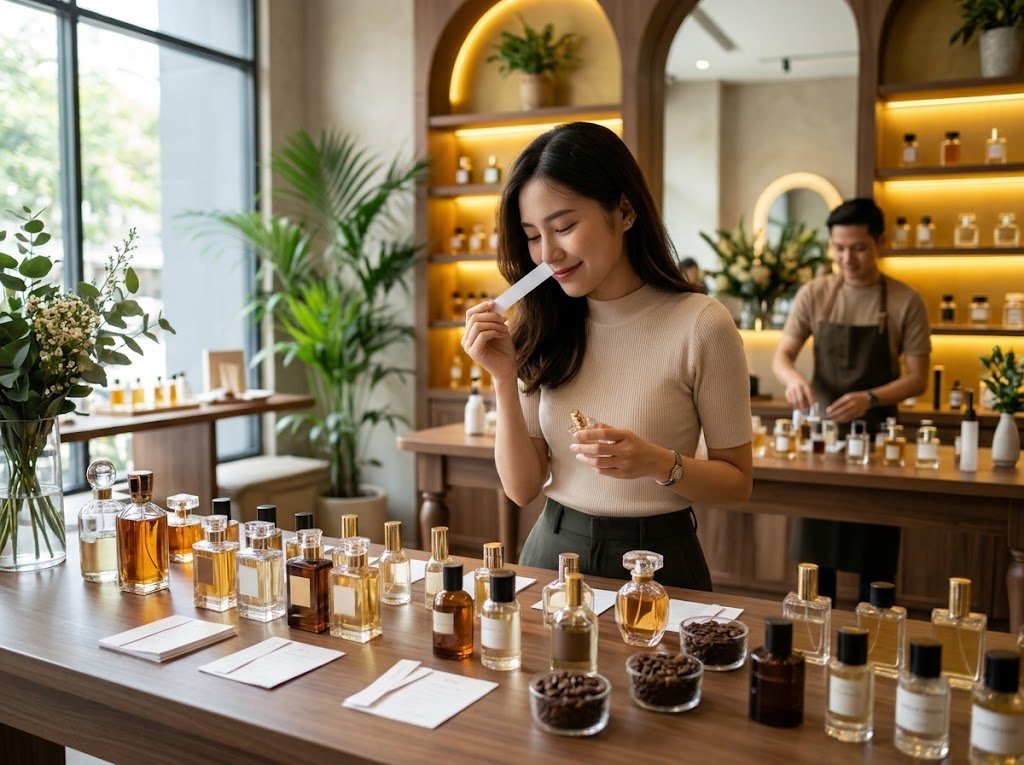
Have you ever encountered a specific fragrance and been instantly transported back to a person or a memorable moment from your past? The power of perfume is truly remarkable, capable of evoking memories and projecting personal allure without uttering a single word, Bestie.
However, discovering a fragrance that genuinely harmonizes with your personality and natural body chemistry can often be a challenging endeavor. Many individuals are drawn to viral perfumes showcased on social media, only to find that once applied to their own skin, the scent is either overwhelmingly pungent or dissipates far too quickly.
Understanding Fragrance Categories to Uncover Your Olfactory Identity
1. Floral: Delicate, Feminine, and Romantic?
Floral notes, such as rose, jasmine, peony, and tuberose, represent timeless classics that consistently captivate. These are ideal for those who gravitate towards an elegant, feminine, and warm aesthetic, suitable for a variety of casual settings or romantic rendezvous.
2. Citrus & Fruity: Zesty, Energizing, and Cheerful?
A vibrant fusion of fresh fruit aromas like bergamot, mandarin orange, green apple, and peach provides an instant burst of vitality. This fragrance family is perfectly suited for morning wear, athletic pursuits, or activities under the intense heat of a tropical climate.
3. Gourmand: Indulgently Sweet, Like Vanilla and Coffee?
For aficionados of warm, comforting, and sweet notes, fragrances characterized by vanilla, caramel, coffee, or dark chocolate are perennial crowd-pleasers. Gourmand scents are particularly well-suited for evening wear or in climate-controlled environments.
4. Woody & Oriental: Mysterious, Warm, and Boldly Characterful?
An exquisite blend of sandalwood, cedarwood, amber, and subtle spices imparts an impression of maturity, sophistication, and gravitas. This is an excellent choice for crucial business meetings or attending formal evening events.
Strategic Application Techniques for All-Day Fragrance Longevity
To ensure your cherished fragrance endures throughout the day without rapid evaporation, implement these effective application strategies:
- Apply to Warm Pulse Points: Pulse points, including the inner wrists, the crook of your elbows, the base of your neck, and behind your ears, naturally emit body heat. This warmth aids in the gradual diffusion of fragrance molecules.
- Hydrate Your Skin First: Dry skin accelerates the evaporation of perfume oils. Apply a thin layer of unscented lotion or petroleum jelly to your pulse points before spritzing your fragrance.
- Never Rub Your Wrists: The common habit of rubbing your wrists together after application actually disrupts the delicate top notes of the fragrance, altering its intended character. Allow the scent to air dry naturally.
Frequently Asked Questions About Fragrance Selection and Storage (FAQ)
What is the difference in concentration between Extrait de Parfum, EDP, and EDT?
The distinction lies in the concentration of fragrance oils. Extrait de Parfum boasts the highest concentration (20–40%) and can last over 8 hours. Eau de Parfum (EDP) contains 15–20% and offers a longevity of 6–8 hours, while Eau de Toilette (EDT) comprises 5–15% and typically lasts around 3–5 hours.
Why does the same perfume smell different on different people?
Each individual possesses a unique skin pH, natural body temperature, and sebum production. The interaction between fragrance molecules and an individual’s natural skin oils results in a distinct final aroma for each person.
What is the optimal storage location for perfume bottles to preserve their scent integrity?
Store your perfume bottles in a cool, dark cabinet, shielded from direct sunlight and extreme temperature fluctuations. It is advisable to avoid storing fragrances in the bathroom, as the humid environment and steam can compromise their chemical structure.



Tinggalkan Balasan