Have you ever purchased an Eid outfit that looked stunning in catalog photos, only to find it uncomfortably hot, stiff, and visually shortening when worn for house-to-house visits? Eid celebrations in Indonesia are almost always synonymous with busy activities in warm weather, making the choice of attire based solely on aesthetics, without considering fabric composition, often lead to discomfort.
- 3.1 1. What bottoms are most suitable to pair with a knee-length long tunic?
- 3.2 2. How should I choose a tunic style for a fuller figure to appear proportional?
- 3.3 3. Which hijab material is best to maintain its shape throughout a day of visits?
- 3.4 4. When is the optimal time to get a facial treatment at a salon before Eid?
The key to selecting comfortable and proportionally flattering Eid tunics lies in prioritizing breathable fabrics like Toyobo cotton or rayon twill, adjusting the tunic’s length to complement your bottoms for a lengthened silhouette, and opting for soft color palettes that harmonize with your skin tone.
Why Are Tunics a Practical Choice for Eid?
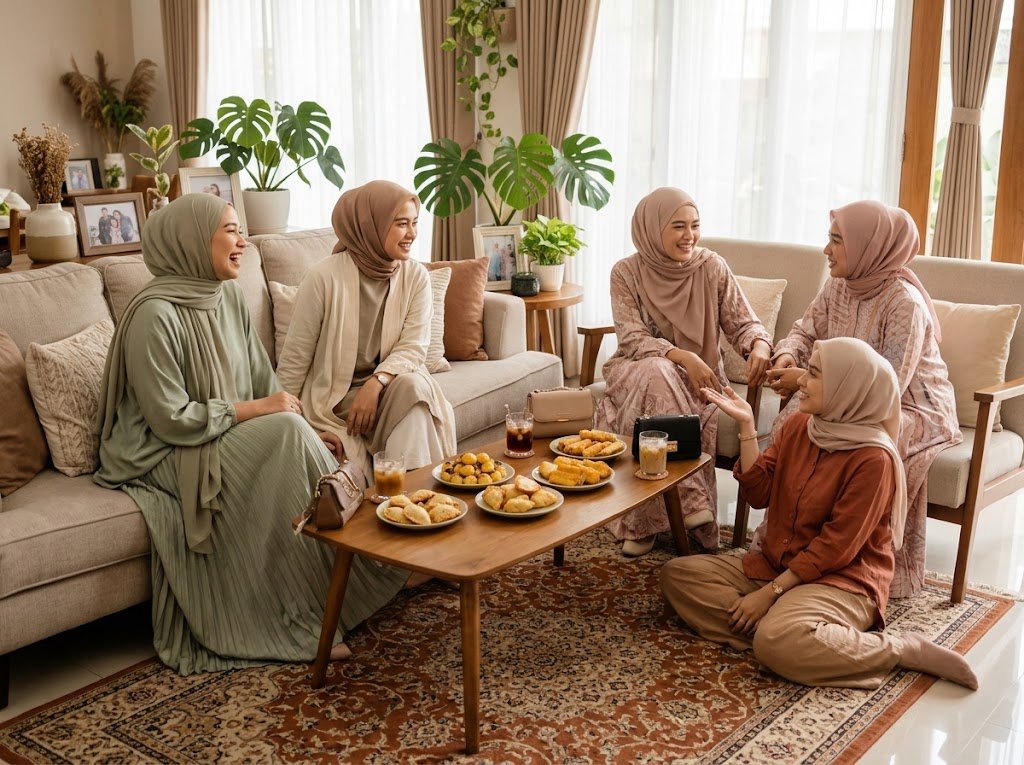
Compared to thick, layered maxi dresses that can restrict movement during extensive walking or driving, tunics offer significantly greater flexibility. The loose-fitting cut of tunics adheres to modest wear principles while remaining versatile for pairing with culottes, straight-leg trousers, or pleated skirts for various post-Eid engagements.
To ensure your chosen tunic is both functional and enhances your appearance, consider these five key aspects before shopping.
5 Keys to Choosing the Right Eid Tunic
1. Prioritize Cool, Sweat-Absorbent Fabrics
All-day comfort during festive visits is largely determined by a fabric’s ability to allow air circulation (breathability) and absorb perspiration. Here are three highly recommended tunic fabric types for tropical climates:
- Cotton (Toyobo Cotton or Cotton Poplin): Features natural fibers that feel cool against the skin, excellent moisture-wicking properties, a subtly refined sheen, and opacity that prevents transparency.
- Premium Rayon (Rayon Twill or Viscose): Offers a fabric character that drapes gracefully with movement, feels exceptionally soft against the skin, and imparts an elegant, lightweight feel.
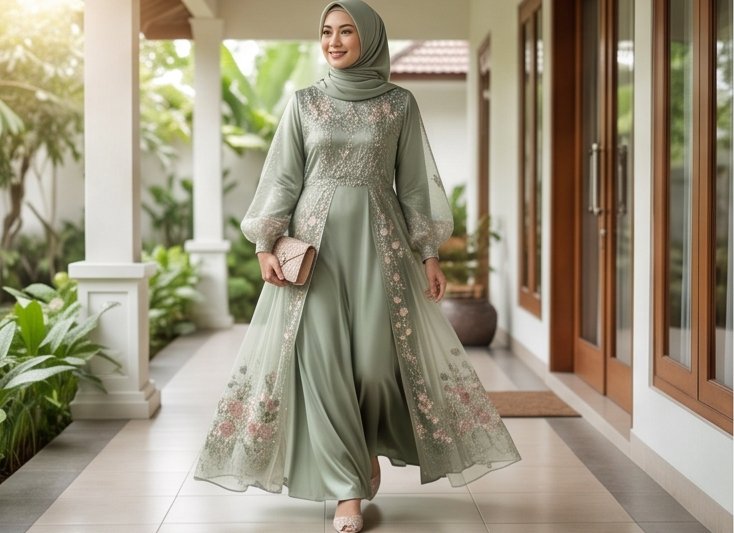
- Chiffon or Organza with Cotton Lining: If you prefer a more formal tunic for Eid gatherings, ensure the lining is made of cotton or rayon, not synthetic polyester which traps body heat.
2. Adjust Tunic Length to Body Proportion and Bottoms
The length of your tunic’s hem significantly impacts your perceived height. You can choose from the following three length categories based on your body shape:
- Short Tunic (Ending at Lower Hip): Ideal for petite individuals as it doesn’t visually cut off the leg line. Pair with high-waisted culottes or an A-line skirt to create the illusion of longer legs.
- Midi Tunic (Covering Thighs to Above the Knee): This is the most versatile length, suitable for almost all body types. To avoid a bulky appearance around the knees, pair midi tunics with straight-cut or neatly tailored slim-fit trousers.
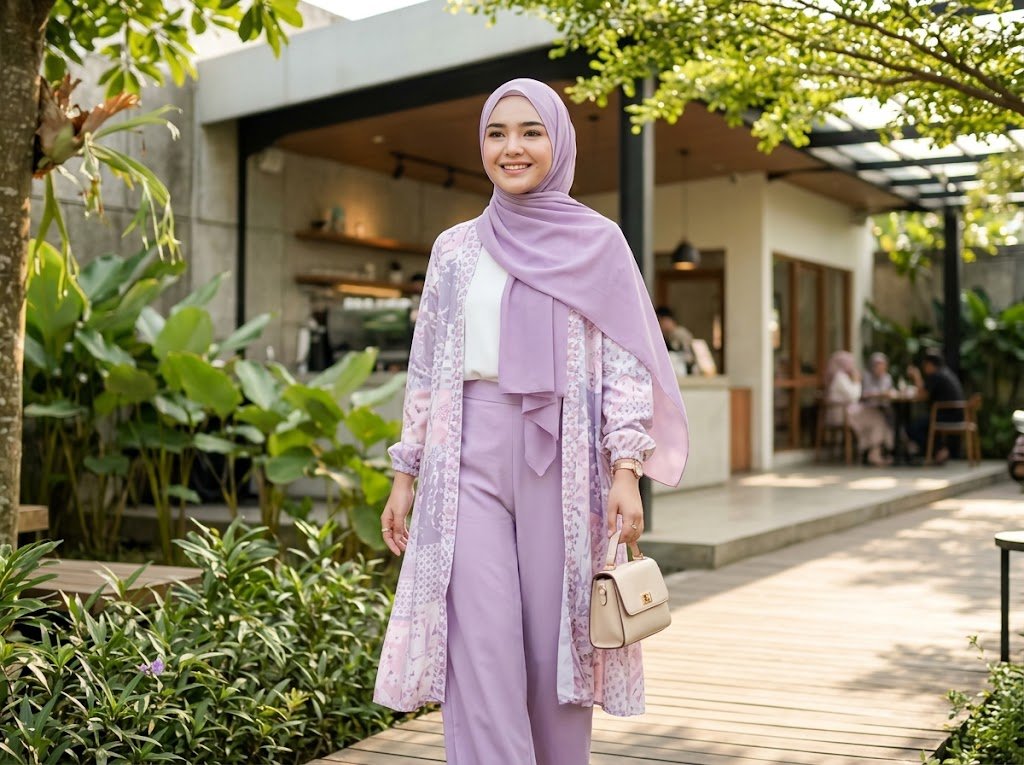
- Long Tunic (Covering Knee to Calf): Provides a very modest and almost maxi-dress silhouette. Pair with straight-leg trousers that fall precisely at the ankle or vertical pleated skirts to maintain a streamlined body silhouette.
3. Select Unobtrusive Cut Details and Patterns
Modern modest fashion trends lean towards clean, timeless designs. Some details that can enhance your tunic’s aesthetic include:
- Small Floral or Ethnic Geometric Prints: Offer a fresh visual accent without making the body appear larger.
- Pleat or Subtle Ruffle Accents: Opt for gathered details placed vertically on the chest or sleeve cuffs to maintain a neat silhouette.
- Asymmetrical Cuts: A diagonally angled hemline visually helps create an illusion of a taller, slimmer physique.
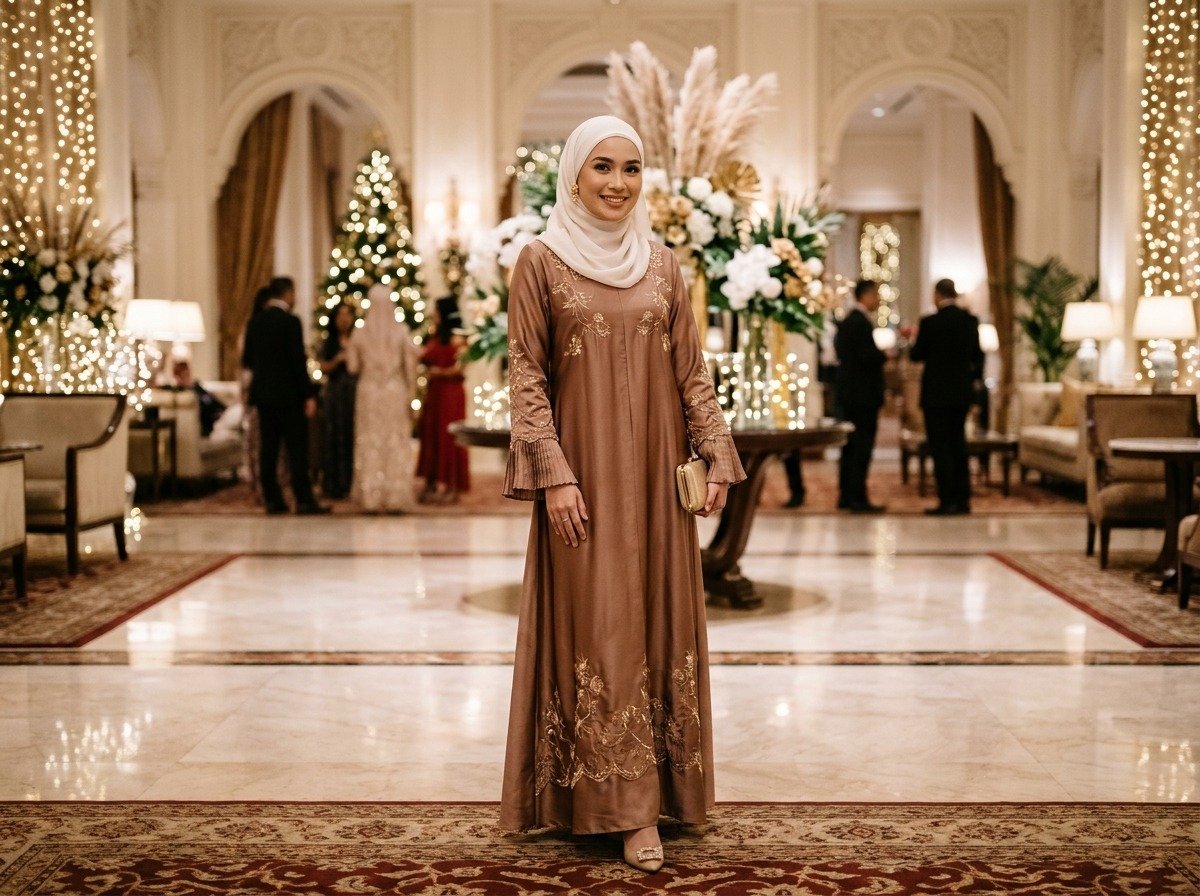
- Pastel and Earth Tone Palettes: Colors such as sage green, soft terracotta, champagne beige, sky blue, and dusty mauve exude a calm impression and are easily coordinated with other family members’ attire.
4. Coordinate with Hijab and Minimalist Accessories
The key to an elegant Eid ensemble lies in accessory restraint. If your tunic already features embroidery, sequins, or busy patterns, opt for a plain voal or ceruty pashmina hijab in a shade that picks up the softest hue from your tunic. Complement with low block heels or cushioned mules to prevent foot fatigue during extended wear.
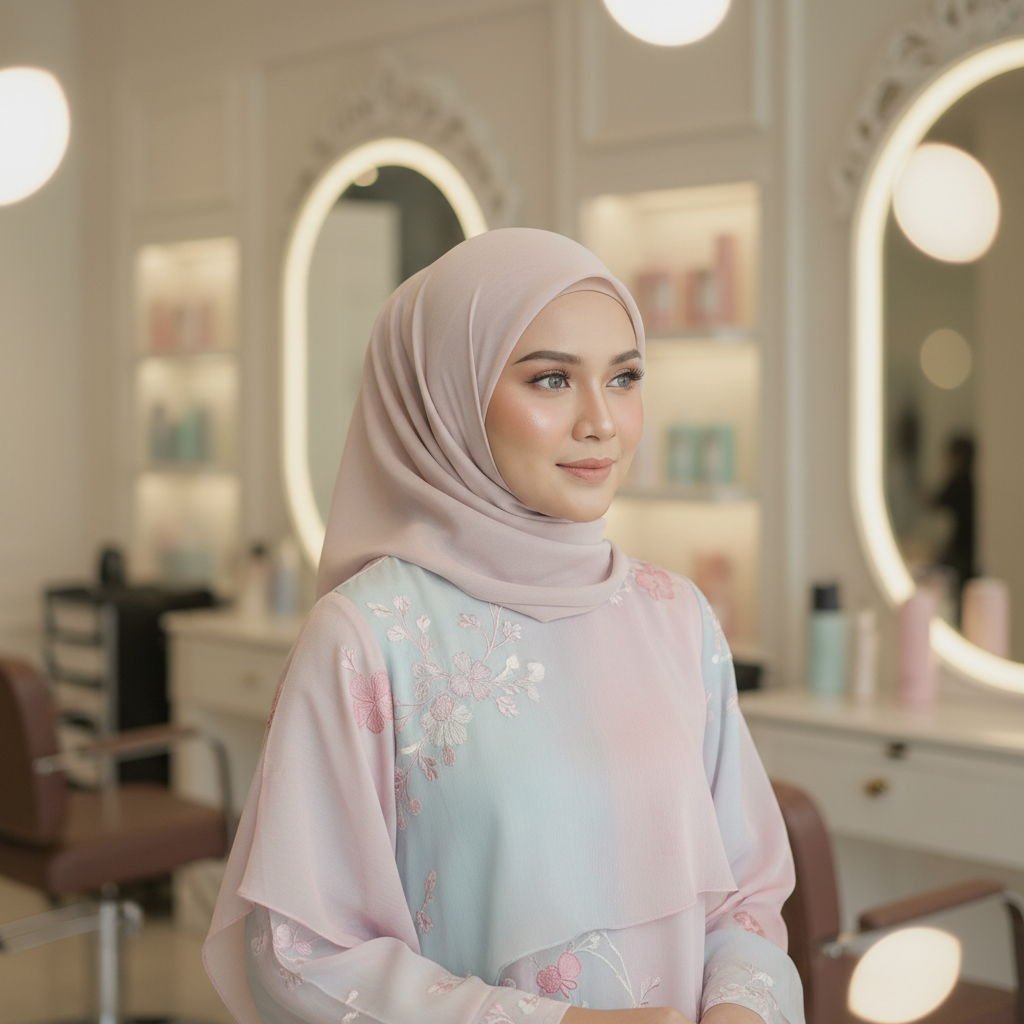
5. Prepare Facial Skin and Hair Health Before Eid
The most beautiful tunic will look even more cohesive when complemented by fresh, hydrated facial skin. Changes in sleep and eating patterns during Ramadan can often leave skin looking dry or dull leading up to Eid.
Editor’s Note — Fatmawati Tahir:
“Don’t wait until the night before Eid to care for your face and hair. Schedule a deep facial treatment at least 5 to 7 days before Eid to allow your skin time to calm down, ensuring your makeup on Eid morning applies smoothly without flaking.”
In addition to facial skincare with moisturizers and sunscreen, allocate time for a creambath or hair spa at a salon before Eid arrives. A clean and refreshed scalp will make wearing a hijab all day during family gatherings significantly more comfortable.
Frequently Asked Questions (FAQ)
1. What bottoms are most suitable to pair with a knee-length long tunic?
Knee-length long tunics are best paired with straight-leg trousers or flowy pleated skirts to avoid adding excess volume to the calf area.
2. How should I choose a tunic style for a fuller figure to appear proportional?
Opt for flowy fabrics like rayon twill with a V-neckline (or vertical button detailing), avoid thick elastic waistbands around the abdomen, and select small-scale prints or vertical stripes.
3. Which hijab material is best to maintain its shape throughout a day of visits?
Square hijabs made from ultrafine voal or premium cotton Paris are the most stable choices as their fibers firmly frame the face, absorb sweat, and are easily re-draped after ablution.
4. When is the optimal time to get a facial treatment at a salon before Eid?
The ideal timing is 5 to 7 days before Eid to avoid post-comedone extraction redness. A light hydrating mask can be done 1 to 2 days prior.

Tinggalkan Balasan