For those with sensitive skin, the exfoliation step often presents a unique dilemma. On one hand, the accumulation of dead skin cells on the epidermis can lead to a dull complexion, a rough skin texture to the touch, and hinder the absorption of daily serums and moisturizers. On the other hand, concerns about stinging, redness, or a tight, stripped feeling post-exfoliation frequently cause hesitation.
The good news is that advancements in dermatological formulations have introduced innovative foaming micro-exfoliants. The rich, plush foam texture acts as a buffer, minimizing friction between your fingertips and the skin’s surface. This allows for the gentle removal of dead skin cells without compromising your skin’s natural moisture barrier.
Why is a Foam Texture More Beneficial for Sensitive Skin?
Conventional physical exfoliants, relying on harsh scrub particles from apricot kernels or walnut shells, can often create microscopic tears (micro-tears) in the epidermal tissue. These invisible abrasions become entry points for bacteria and pollutants, triggering inflammation and recurrent allergic reactions.
A high-absorption foam format operates on an entirely different mechanism. Micro-sized foam bubbles can penetrate pore crevices and dissolve the keratin protein bonds between dead cells without requiring harsh physical friction. The active ingredients encapsulated within the foam are distributed homogeneously across the entire skin surface, preventing the over-concentration of actives in any single facial area.
Gentle Exfoliating Ingredients to Look For
When selecting a foam-based exfoliation product for reactive-prone skin, pay close attention to the active ingredients listed on the packaging:
1. Polyhydroxy Acids (PHAs) and Mandelic Acid?
PHAs, such as gluconolactone and lactobionic acid, have significantly larger molecular sizes compared to conventional AHAs (like glycolic acid). Due to their larger molecules, PHAs penetrate the outermost skin layers slowly without causing a stinging sensation. In addition to dissolving dead cells, PHAs are natural humectants, drawing moisture into the skin cells. Mandelic acid, extracted from bitter almonds, is also a gentle acid option that is well-tolerated by sensitive skin.
2. Natural Plant Enzymes (Papain and Bromelain)?
Proteolytic enzymes extracted from papaya (papain) and pineapple (bromelain) work selectively to break down the protein in dead skin cells without disturbing the living skin cells beneath. This biological mechanism makes them one of the safest exfoliation options for skin prone to redness.
3. Soothing Agents: Grape and Chamomile Extracts?
The inclusion of organic grape water, chamomile flower extract, or centella asiatica in foam formulations provides an immediate cooling effect, neutralizes potential irritation, and helps maintain the stability of the skin’s protective microbiome.
Proper Application Technique for Foaming Exfoliants
To achieve a smooth, radiant complexion without the risk of over-exfoliation, adhere to these disciplined application steps:
- Perform Initial Cleansing: Begin by cleansing your face of impurities and makeup using a gentle micellar water or cleansing oil, then rinse with room-temperature water.
- Dispense Adequate Foam: Dispense one to two pumps of rich foam into clean palms. Avoid applying foam with dirty hands.
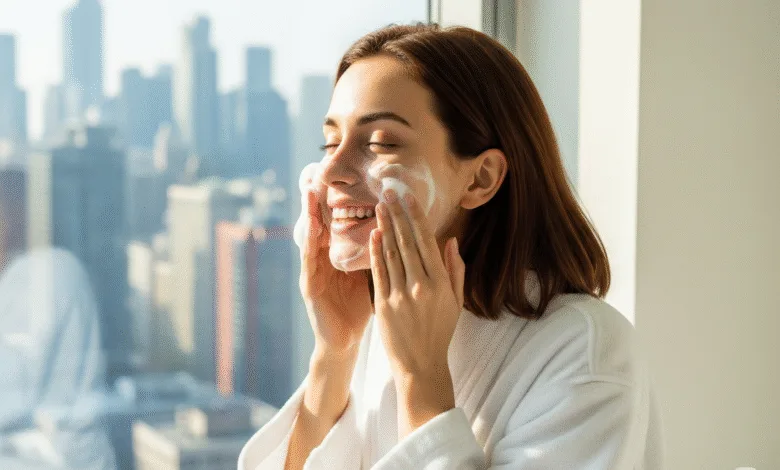
- Gentle Circular Motions: Distribute the foam evenly across your entire face using very light, circular motions with your fingertips. Allow the foam to work for 30 to 60 seconds without vigorous rubbing.
- Rinse Thoroughly and Pat Dry: Rinse with lukewarm water until no foam residue remains. Gently pat your face dry with a microfiber towel, avoiding any harsh rubbing.
- Follow Immediately with Hydration: Immediately follow with a hydrating toner and a ceramide-rich moisturizer to lock in newly regenerated natural moisture.
Salwa Salon Editorial Note: Caring for sensitive skin isn’t about how aggressively we cleanse it, but rather how gently we respect its recovery rhythm. Gentle foaming exfoliation gives your skin the space to breathe freely, shedding dullness without ever feeling compromised.
Questions About Exfoliating Sensitive Skin
How often should sensitive skin be exfoliated with a gentle foam?
One to two times per week, preferably in the evening, is sufficient. This frequency is adequate for maintaining pore clarity without disrupting the skin barrier.
Is it permissible to use retinol after foam exfoliation?
It is advisable to avoid using retinol or high-concentration vitamin C on the same evening as your exfoliation routine to prevent the risk of dual irritation for sensitive skin.
When is the best time to discontinue exfoliation?
Temporarily cease exfoliation if your skin is experiencing open wounds, severe active acne, sunburn, or if your skin feels a stinging sensation even when exposed to plain water.
Nurture the smoothness of your facial skin with patience and love. Through the touch of gentle foam and calming nourishment, a fresh, healthy, and naturally radiant complexion will always be your steadfast companion.