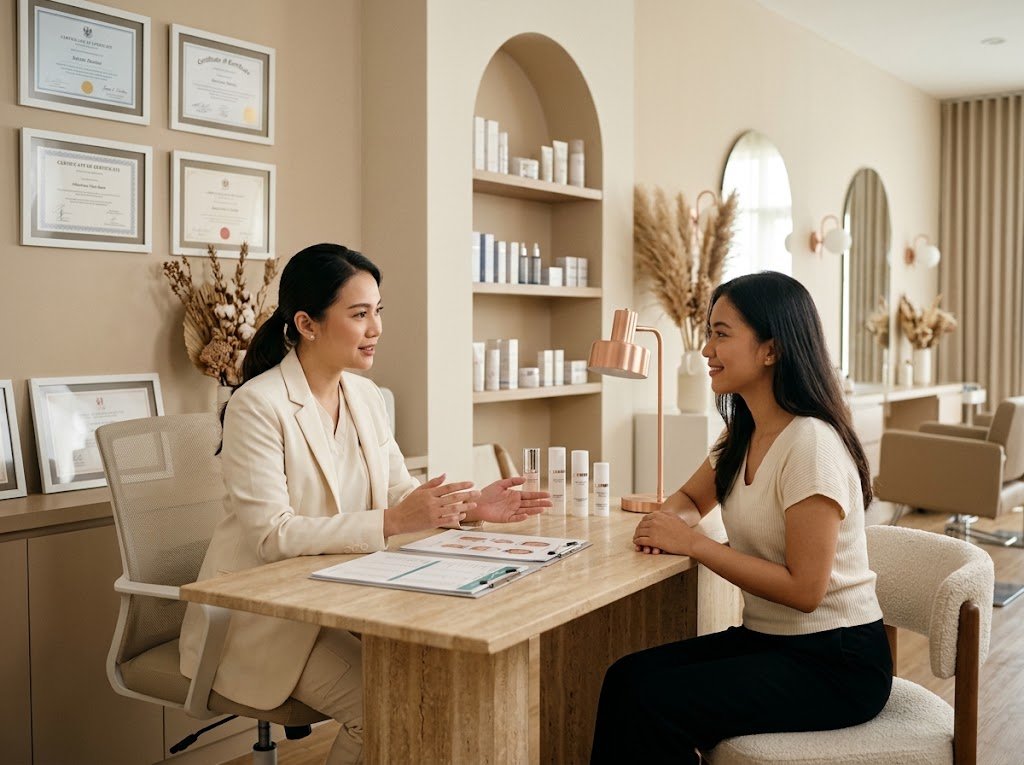
Have you ever seen advertisements for aesthetic treatments on social media promising instant facelift results comparable to surgical procedures, offered at a third of the normal hospital rates? The allure of low prices and dramatic before-and-after photos often prompts potential consumers to rush into bookings without verifying the medical background or practice licenses of the individuals performing the procedures.
- 4.1 How can I confirm if a beauty practitioner is a legitimate doctor?
- 4.2 Are thread lifts or eyelid surgeries permissible at regular beauty salons?
- 4.3 What are the warning signs of a beauty treatment facility to avoid?
- 4.4 What is the first step to take if I experience an infection after a treatment?
Selecting a legitimate beauty clinic necessitates verifying the facility’s operational permits, ensuring the doctor possesses a valid Practice License (SIP), and understanding the scope of practice differentiating non-invasive beauty salon services from medical surgical interventions. This verification process is crucial for safeguarding your health against risks of tissue infection and long-term health complications.
Lessons Learned from Cases of Unlicensed Aesthetic Procedures

The importance of consumer vigilance has once again come under public scrutiny following legal reports concerning alleged illegal aesthetic procedures at a treatment facility in Pekanbaru, Riau. In one report, a patient from Batam was enticed by social media promotions offering facelift and eyebrow lift procedures at a steep discount, reduced from approximately Rp27 million to Rp9 million per procedure.
The patient subsequently underwent invasive procedures at this location, incurring a total cost of around Rp16 million. These were performed by an individual identified as JRF, who claimed to possess medical qualifications. Due to the surgical procedures being conducted without legitimate medical credentials and failing to meet medical sterility standards, the patient suffered severe infection complications in the temple and scalp areas, necessitating further reconstructive surgery. This case is currently under investigation by local law enforcement to ensure legal accountability and serve as a firm measure by authorities to protect the public from the risks of unlicensed aesthetic malpractice.
Understanding the Scope of Practice: Beauty Salons vs. Medical Clinics
To ensure you make informed choices about your treatment providers, it’s fundamental to understand the regulatory distinctions between beauty salons, primary aesthetic clinics, and specialized clinics or plastic surgery hospitals:
1. Beauty Salon Services (Non-Invasive)
Beauty salons focus on superficial skin, hair, and nail maintenance treatments that offer relaxation and external aesthetic enhancement. Examples include haircuts and styling, deep conditioning treatments (creambath), hair spas, makeup application, manicures, and basic cleansing facials that do not involve needles or surgical instruments.
2. Medical Aesthetic and Plastic Surgery Clinics (Invasive)
Any procedure that penetrates the skin’s layers (such as skin booster injections, botulinum toxin, fillers, and thread lifts) must be performed directly by a licensed physician in an accredited healthcare facility. Surgical tissue procedures like surgical facelifts or eyebrow lifts, which involve incisions and suturing, are exclusively to be performed by a Board-Certified Plastic, Reconstructive, and Aesthetic Surgeon (Sp.B.P.R.E) in a medically standardized operating room.
5 Guidelines for Verifying the Safety of Your Beauty Treatment Provider
Before entrusting your facial or body treatments to a clinic or beauty practitioner, implement these five verification steps:
1. Verify the Doctor’s Practice License (SIP) Number
Do not hesitate to ask for the full name and credentials of the doctor who will be treating you. You can independently verify the doctor’s registration status on the official website of the Indonesian Medical Council (KKI). Reputable clinics will prominently display the doctor’s nameplate along with their SIP number in the reception area or treatment rooms.
2. Be Wary of Unreasonably Discounted Medical Procedures
Safe medical procedures require standard costs for sterile treatment rooms, licensed anesthetic medications, medical-grade sutures, and specialist physician expertise. If a facility offers surgical procedures at prices significantly below general medical standards, you should question the quality of materials and the qualifications of the operator.
3. Ensure a Transparent Consultation Process
A competent physician will conduct a direct examination without concealing their identity, honestly explain potential side effects, inquire about medication allergies, and obtain written informed consent before commencing any procedure.
4. Check for BPOM and Ministry of Health Approval on Products
For skincare products, hair dyes, or injectable solutions used, request to see the original packaging. Ensure products are properly sealed, bear an official registration number from BPOM (National Agency of Drug and Food Control) or the Ministry of Health, and have not passed their expiration date.
5. Observe Post-Treatment Care Protocols
Responsible healthcare facilities have clear and evidence-based post-procedure monitoring protocols. In the event of complaints such as excessive swelling or signs of infection, a legitimate clinic will provide measured medical management, not merely non-standard self-care instructions.
Expert Note — Fatmawati Tahir: “In the beauty industry, customer trust is built upon transparency and adherence to professional boundaries. At Salwa Salon, we are consistently committed to providing hair and skin treatments that fall purely within the safe, non-medical beauty realm. We always advise our clients to consult directly with a licensed medical specialist if they require invasive medical procedures.”
[Image: Differences in facial treatments at salons and medical procedures at clinics]
[Image: How to check BPOM registration numbers on skincare products]
Frequently Asked Questions (FAQ)
How can I confirm if a beauty practitioner is a legitimate doctor?
You can enter the practitioner’s full name into the doctor verification search function on the official website of the Indonesian Medical Council (kki.go.id) to view their Registration Number (STR) and specialist qualifications. Additionally, ensure the practice’s signage clearly displays the Practice License (SIP) number issued by the local health department.
Are thread lifts or eyelid surgeries permissible at regular beauty salons?
Absolutely not. Procedures such as thread lifts, intradermal injections, or eyelid and eyebrow surgeries are invasive medical procedures that carry risks of nerve and vascular damage. Therefore, they must only be performed by licensed physicians in clinic or hospital settings.
What are the warning signs of a beauty treatment facility to avoid?
Key indicators to be cautious of include the absence of clear operational permits and doctor’s names, unhygienic treatment locations (such as hotel rooms or ordinary residences), refusal to show original product packaging, and claims of instant results without a thorough explanation of medical risks.
What is the first step to take if I experience an infection after a treatment?
Immediately discontinue the use of any creams or solutions from the facility and seek consultation with a board-certified dermatologist (Sp.D.V.E) or the nearest official hospital medical unit. This ensures the infection can be managed with appropriate antibiotics and wound care. Retain all evidence of communication, payment receipts, and photographic documentation of your skin’s condition for medical records.




Tinggalkan Balasan