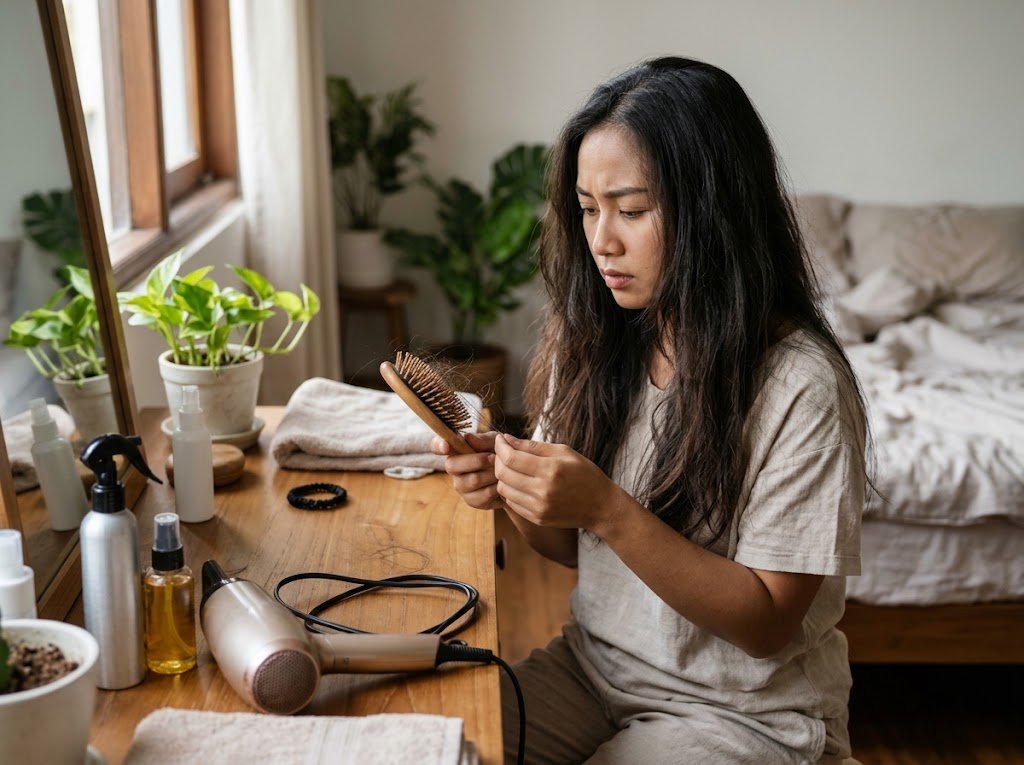
Hello, Salwa Besties! Maintaining hair to be consistently thick, soft, and naturally radiant requires comprehensive attention. Often, we invest in a variety of premium hair care products, yet our crowning glory continues to suffer from issues like hair loss, dullness, breakage, or split ends.
Unbeknownst to us, the primary culprits might stem from simple daily routines we consider normal, but which are slowly damaging the hair cuticle’s structure. Let’s identify these detrimental habits and make immediate changes for your hair’s health!
Everyday Habits That Can Damage Hair Strands
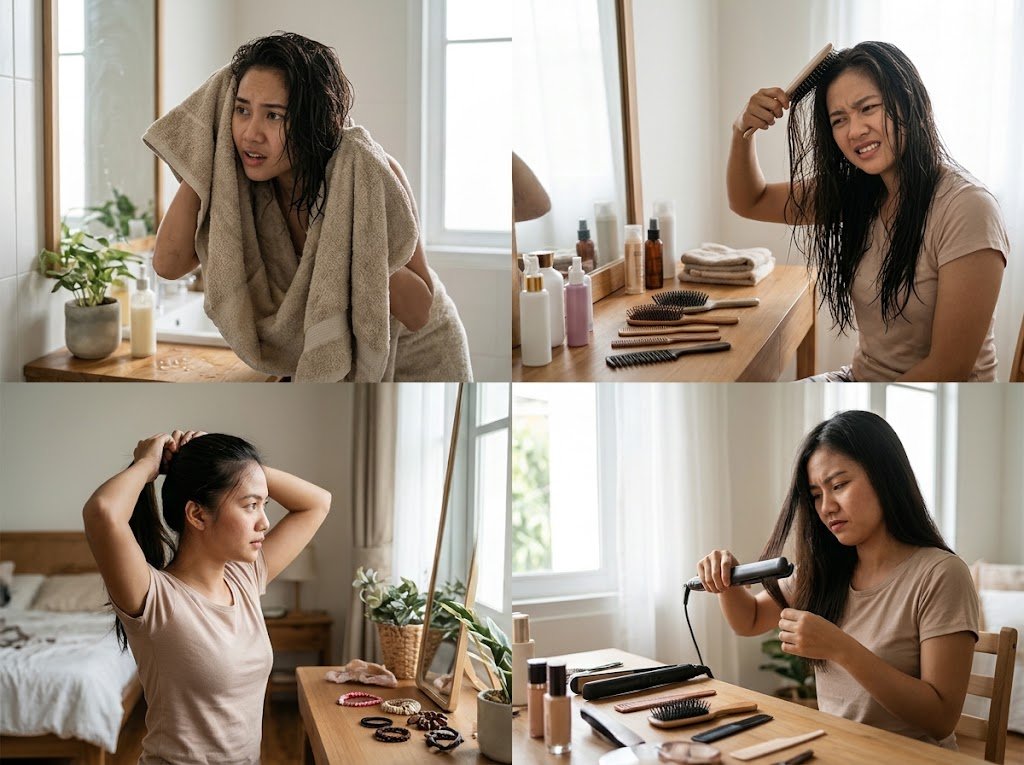
1. Rubbing Wet Hair with a Coarse Towel?
Wet hair strands are at their most vulnerable. Aggressively rubbing them with a standard cotton bath towel can tear the hair cuticle, leading to tangles and brittle strands.
2. Combing Hair from the Roots When Wet?
Forcibly pulling a comb from the scalp downwards when hair is wet stretches the hair fibers to the point of breakage and loss. Detangle knots starting from the ends first, gently.
3. Tying Hair Too Tightly Too Often?
An overly tight ponytail style pulls on the hair follicles, triggering traction alopecia in the hairline and temples.
4. Styling Hair with Heat Tools Without a Heat Protectant?
The high temperatures of styling tools, often exceeding 180 degrees Celsius (356 degrees Fahrenheit), can essentially “cook” the hair’s keratin proteins if not shielded with a protective serum beforehand.
5. Washing Hair with Water That’s Too Hot?
Excessively hot shower water can strip the scalp of its natural protective oils, leading to a dry, itchy scalp and hair that becomes frizzy and unmanageable.
6. Neglecting to Trim Split Ends?
Allowing split ends to persist will cause the damage to travel up the hair shaft, resulting in progressively thinner strands.
The Threat of Traction Alopecia from Tying Wet Hair:
“The most critical mistake frequently observed in salons is the habit of tying hair into a tight ponytail immediately after shampooing while it’s still wet. Wet hair fibers experience maximum elastic stretching; tying them tightly with a regular elastic band will exert excessive pulling force on the follicular units (traction alopecia) while simultaneously fracturing the hair shaft at the knot’s point of tension. Besides triggering hair loss along the hairline, trapped air circulation within the wet tie creates a perfect humid environment for fungal spores that cause seborrheic dermatitis and musty odors. Always allow hair to dry completely before loosely tying it.” — Fatmawati Tahir
Restorative Steps to Revitalize Hair Strands
Switch to a soft microfiber towel, use silk scrunchies, and apply a nourishing hair mask regularly once a week.
Frequently Asked Questions About Hair Care Habits (FAQ)
What is the safe limit for heat styling hair per week?
Ideally, limit heat styling to 2 to 3 times per week, always using a moderate temperature setting and a heat protectant spray.
Does sleeping on a cotton pillowcase damage hair?
The friction from coarse cotton fibers can absorb hair’s natural moisture. Switching to satin or silk pillowcases significantly helps prevent hair tangles and breakage.
When is the best time to comb hair?
Comb your hair when it’s about 80% dry, using a wide-tooth comb or a soft-bristled paddle brush.



Tinggalkan Balasan