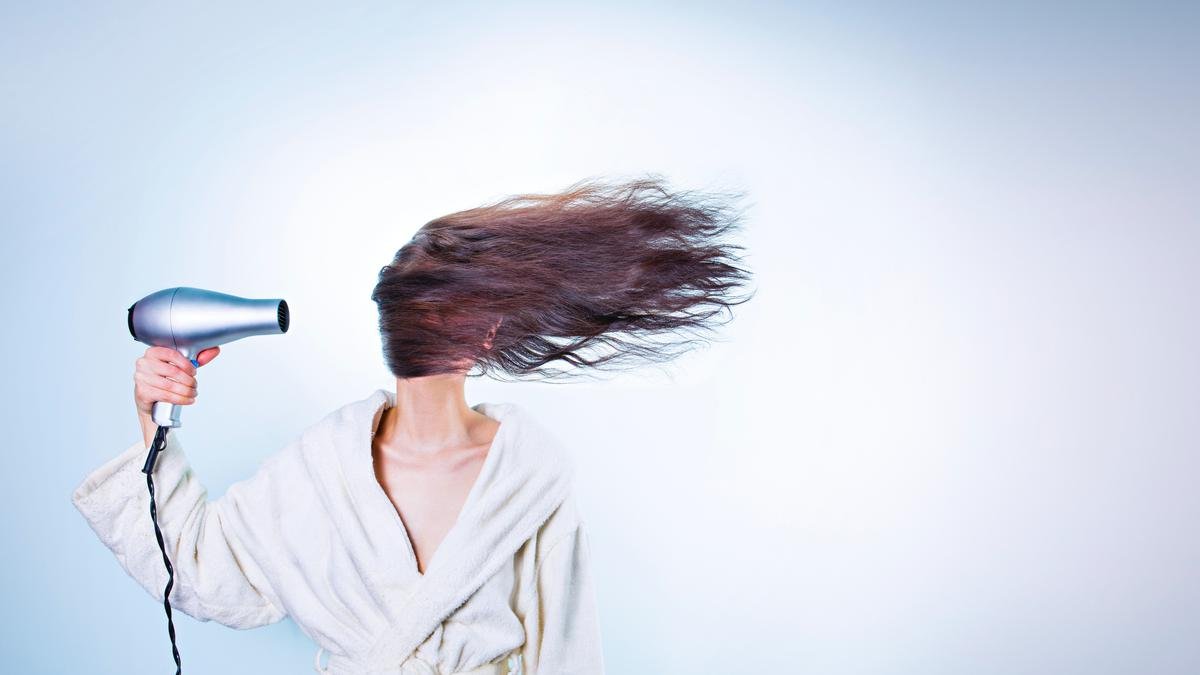
Hello, Salwa Besties! The ritual of shampooing (*keramas*) is a fundamental step in maintaining the cleanliness of your crowning glory. However, did you know that the most critical moment when hair is vulnerable to severe damage actually occurs right after shampooing, during the drying process?
When wet, the hydrogen bonds within hair strands elongate, leaving the protective cuticle in its most fragile and elastic state. Drying hair carelessly by rubbing vigorously or using excessive heat from a hairdryer can compromise the hair’s cortex layer. Let’s implement these six safe hair-drying methods!
6 Essential Steps for Damage-Free Hair Drying
1. Gently Squeeze Out Excess Water with Your Palms
Once you’ve finished rinsing, don’t immediately wrap your hair. Gently squeeze the ends of your hair strands with clean palms, working from top to bottom, to remove excess water without tugging at the roots.
2. Use a Microfiber Towel or a Soft Cotton T-Shirt
Replace rough-textured cotton bath towels with a microfiber towel. Gently press the towel into your hair strands to absorb moisture without causing friction that can abrade the cuticle.
3. Avoid Rubbing Hair Strands Vigorously
The habit of rubbing your head back and forth with a towel is the number one culprit behind tangled, broken, and split ends. Simply pat and press gently.
4. Apply a Heat Protectant Before Using Drying Tools
If you plan to use a hairdryer, always spritz a heat protectant evenly from mid-lengths to the ends of your hair to shield the hair’s protein structure.
5. Utilize the Cool Shot Setting
Begin by drying your scalp area using a hairdryer on the cool or lukewarm setting. Maintain a minimum distance of 6 inches (15 cm) between the dryer nozzle and your hair.
6. Detangle with a Wide-Tooth Comb
When your hair is about 80% dry, gently comb through it using a wide-tooth comb, starting from the ends and gradually working your way up towards the roots.
Tips for Faster Natural Hair Drying
Allow your hair to air dry freely in a well-ventilated area or near a gentle fan. This allows air circulation to expedite water evaporation without compromising hair strands.
Hair Drying FAQs
Which is better, drying with a hairdryer or natural air drying?
A combination of both is optimal: dry your scalp with a cool-setting hairdryer for a few minutes, then allow the hair shafts to air dry naturally.
Is it okay to sleep with slightly damp hair?
It is strongly discouraged, Bestie! Damp pillowcases can become a breeding ground for fungi that trigger dandruff, and fabric friction can lead to fragile, broken hair strands.
Why does my hair feel stiff when dried with a hairdryer?
This indicates that your hair is experiencing dehydration due to excessive heat. Always use a conditioner after shampooing and apply a hair vitamin serum.