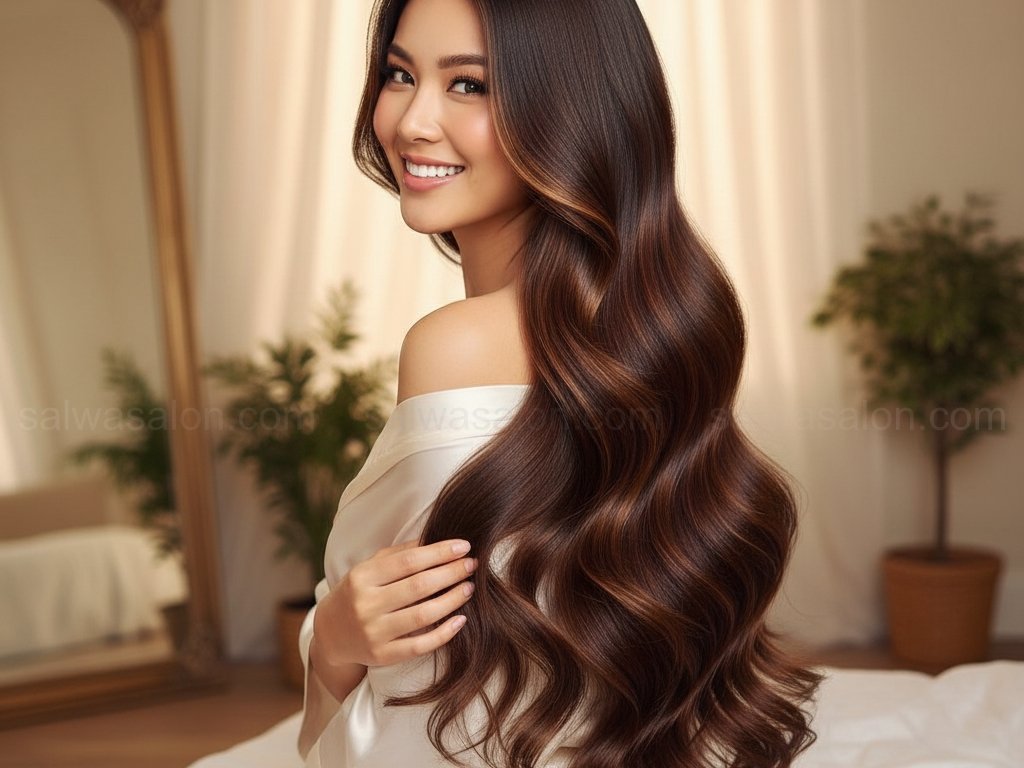
Experiencing hair strands that feel coarse like wire, break easily when brushed, are brittle, and have split ends can significantly diminish self-confidence. This type of hair damage is typically an accumulation of harsh treatments: coloring processes with bleaching agents, chemical straightening (rebonding), and the habit of daily heat styling at extreme temperatures without protection. Many assume the only solution to repair damaged hair is to spend a fortune on intensive treatments at luxury salons.
- 2.1 1. Use a Low-Sulfate Shampoo Rich in Keratin Protein
- 2.2 2. Always Apply Conditioner After Every Wash
- 2.3 3. Perform a Deep Conditioning Mask Once a Week
- 2.4 4. Neatly Trim Split Ends (Trimming)
- 2.5 5. Take a Temporary Break from Heat Styling Tools
- 2.6 6. Seal Hair Ends with Protective Serum Oil Daily
However, by understanding the anatomical structure of hair damage and implementing a disciplined, targeted daily care routine at home, you can gradually and sustainably restore the flexibility and softness of your hair strands.
Identifying Types of Damage to Hair Structure
Before selecting corrective products, it’s crucial to recognize the specific type of damage your hair is experiencing:
- Mechanical Damage: Caused by rough friction during brushing wet hair, tying hair too tightly, or vigorously rubbing hair with a coarse towel. Characterized by strands that break easily mid-shaft.
- Thermal Damage: Resulting from excessive heat from styling tools like flat irons or blow dryers, which boils the moisture within the hair cortex, leaving strands dry, stiff, and prone to brittle breakage.
- Chemical Damage: Occurs due to bleaching or perming solutions that break the disulfide bonds within the keratin fibers. Hair strands lose their elasticity, feel limp and rubbery when wet, and shatter brittlely when dry.
6 Steps to Independently Restore Damaged Hair at Home
1. Use a Low-Sulfate Shampoo Rich in Keratin Protein
Avoid shampoos with high detergent content that can exacerbate cuticle dryness. Opt for a restorative, damage-repair shampoo enriched with hydrolyzed keratin, silk amino acids, and argan oil. Gently cleanse your scalp using your fingertips, avoiding rough scrubbing of the hair shafts.
2. Always Apply Conditioner After Every Wash
Conditioner is your daily savior for resealing the compromised cuticle scales. Apply a concentrated conditioner from the mid-lengths to the ends of your hair, allowing it to penetrate for 3 to 5 minutes, then rinse with cool water to lock in hydration.
3. Perform a Deep Conditioning Mask Once a Week
Replace your daily conditioner with an intensive, deep conditioning hair mask once a week. Cover your hair, coated with the mask, using a warm shower cap for 20 to 30 minutes. Gentle heat will help the formula, rich in shea butter, ceramides, and plant-based proteins, penetrate the hair cortex.
4. Neatly Trim Split Ends (Trimming)
It’s important to realize that split or frayed ends cannot be permanently rejoined by any product. Trimming damaged ends by 1 to 2 centimeters every 6 to 8 weeks is a mandatory step to prevent further propagation of breakage up the hair shaft.
5. Take a Temporary Break from Heat Styling Tools
Give your hair time to breathe and recover. Put away your flat irons and curling wands for a minimum of 3 to 4 weeks. If you must dry your hair, use the cool setting on your blow dryer from a distance of at least 20 centimeters.
6. Seal Hair Ends with Protective Serum Oil Daily
Dispense 2 drops of hair serum or pure jojoba oil onto your palms, then smooth it over the driest ends of your hair each morning and before bedtime. This lipid layer acts as a shield against friction from clothing and the dry air of air-conditioned rooms.
Balancing Hydration and Protein for Damaged Hair:
Caring for damaged hair requires a delicate balance between two essential elements: moisture (hydration) and strengthening protein. If your hair feels extremely brittle and stretchy when wet, it needs protein mask treatments. However, if your hair feels dry, stiff, and straw-like, it requires more emollient hydration for softening. Over-applying protein to water-deprived hair will only make it stiffer and more prone to breakage. — Salwa Salon Editorial Team
Frequently Asked Questions About Damaged Hair Care (FAQ)
How long does it take to see improvement in severely damaged hair?
With disciplined intensive mask treatments and reduction of heat styling tools, the surface softness of the hair begins to improve within 2 to 4 weeks. Full structural strength recovery typically takes 2 to 3 months.
Can hair damaged by bleaching return to its virgin state?
Hair fibers whose chemical bonds have been degraded cannot fully revert to their original virgin state. However, their condition can be restored to be 70-80% stronger, more flexible, and appear healthier with regular bond builder and lipid treatments.
Is it permissible to brush damaged hair while it’s still wet?
Avoid brushing damaged hair when it is soaking wet. Gently pat it dry with a microfiber towel until it’s damp, then carefully detangle using a wide-tooth comb, working from the ends upwards.
Is coconut oil effective for repairing damaged hair?
Coconut oil is highly effective because its medium-chain triglyceride molecules can penetrate the hair shaft and reduce protein loss during shampooing.