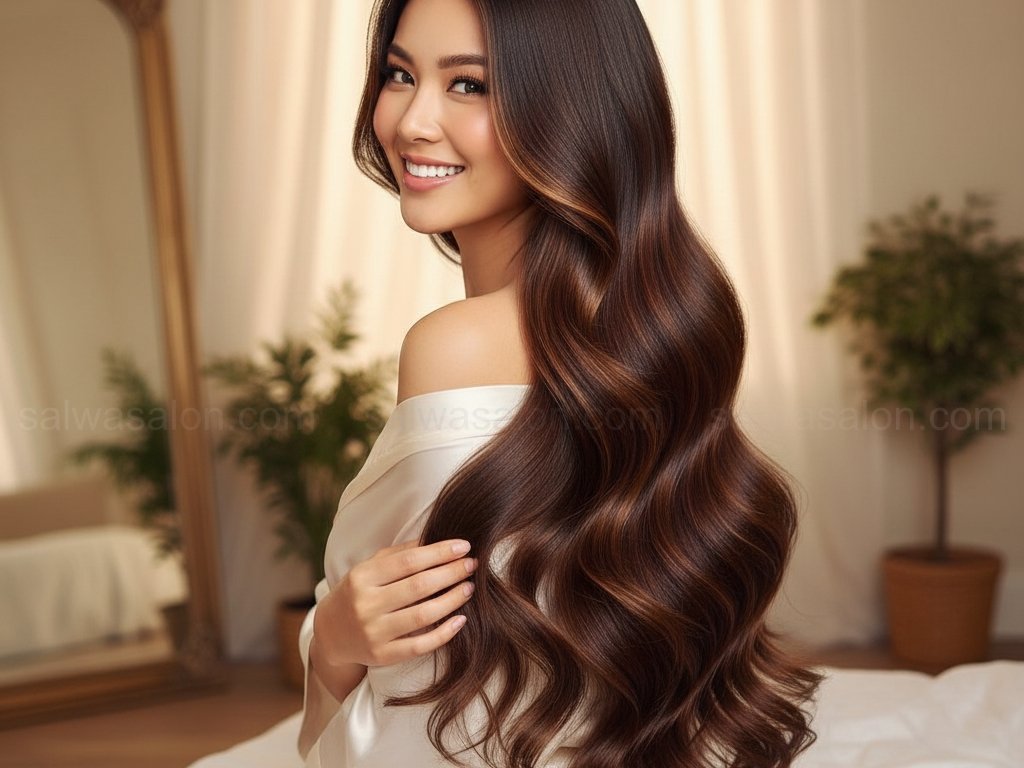
For anyone who enjoys transforming their crowning glory through regular coloring, chemical bleaching, rebonding straightening, or permanent perming, the risk of hair damage is a constant threat. Often, after repeated exposure to harsh chemicals and high heat from styling tools, hair strands begin to lose their natural elasticity: hair feels rubbery when wet, snaps into pieces when brushed, and becomes stiff and straw-like when dry.
When hair reaches this level of severe damage, conventional silicone conditioners are no longer sufficient. Silicones merely coat the outer cuticle temporarily, leaving the cortex within the hair shaft porous and compromised. Cutting-edge innovations in hair biotechnology offer a revolutionary solution through biomimetic peptide therapy and hydrolyzed amino acid chains. This molecular-based therapy penetrates deep into the keratin fiber core to reconnect broken polypeptide bonds, restoring the intrinsic strength of the hair strands to near their natural healthy state.
Biochemical Mechanisms of Peptide Therapy on the Hair Shaft
Understanding how peptides work helps us choose targeted restorative treatments:
1. Micro-Molecule Penetration into the Cortex Layer?
Intact keratin protein molecules are too large to enter the hair shaft. Through biotechnological engineering, protein chains are broken down into nano-sized bioactive peptides that can freely penetrate the damaged cuticle gaps and reach the deepest cortex layer.
2. Reconnecting Polypeptide and Disulfide Bonds?
The chemical process of bleaching breaks down the disulfide and peptide bonds that form the backbone of hair strand strength. Biomimetic amino acid chains mimic the original keratin DNA sequence and covalently bond to the broken peptide chains, permanently patching micro-porosities from within.
3. Restoring Natural Hair Moisture Retention?
Severely damaged hair loses its ability to retain moisture within its fibers. The restructuring of keratin by amino acids restores cellular moisture retention, bringing back the natural suppleness of hair strands so they are no longer prone to breakage when pulled.
4. Neutralizing Excess Calcium Mineral Buildup?
In highly porous hair, calcium and mineral deposits from household tap water can accumulate within the hair cortex, making hair stiff and brittle. Modern treatment formulas are enriched with chelating agents like citric acid and glycine that dissolve calcium buildup before peptide application.
At-Home Peptide Restoration Treatment Stages
Maximize your hair restoration results with a disciplined treatment protocol:
- Step 1: Decalcification and Deep Cleansing: Use a pre-shampoo or a gentle clarifying shampoo to remove heavy metal residues and prepare the hair for peptide penetration.
- Step 2: Application of Leave-In Molecular Peptide Mask: Evenly apply a molecular mask containing oligopeptides to towel-dried hair after shampooing. Leave it on for four minutes without rinsing to allow molecular bonds to set completely.
- Step 3: Avoid Heavy Oil Buildup Initially: Do not immediately coat hair with heavy hair oils after applying the peptide mask; allow the peptides to work their way into the cortex first before adding other styling products.
- Step 4: Disciplined Periodic Treatments: Perform this peptide restoration therapy every time you shampoo for four to six consecutive sessions, then reduce to a maintenance treatment once every two weeks.
Salwa Salon Editorial Note: Damaged hair is not the end of your crowning glory’s beauty, but rather a call to nurture it with wise science and sincere patience. Give your hair strands time to recover from within, and appreciate every step of its health journey with gratitude.
Questions About Hair-Restoring Peptide Therapy
Will the restorative effects of a peptide mask wash out when hair is re-washed?
No, they will not wash out. Unlike regular conditioning masks that only adhere to the exterior, peptides biochemically integrate with the keratin chains within the hair cortex and are permanent.
Can severely split ends be reconnected by peptides?
Severely split ends still require a light trim; peptides work to strengthen the remaining hair shaft to prevent brittleness and new split ends.
Is peptide therapy safe for uncolored hair?
It is very safe. Natural hair damaged by intense sun exposure or daily heat styling will also experience significant improvements in strength and softness.
What is the recommended waiting period before undergoing another chemical process?
Allow a minimum of four to six weeks for hair keratin bonds to recover with peptide therapy before considering re-coloring the hair.
Is it safe to mix a peptide mask with regular conditioner?
Use the peptide mask independently first, following the application instructions. Heavy conditioners applied simultaneously can hinder the penetration of peptide molecules into the hair fibers.
Understanding modern hair treatment technology allows us to care for our crowning glory intelligently and with scientific evidence. Nourish your hair fibers with the right peptide nutrients, avoid excessive chemical exposure, and rediscover strong, resilient strands that radiate natural healthy shine every day.