For men, a haircut is more than just trimming long strands; it’s a cornerstone of visual aesthetics and personality impression. The right haircut can accentuate the best facial features, define the jawline, and even camouflage less balanced proportions. Unfortunately, many men often choose styles based on fleeting trends seen in photos without understanding their own head anatomy. Learning a guide to men’s hairstyles according to face shape is crucial for exuding charisma.
- 2.1 1. Hairstyles for Round Faces: Create Vertical Volume
- 2.2 2. Hairstyles for Square Faces: Emphasize Masculine Definition
- 2.3 3. Hairstyles for Oval Faces: Versatility for All Styles
- 2.4 4. Hairstyles for Oblong Faces: Add Horizontal Proportion
- 2.5 5. Hairstyles for Heart and Diamond Faces: Balance a Pointed Chin
The fundamental principle is to create visual balance: a round face benefits from vertically elongating styles, while angular faces require softer, flowing textural transitions.
Identifying Your Face Shape Geometry
Before heading to your go-to barbershop or salon, the first step is to identify your face shape in the mirror by pulling all your hair back. There are five common geometric face shape categories for men:
- Oval Face: The face length is slightly greater than the width of the cheekbones, with the forehead being slightly wider than a rounded jawline. This is considered the most proportional face shape.
- Round Face: The width of the cheekbones and the face length are nearly equal, with a softly curved jawline lacking sharp angles.
- Square Face: A very strong, angular jawline with symmetrical width across the forehead, cheekbones, and jaw.
- Oblong (Long) Face: The face appears elongated vertically, with the width of the forehead and jawline being relatively parallel.
- Heart or Diamond Face: Prominent cheekbones with a pointed, tapering chin.
Recommended Hairstyles Based on Face Shape Geometry
1. Hairstyles for Round Faces: Create Vertical Volume
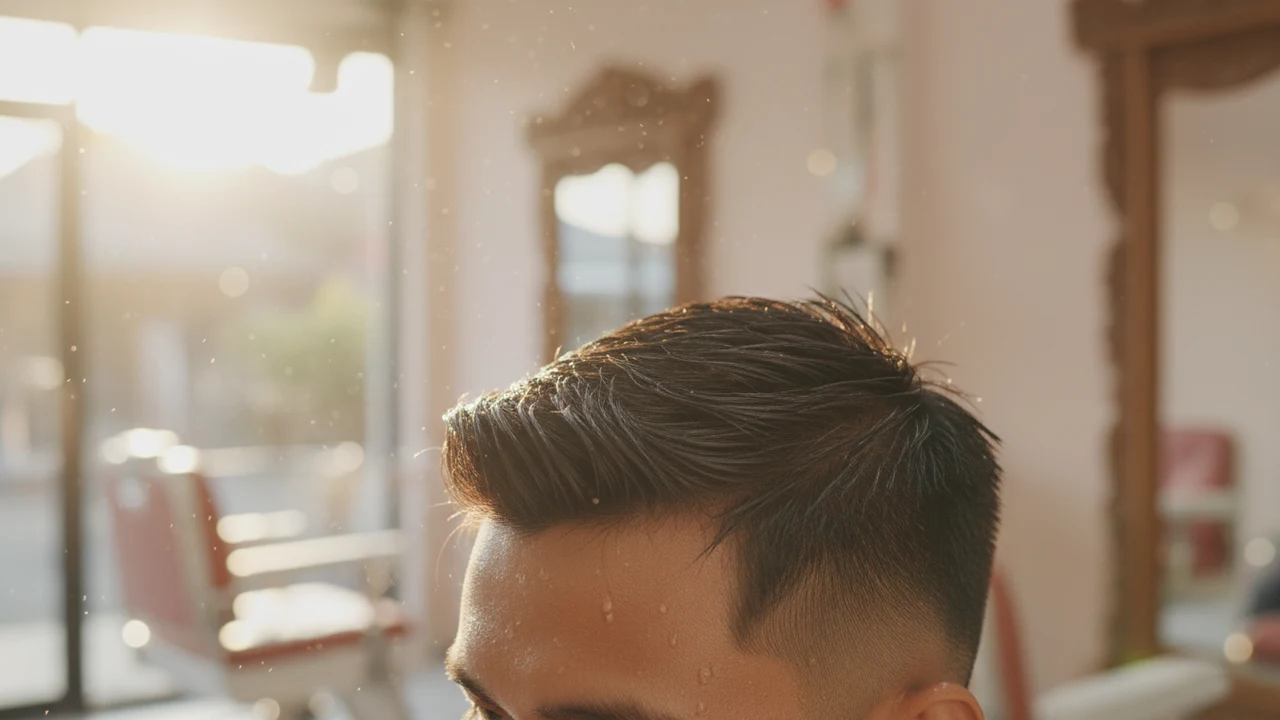
The primary goal for styling a round face is to create the illusion of a longer, leaner face. The best choices are cuts with ample volume on top and tapered sides (fade or undercut). Styles like the Pompadour, Textured Quiff, and High Skin Fade are highly effective in balancing facial roundness.
2. Hairstyles for Square Faces: Emphasize Masculine Definition
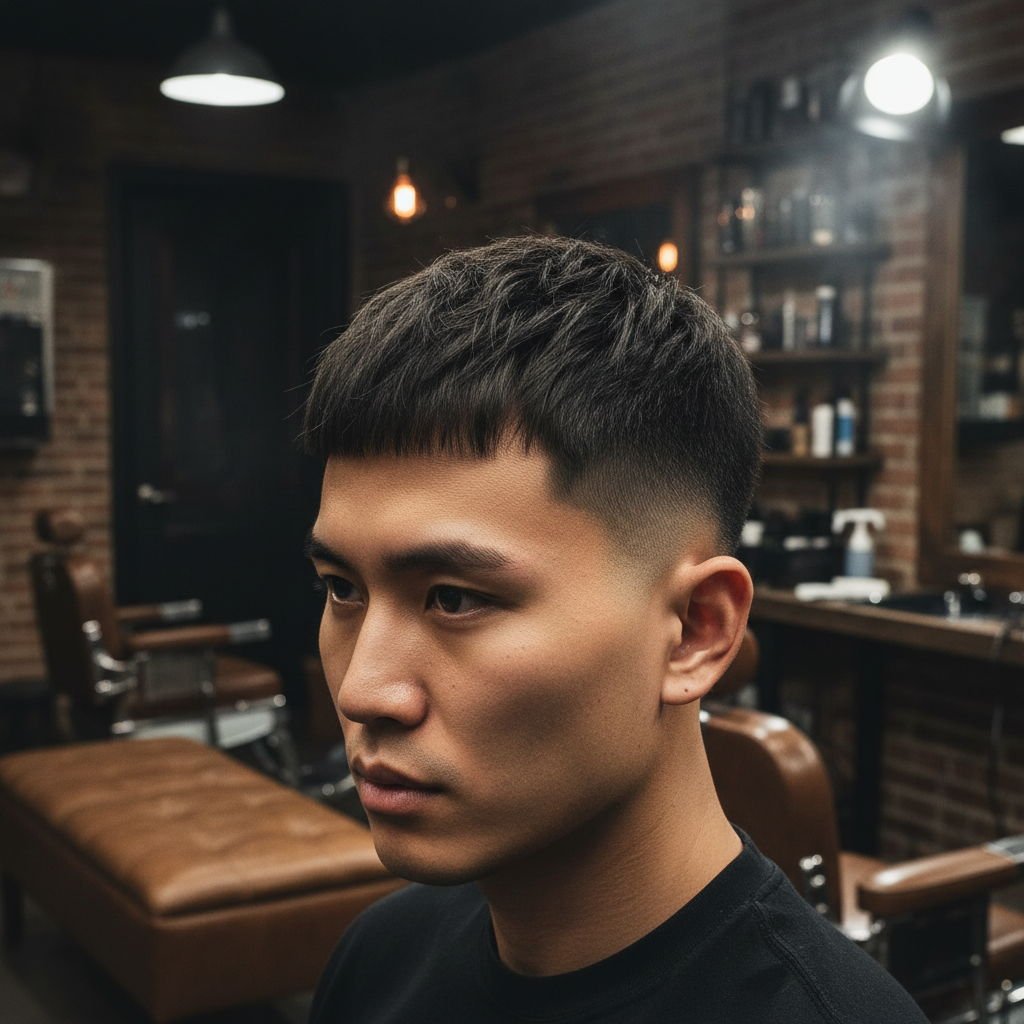
Men with square faces naturally possess a strong jawline. You can opt for classic cuts like a neat Side Part, a Buzz Cut, or a textured French Crop. Avoid styles with overly voluminous sides, which can make the head appear too boxy.
3. Hairstyles for Oval Faces: Versatility for All Styles
The oval face shape is considered the most versatile, suiting almost any hairstyle, from a Slicked Back look to Comma Hair, or even medium-length styles hitting the shoulders. The only thing to avoid is a thick, straight fringe that can shorten the appearance of the face.
4. Hairstyles for Oblong Faces: Add Horizontal Proportion
For those with oblong faces, avoid hairstyles that are excessively tall on top, as this will further elongate the face. Opt for styles with proportional side layers, such as the classic Crew Cut, a Side Swept Fringe, or a style with a light fringe that partially covers the forehead.
5. Hairstyles for Heart and Diamond Faces: Balance a Pointed Chin
Men with pointed chins and wide cheekbones are well-suited to medium-textured haircuts like a Taper Fade, a Textured Crop with an artfully disheveled fringe, or a Mid-Length Quiff. These styles add balanced volume to the temples, creating a proportional and masculine transition to the chin.
Facial Geometry and Male Jawline Structure:
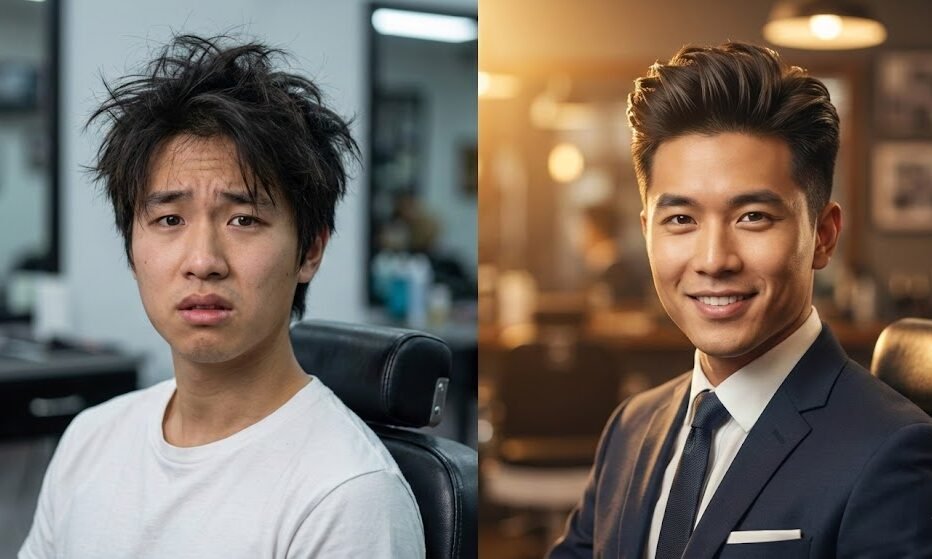
An ideal men’s haircut acts as a visual illusion balancer for the jawline and head proportions. Bringing photo references is helpful, but the barber needs to adjust the cut to the natural growth patterns of your hair. The key to a great cut is a style that remains neat and is easy to manage at home without taking excessive time. — Salwa Salon Editorial Team
The Importance of Effective Communication with Your Barber or Stylist
Bringing reference photos of hairstyles is a good starting point, but discuss openly whether the cut is realistic for your hair type. A professional barber will adjust the cutting angles at the crown and the direction of your hair’s growth patterns so that the style remains neat, even when you first wake up.
Hair Texture Factors and Supporting Styling Products
Beyond face shape, your natural hair texture plays a significant role in daily styling ease:
- Straight and Fine Hair: Use sea salt spray or a water-based pomade to add textural grip without weighing hair down.
- Thick and Coarse Hair: Employ a high-hold matte clay to control unruly strands.
- Wavy and Curly Hair: Utilize a lightweight curl cream to define natural waves without a sticky feel.
Frequently Asked Questions About Men’s Hairstyles (FAQ)
What’s the easiest way to determine my face shape at home?
Take a selfie directly facing the camera at eye level with your hair pulled back. Then, observe the silhouette of your face on your phone screen to objectively assess the proportions of your forehead, cheekbones, and jaw.
Are men with thinning hair suitable for fade styles?
Absolutely. A fade on the sides effectively distracts from thinning areas on top, creating a contrast that makes the hair on top appear fuller.
How often should men get their haircuts at a salon or barbershop?
For short fade and taper cuts, it’s ideal to get a trim every 2 to 3 weeks. For medium to long hairstyles, a regular visit every 4 to 6 weeks is sufficient to maintain the shape and neatness.