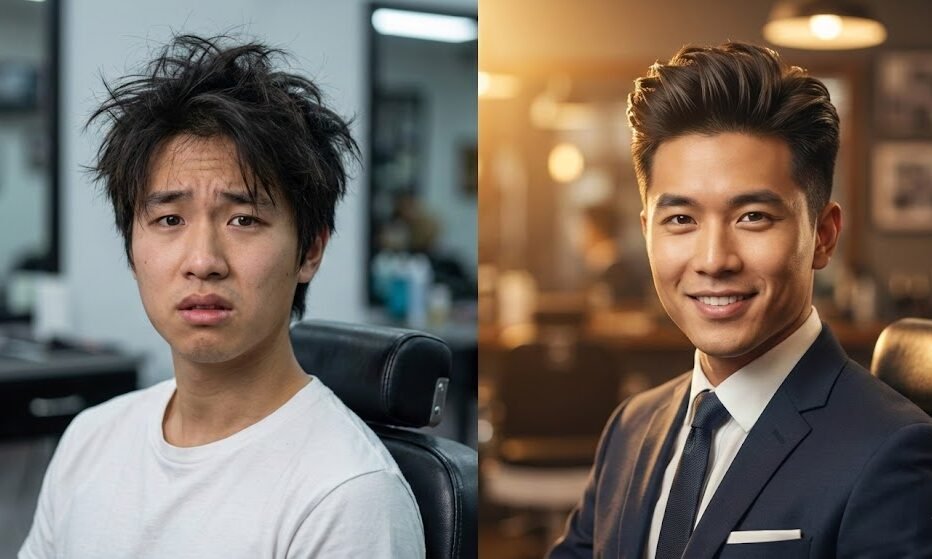
For men, a haircut at the barbershop is more than just a routine trim of lengthening strands; it’s a significant investment in appearance and self-confidence. However, nearly every man has experienced the disappointment of leaving a barbershop with a haircut that’s too short, asymmetrical lines, or a style far from their initial vision.
On social media, we frequently encounter complaints and disputes between clients and barbers stemming from dissatisfaction with haircut results. The majority of these disappointments are rooted in a simple factor: miscommunication in the crucial moments before the first snip of the scissors.
Why Do Expectation Gaps Occur in the Barber’s Chair?
It’s important to recognize that everyone’s visual perception is highly subjective. When a client says, “Just take a little off the top,” “a little” could mean 1 centimeter to the client, but it might be interpreted as 3 centimeters by the barber who sees the ends as damaged or split.
Furthermore, professional barbers work with an understanding of cranial structure, cowlick patterns, and the natural elasticity of hair strands. Without constructive two-way dialogue, barbers are left guessing your desires based on general trends.
5 Steps for Effective Communication at the Barbershop
1. Bring Realistic Photo References
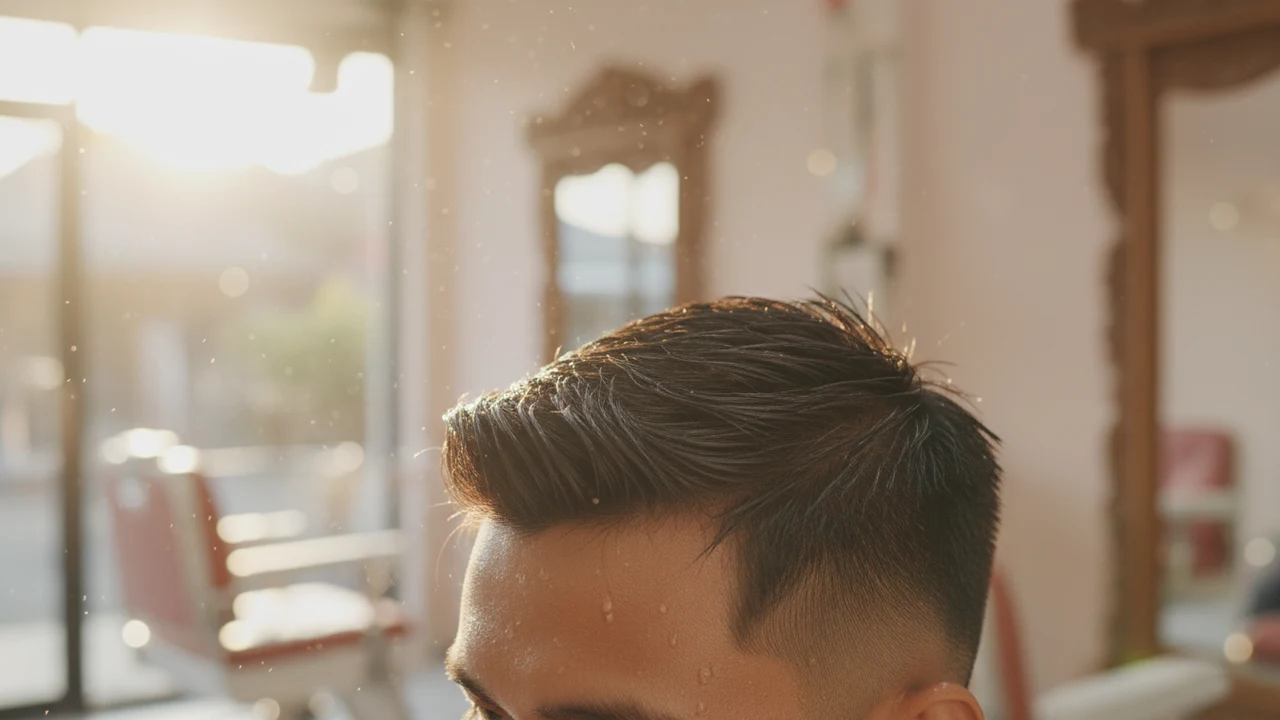
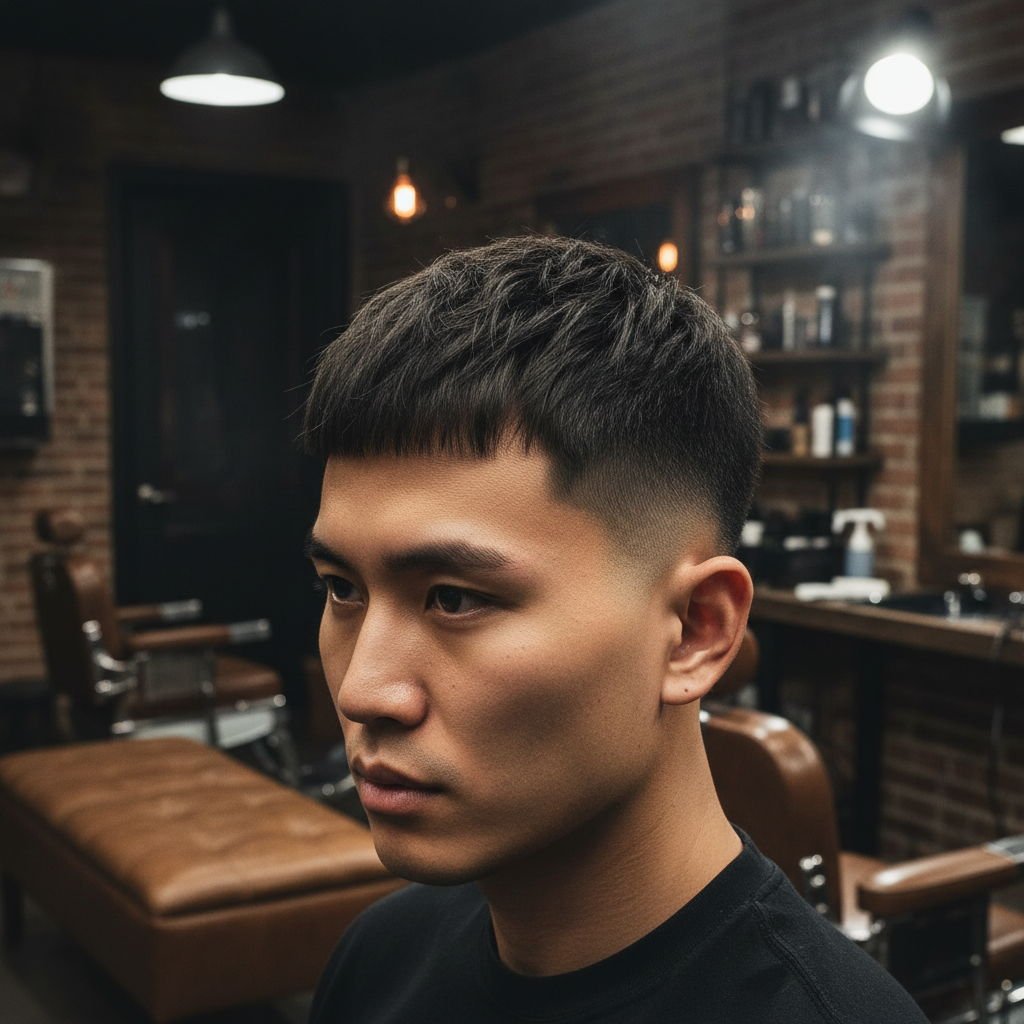
Describing a hairstyle with words alone often leads to misinterpretation. The safest and most effective method is to present 2 to 3 reference photos from the front, side, and back angles. Choose photos of models with hair types similar to yours (straight, wavy, or curly) and hairline shapes that closely match your natural growth pattern.
2. Understand Basic Men’s Haircut Terminology
Familiarizing yourself with a few basic technical terms will greatly assist the barber in understanding your instructions:
- Fade: A graduated haircut that transitions from very short (even skin) at the bottom, blending to a thicker length towards the top. Options include low fade, mid fade, or high fade.
- Taper: A gradual shortening focused solely on the sideburns and the nape of the neck, allowing the side hair to retain its natural thickness.
- Undercut: A distinct contrast without a smooth gradation between the short-cut bottom section and the longer, disconnected top section.
- Texturizing: A technique using thinning shears or point-cutting to remove bulk and prevent hair from lying flat and heavy, creating a more natural, less “bowl-cut” appearance.
3. Share Your Daily Styling Routine
Honestly inform your barber whether you’re someone who diligently styles your hair every morning with a hairdryer and pomade, or if you prefer a low-maintenance style that’s neat with just a finger comb after showering. A skilled barber will adjust their cutting technique so you won’t struggle to style it yourself at home.
4. Be Open to Your Barber’s Professional Input
If the hairstyle you’ve brought as a photo reference is deemed less suitable for your oval face shape or the prominence of your occipital bone, listen to your barber’s advice with an open mind. They possess the spatial knowledge of cutting angles that can balance your facial features.
5. Provide Polite Feedback During the Process
Don’t remain silent, engrossed in your phone throughout the haircut. Periodically check the mirror. If you feel the sides are sufficiently short before the barber reaches for a thinner clipper guard, politely state, “Excuse me, I think the side length is perfect at this point.” Early corrections are far easier to make than regretting hair that has already been cut too short.
Building a Long-Term Trusting Relationship with Your Barber:
Finding a compatible barber is akin to finding a family doctor or a personal tailor. Once you’ve found a stylist or barber who understands your cowlick patterns, hair texture, and personal preferences, commit to them as a regular client. A consistent, long-term relationship minimizes the risk of a bad cut because they already know your head’s anatomy without needing extensive repeated explanations. — Salwa Salon Editorial Team
Barbershop Etiquette for Mutual Comfort
Respecting your barber’s professionalism fosters a pleasant working environment:
- Arrive with Clean Hair: Shampoo at home or utilize the barbershop’s hair-washing facilities before your cut. Hair laden with dried wax or gel can dull scissor blades and impede precision cutting.
- Maintain a Stable Head Position: Avoid sudden head movements to check phone messages while the barber is wielding scissors or a razor around your ears and neck.
- Show Appropriate Appreciation: Offer a sincere thank you and a suitable tip if you are satisfied with the service and the quality of the haircut.
Frequently Asked Questions (FAQ)
What should I do if my haircut turns out too short?
Stay calm; men’s hair grows approximately 0.3 to 0.4 millimeters per day. You can manage it by using styling powder or matte clay to create texture and a slightly disheveled look during the 1-2 week recovery period.
Is it acceptable to ask the barber to fix an asymmetrical cut?
Absolutely. Politely point out the areas that feel unbalanced before you get up from the barber’s chair.
How can I request a hairstyle if I don’t have reference photos?
Describe the desired length in centimeters, specify your preferred parting or styling direction (side part, swept back, or forward), and request a safe side graduation (classic taper).
What is the ideal interval for men’s haircuts?
For fades or short crop styles, ideally every 2 to 3 weeks. For medium styles like a two-block or curtain hair, you can get a tidy-up every 4 to 5 weeks.
Conclusion
A satisfying haircut is the result of a strong partnership between a communicative client and a skilled barber. By prioritizing mutual respect, bringing clear references, and engaging in active dialogue throughout the cutting process, you will always leave the barbershop with pride and complete confidence.