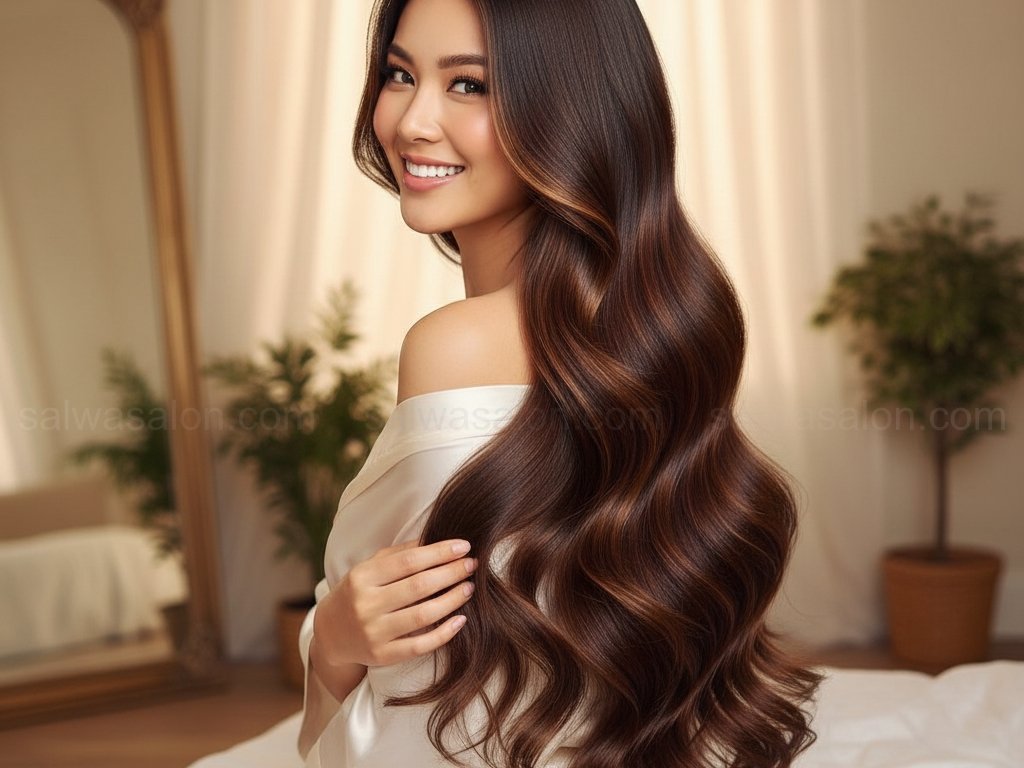
Many individuals find themselves perplexed when their hair remains dry, dull, and prone to breakage despite washing it every other day. What’s often overlooked is that the shampooing process inherently strips away not only dirt but also the hair’s protective lipid layer. Consequently, without the right conditioner, strands are left vulnerable and depleted of moisture.
Selecting the ideal conditioner formula for dry hair isn’t about succumbing to overpowering fragrances; it’s about understanding the synergy of active ingredients like water-binding humectants, cuticle-smoothing emollients, and fiber-strengthening amino acids that can restore silken softness to your crowning glory.
Why Does Dry Hair Absolutely Need Conditioner?
The cuticle of dry hair exhibits an open, rough, and scaly structure. When these scales are not lying flat, light refracts erratically across the hair’s surface, resulting in a dull, lack-luster appearance. Furthermore, rough strands tend to interlock, leading to severe tangles and subsequent mechanical breakage during combing.
Conditioners are formulated with positively charged (cationic) molecules that naturally adhere to damaged, negatively charged hair sections. This micro-thin layer reseals the cuticle flat, reducing inter-strand friction by up to ninety percent and preserving essential moisture within the hair’s cortex.
Key Ingredients to Seek in Conditioner Formulas
1. Fatty Acid-Rich Botanical Oils (Argan and Olive Oil)
Micro-sized botanical oils can penetrate the cuticle’s inter-cellular spaces to replenish lost natural hair lipids. Argan oil is abundant in Vitamin E and antioxidants, while olive oil provides a substantial protective barrier, exceptionally effective at softening hair shafts stiffened by sun exposure.
2. Natural Humectants (Glycerin, Panthenol, and Aloe Vera)
Humectants act as moisture magnets, drawing hydration from the surrounding atmosphere into the hair fibers. Panthenol (provitamin B5) possesses a unique ability to penetrate the hair shaft and bind water molecules, imparting a more voluminous, resilient, and breakage-resistant strand.
3. Intensive Botanical Butters (Shea Butter and Murumuru Butter)
For severely dry, coarse, or chemically treated hair (from perms or color services), opt for conditioners enriched with shea butter. Its concentrated emollient properties deliver profound, long-lasting hydration that persists until your next wash.
4. Hydrolyzed Proteins (Hydrolyzed Keratin or Silk Protein)
Chronically dry hair often suffers from internal structural fragility. Hydrolyzed proteins, broken down into minute particles, can fill micro-cavities within compromised hair shafts, restoring hair elasticity and preventing strands from snapping under gentle tension.
Proper and Effective Conditioner Application Technique:
The most common error we observe is applying conditioner directly from the scalp to the hair ends. Conditioners are specifically designed for the mature, dry hair shaft, not the scalp’s follicles. Applying conditioner to the scalp can occlude pores and trigger seborrheic dermatitis. Always thoroughly squeeze out excess water from your hair before applying conditioner, starting from the ear line downwards. Allow it to process for two to three minutes, then rinse thoroughly with cool-temperature water. — Salwa Salon Editorial Team
Conditioner Categories Based on Hair Dryness Levels
For daily maintenance, a lightweight rinse-out conditioner is sufficient to maintain the softness of normal to dry hair. However, if your hair is extremely dry and frizzy, consider supplementing with a leave-in conditioner, misted onto damp hair before styling.
Additionally, incorporate a deep conditioner, in the form of a rich cream mask, once a week. This intensive treatment penetrates deeper to reconstruct weakened hair disulfide bonds and gradually restore your hair’s natural suppleness.
Frequently Asked Questions (FAQ)
Is it permissible to use conditioner daily without shampoo?
Yes, this method is highly beneficial for individuals with dry and curly hair, helping to preserve natural moisture without causing scalp irritation from shampoo detergents.
Why does my hair still feel dry even after using conditioner?
This typically occurs if the hair is still excessively wet when conditioner is applied, causing the product to slip off, or if you are rinsing with water that is too hot.
Are silicone-free conditioners better for dry hair?
Silicone-free conditioners prevent long-term residue buildup. However, for severely damaged and tangled hair, water-soluble silicones can still be beneficial for providing a protective slip effect.
How long should rinse-out conditioner be left on the hair?
The optimal duration for a standard rinse-out conditioner is between two to three minutes, allowing its active ingredients sufficient time to bind effectively to the cuticle layer.
A Soothing Conclusion
Addressing dry hair requires patience and gentleness in every touch of care. By selecting conditioner formulas rich in natural nutrients and applying them with the correct technique, your hair will gradually rediscover its natural softness, resilience, and healthy luster.