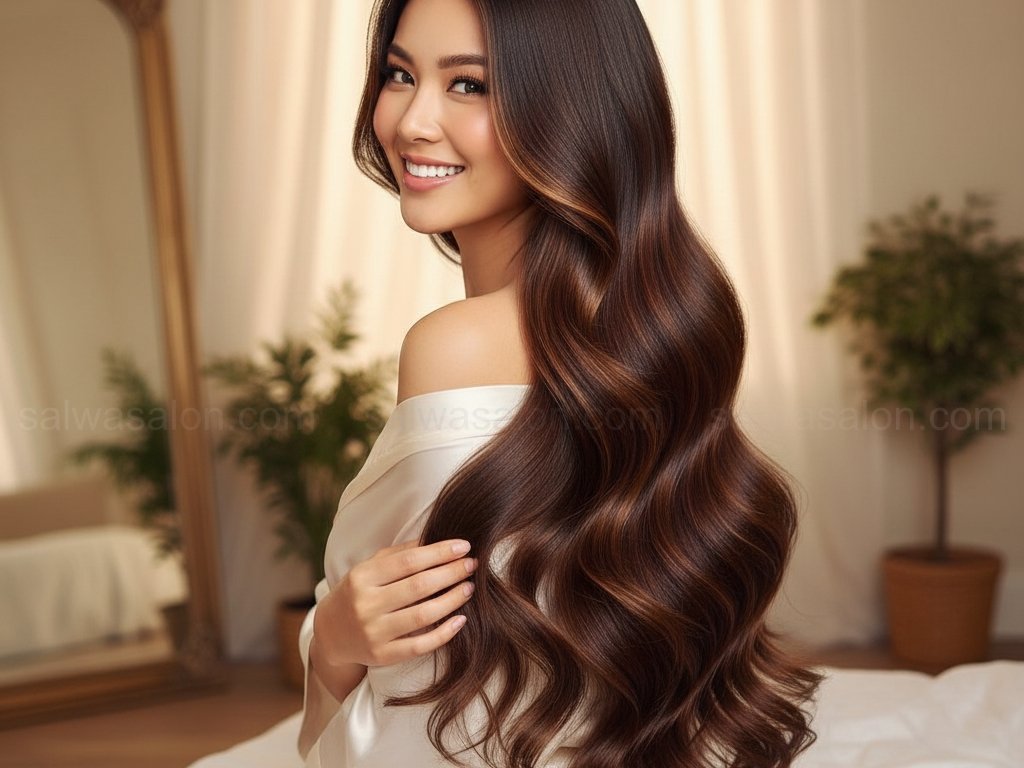
Experiencing dry, coarse, dull, and easily frizzy hair is a common complaint among both women and men. When the outer layer of hair strands loses its essential moisture, the protective cuticle lifts and stands on end, causing strands to tangle easily, rub against each other, and lose their natural shine. This condition is often triggered by exposure to intense sunlight, dry air from air conditioning, and styling habits involving high heat.
- 2.1 1. Warm Oil Treatment
- 2.2 2. Limit Shampooing to Every 2 to 3 Days
- 2.3 3. Always Use Conditioner After Shampooing
- 2.4 4. Apply a Nourishing Hair Mask Weekly
- 2.5 5. Reduce the Use of High-Heat Styling Tools
- 2.6 6. Avoid Shampooing with Hot Water
- 2.7 7. Use a Wide-Tooth Comb on Wet Hair
- 2.8 8. Dry Hair with a Soft Microfiber Towel
The good news is, you don’t always have to spend a fortune at a specialized salon to restore its softness; a series of practical and consistent steps at home can bring back your hair’s natural moisture.
Understanding the Causes of Dry Hair Strands
Hair does not have its own oil glands along its shaft. Hair moisture relies entirely on sebum production from the scalp, which slowly flows to coat each strand. When this natural oil production is insufficient, or when the natural oil barrier is stripped by harsh shampoos, hair shafts lose their ability to retain water (hydration).
Other factors such as chemical hair coloring processes, perming, washing with excessively hot water, and air pollution also accelerate keratin chain damage in the hair’s cortex, leaving its texture feeling like dry straw.
8 Natural Ways to Combat Dry Hair at Home
1. Warm Oil Treatment
Pure botanical oils like olive oil, coconut oil, or argan oil are rich in fatty acids and Vitamin E. Warm two tablespoons of oil, then gently massage it from the mid-lengths to the ends of your hair strands. Cover with a warm towel for 30 minutes before shampooing to deeply nourish the cuticles.
2. Limit Shampooing to Every 2 to 3 Days
Washing hair daily can strip away the scalp’s natural protective oil barrier. Reduce shampooing frequency to every two or three days to allow hair strands the opportunity to reabsorb their natural moisture.
3. Always Use Conditioner After Shampooing
Never skip conditioner. Conditioner formulas work to reseal the cuticle scales that open when exposed to water and shampoo surfactants, locking moisture within the hair shaft.
4. Apply a Nourishing Hair Mask Weekly
Indulge your hair with a mask made from natural ingredients like mashed ripe avocado with honey, or use a shea butter-based hair mask once a week for the restoration of fragile hair fiber structure.
5. Reduce the Use of High-Heat Styling Tools
The high heat from hair dryers, flat irons, or curling irons is a primary enemy of moisture. If you must use them, always apply a heat protectant spray first and use the lowest heat setting.
6. Avoid Shampooing with Hot Water
While hot showers feel comforting, hot water can excessively open hair cuticles and strip protective lipids. Always use lukewarm water when shampooing, and rinse hair with cool water as a final rinse to seal in shine.
7. Use a Wide-Tooth Comb on Wet Hair
Hair strands are at their most fragile and elastic when wet. Using a fine-tooth comb or brushing vigorously can cause breakage. Use a gentle, wide-tooth comb, preferably made of smooth wood, to detangle slowly.
8. Dry Hair with a Soft Microfiber Towel
Roughly rubbing hair with a coarse cotton bath towel can damage cuticles and create static friction that leads to wild frizz. Simply gently squeeze excess water from your hair using a microfiber towel or a clean cotton t-shirt.
Maintaining the Lipid Barrier on Hair Strands:
Chronic hair dryness is often not solely due to a lack of water, but rather the degradation of the 18-MEA lipid layer that coats the cuticle surface. Applying a small amount of argan or jojoba oil to damp ends after washing acts as a substitute for these natural lipids, preventing hydration evaporation in air-conditioned environments throughout the day. — Salwa Salon Editorial Team
Sleep Habit Adjustments to Protect Dry Hair
Nighttime care is often overlooked, yet hair friction during sleep contributes significantly to damage:
- Use Silk or Satin Pillowcases: Satin fabrics have a very smooth surface, minimizing friction between hair strands and the pillow, thus preventing tangles or breakage as you move during the night.
- Braid Hair Loosely: Tying hair into a loose braid prevents tangled strands from piling up without putting pressure on the hair roots.
Frequently Asked Questions About Dry Hair Care (FAQ)
How long does it take to restore severely dry hair?
With warm oil treatments and regular conditioning twice a week, improvements in hair strand softness typically begin to be noticeable within 2 to 4 weeks.
Can dry hair be fixed by just changing shampoo?
Switching to a sulfate-free shampoo helps prevent dryness from worsening, but you will still need conditioner and hair oils to restore lost moisture.
Is it okay to leave olive oil on hair overnight?
Yes, it is permissible, especially on the mid-lengths to the ends of the hair. However, avoid applying it heavily to the scalp overnight if you have a tendency towards dandruff or an oily scalp.