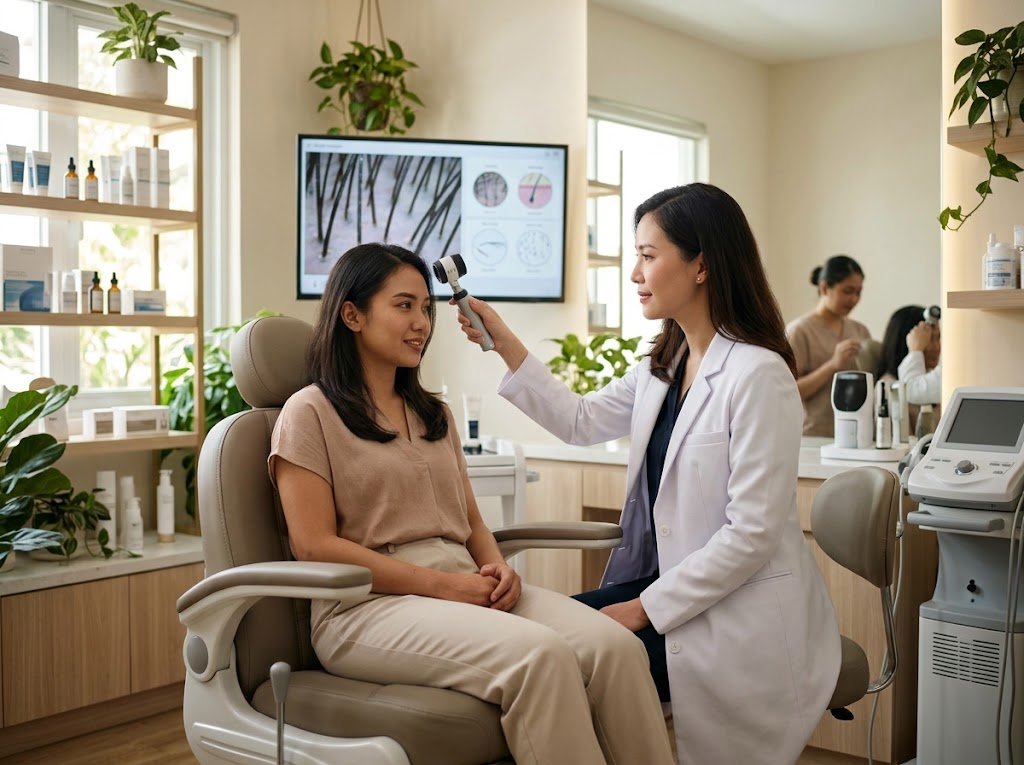
Hello, Salwa Besties! Persistent hair loss can often trigger significant worry and anxiety. Every time you brush or shampoo, seeing clumps of hair on the floor is truly heartbreaking! When conventional shampoos and at-home tonics no longer suffice, it’s time to understand modern clinical and medical approaches to safeguard your hair follicles from premature baldness.
The fields of dermatology and hair aesthetics have advanced tremendously. Tackling hair loss is no longer about guesswork with products; it requires an integrated approach targeting the root biological causes. Let’s explore the latest clinical treatment technologies for comprehensive hair loss solutions!
Understanding the Primary Triggers of Hair Loss
Before recommending medical therapies, dermatologists and trichologists always conduct a thorough evaluation to identify the underlying causes of your hair loss. Some of the most frequent culprits include:
- Genetic and Hormonal Factors (Androgenetic Alopecia): Follicular sensitivity to Dihydrotestosterone (DHT) hormone, which gradually shrinks hair follicles, eventually ceasing hair production.
- Temporary Hormonal Imbalances: Hormonal fluctuations commonly experienced by women postpartum, with PCOS, or during perimenopause.
- Micronutrient Deficiencies: Insufficient intake of iron (ferritin), vitamin D3, zinc, and essential amino acids crucial for keratin synthesis.
- Physical and Emotional Stress (Telogen Effluvium): Severe stress can prematurely push hair follicles into a synchronized resting phase (telogen), leading to mass shedding 2–3 months later.
Advanced Clinical Treatments for Hair Regrowth
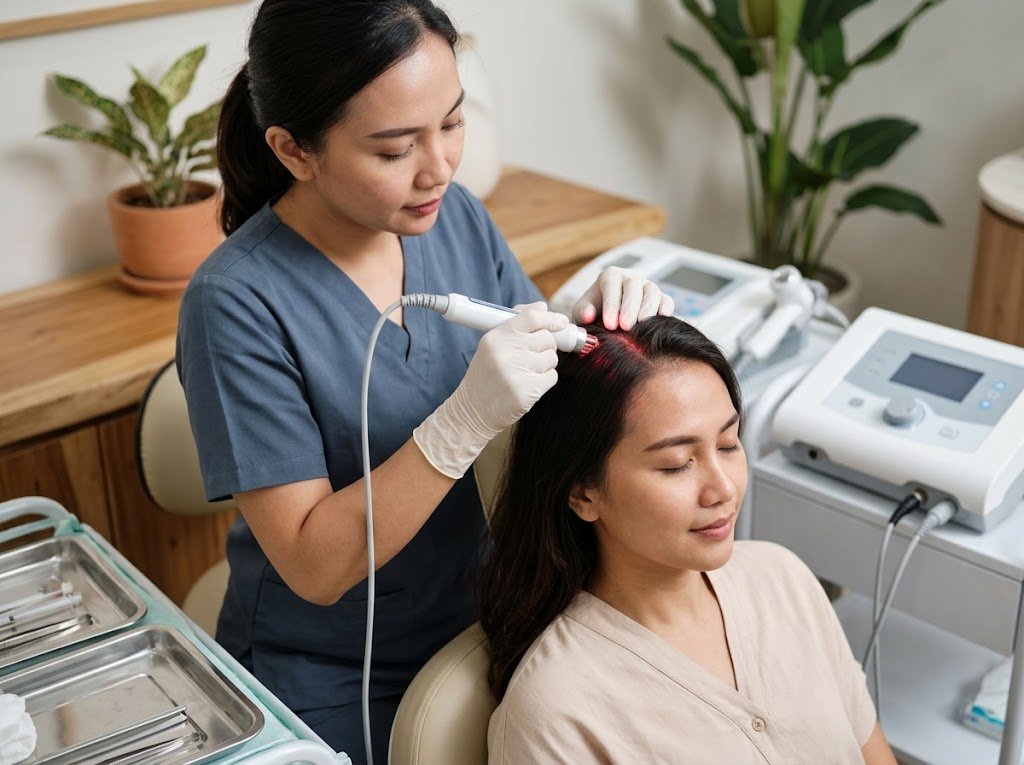
1. Hair PRP (Platelet-Rich Plasma) Therapy
Hair PRP is a highly popular treatment with minimal side effects. The procedure involves drawing a small amount of the patient’s blood, which is then spun in a specialized centrifuge to isolate plasma rich in platelets and growth factors.
This nutrient-dense plasma is then micro-injected into thinning areas of the scalp. Its benefits are remarkable in stimulating capillary circulation and reactivating dormant hair follicles.
2. Hair Exosome Therapy
This represents the latest technological leap beyond PRP. Exosomes are cellular nanovesicles that carry thousands of regenerative peptide signals and cell-repairing proteins. Exosome therapy delivers potent anti-inflammatory effects to the scalp while accelerating hair follicle recovery with exceptionally high success rates.
3. Low-Level Laser Therapy (LLLT / Hairmax Laser)
Low-intensity laser therapy utilizes red light wavelengths to penetrate the scalp down to the mitochondrial level of follicle cells. This photobiomodulation stimulates adenosine triphosphate (ATP) production, prolongs the active growth phase of hair (anagen phase), and promotes the growth of thicker new hair shafts.
4. Application of Specialized Topical Formulations (Minoxidil & Peptides)
Physicians often prescribe topical lotions containing Minoxidil, specifically formulated with anti-DHT agents and biomimetic peptides. These compounds work by dilating follicle blood vessels, ensuring optimal oxygen and blood supply to the hair roots.
Early Detection in Salons: When Should Hair Loss Issues Be Referred to a Medical Clinic?
As hairstylists, we frequently encounter clients who insist on continuous creambaths or switching between salon hair tonics, even when their follicles have already undergone miniaturization (follicle shrinkage due to DHT or autoimmune conditions). The most telling signs: if daily shedding consistently exceeds 100 strands for over two months, and the diameter of newly growing hair shafts appears significantly finer, akin to baby hair, discontinue experimenting with over-the-counter cosmetic products. At this juncture, trichological medical intervention, such as PRP injections or exosome therapy, is the appropriate course of action before follicles close permanently.
Daily Nutritional Support to Strengthen Hair Roots
- High-Quality Protein: Eggs, salmon, chicken breast, and legumes serve as the primary building blocks for keratin protein.
- Iron and Zinc: Dark leafy greens like spinach and broccoli, along with lean red meat, help prevent follicular anemia.
- Omega-3 Fatty Acids: Chia seeds, olive oil, and fatty fish maintain scalp hydration and prevent follicular inflammation.
Q&A on Clinical Hair Loss Therapies
How many PRP therapy sessions are needed before new hair growth becomes visible?
Typically, physicians recommend an initial protocol of 3 to 4 sessions, spaced one month apart. Reductions in shedding are usually noticeable by the second session, while the growth of new vellus hairs becomes apparent after 3 to 6 months.
Is scalp injection therapy for hair loss painful?
Prior to the procedure, a local anesthetic cream is applied to the entire scalp for 30–45 minutes. The micro-needles used are extremely fine, resulting in minimal discomfort that is well-tolerated.
Does postpartum hair loss require laser or PRP therapy?
Postpartum hair loss is generally physiological and can resolve on its own within 6–12 months as estrogen levels stabilize. However, if the shedding is severe and causes significant scalp visibility, a mild PRP therapy or peptide tonic can expedite recovery.
Conclusion
Hair loss is not the end of the road and can be effectively managed with the right methods implemented as early as possible. The key is to not delay consultation with a professional physician when hair loss exceeds normal limits (over 100 strands per day). Cherish your crown and treat it with scientifically proven solutions!



Tinggalkan Balasan